
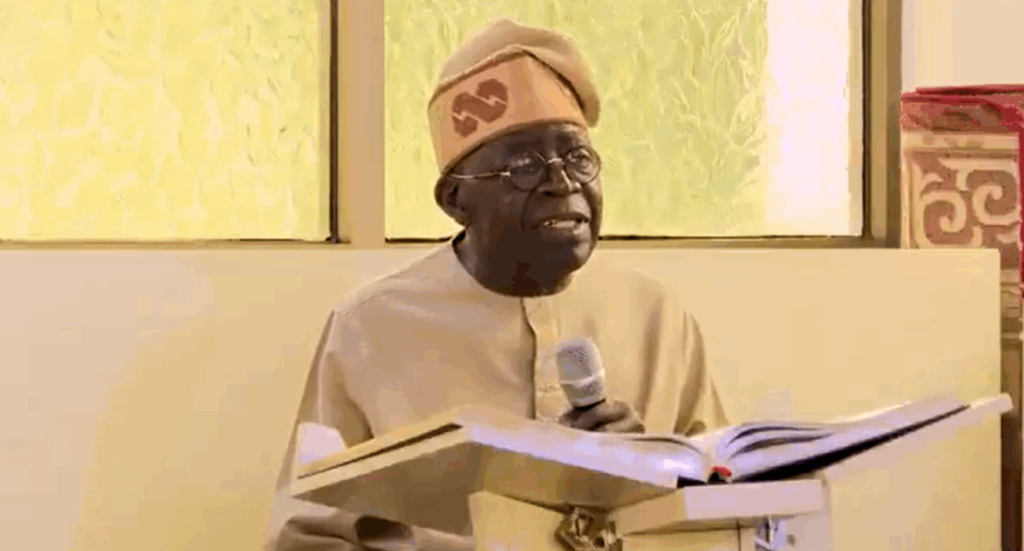
President Bola Ahmed Tinubu on Monday convened a series of high-level security meetings at the Presidential Villa in Abuja, following fresh military casualties and escalating violence in parts of the country.
The President first held a closed-door meeting with the Chief of Defence Staff, Olufemi Oluyede, alongside an unnamed French general, in what sources described as part of ongoing international collaboration to strengthen Nigeria’s fight against insurgency.
Shortly after, Tinubu also chaired an emergency security meeting with Nigeria’s service chiefs and intelligence leaders, including the heads of the Army, Navy, Air Force, the Department of State Services, the National Intelligence Agency, and the Inspector-General of Police.
Meeting follows deadly attack on soldiers
The security consultations came after a colonel and six soldiers were killed on Sunday by an improvised explosive device (IED) planted by insurgents in Borno State.
According to a statement from Operation Hadin Kai, the military’s counter-insurgency task force in the North-East, the troops were attacked at a location in Monguno.
The incident occurred when the commanding officer moved toward the frontline to assess the situation after an earlier exchange of fire with insurgents.
- “The commanding officer courageously proceeded to the troops’ location to personally assess the situation but encountered an improvised explosive device which severely affected his vehicle,” the statement said.
The blast reportedly killed the officer and six other personnel, marking another deadly strike against troops operating in the region.
Security collaboration with France
Monday’s meeting with the French military officer followed recent discussions between President Tinubu and Emmanuel Macron on strengthening military cooperation.
Three weeks earlier, Tinubu disclosed that France had agreed to support Nigeria with military equipment and training to help security forces combat insurgency in the North-East.
Speaking during a meeting with state governors in Lagos, the President said Nigeria was exploring all available partnerships to strengthen its defence capabilities.
- “We had a lengthy discussion with Emmanuel Macron on collaboration for equipment and support.
- “I am making frantic efforts to contact other nations. If we have to spend our goodwill and lines of credit, we have partners willing to support us with equipment and training,” he said.
Controversy over airstrike in Borno
The renewed security engagements also come amid controversy surrounding a recent airstrike by the Nigerian Air Force that targeted insurgents near the Yobe-Borno border.
The strike reportedly hit Jilli market in Gubio, killing dozens of people, including suspected insurgents and civilians.
While the military described the operation as a precision strike against a terrorist logistics hub used by Boko Haram and ISWAP fighters, human rights group Amnesty International condemned the incident and called for an independent investigation.
Presidential media adviser Temitope Ajayi defended the operation, stating that the location had become a major trading and logistics hub for terrorist groups.
However, survivors of the strike said they were unaware that the market was being used by insurgents and described the attack as devastating, noting that multiple bombs were dropped by military jets during the operation.
Rising security concerns
The developments coincide with growing international concerns about Nigeria’s security situation.
Earlier this month, the United States Department of State authorised the voluntary departure of non-emergency government employees and family members from the U.S. Embassy in Abuja, citing deteriorating security conditions.
The advisory elevated 23 Nigerian states to a “Level 4: Do Not Travel” warning, pointing to threats from insurgents in the North-East, criminal gangs in the North-West, and violence in parts of the South and oil-producing regions.
However, Nigeria’s Minister of Information, Mohammed Idris, said the travel advisory reflected U.S. internal security protocols and did not indicate a nationwide breakdown of law and order.
Fresh violence in Benue
Meanwhile, violence also escalated in parts of Benue State, where suspected armed herders launched a series of attacks across several communities.
The attacks affected villages including Edikwu-Ankpali, Ikobi, Adija, and Upu, leaving at least 14 people dead, including a Mobile Police officer.
Local officials confirmed that several residents were killed while others remain missing as search operations continue.
The latest wave of attacks underscores the multi-layered security challenges facing Nigeria, ranging from insurgency in the North-East to communal violence and banditry in other regions.