
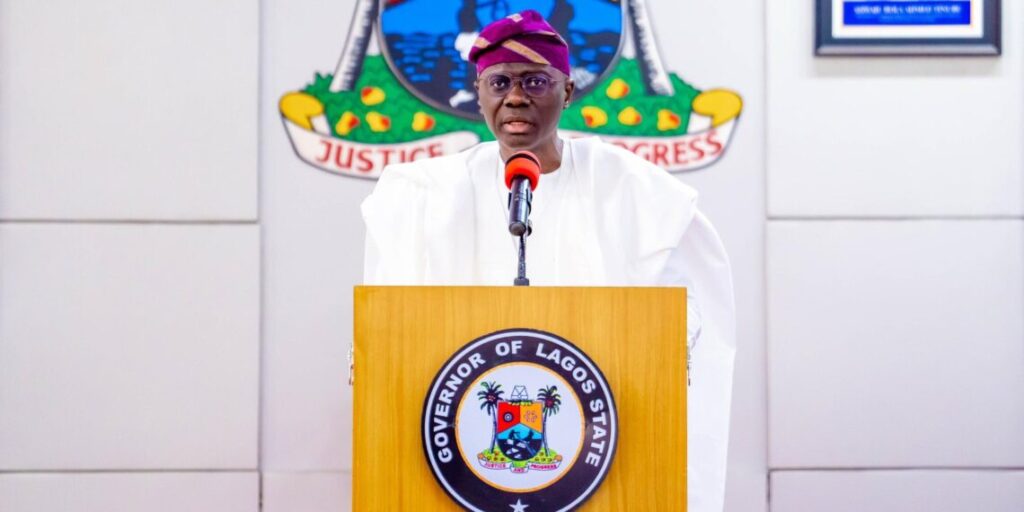
Youths in Lagos State contribute an estimated N4.5 trillion annually to the state’s Gross Domestic Product (GDP), according to Governor Babajide Sanwo-Olu.
The governor disclosed this on Monday at the Abuja Dialogue, held in Abuja and organized by the Office of the Vice President of Nigeria in collaboration with the Lagos State Government.
The event, themed “Scaling Excellence: Youth Leadership as Strategic Infrastructure for National Transformation,” served as a precursor to the upcoming Lagos Leadership Summit and attracted members of the Federal Executive Council, Lagos State commissioners, political leaders, private sector stakeholders, and fellows of the Lateef Jakande Leadership Academy.
Investing in youth leadership
Speaking at the event, which was attended by Nairametrics, Governor Sanwo-Olu expressed appreciation to Vice President Kashim Shettima for hosting the dialogue aimed at strengthening the human capital infrastructure Nigeria needs for long-term national development.
According to him, Lagos has built a strong leadership ecosystem anchored on the Lateef Jakande Leadership Academy (LJLA), an institution named after former Lagos governor Lateef Jakande.
Through the academy’s structured fellowship programme, young Nigerians receive hands-on public sector experience, cross-sector exposure, policy training, mentorship from experienced leaders, and opportunities to implement capstone projects addressing real societal challenges.
Sanwo-Olu said the impact of these initiatives is already visible in the state’s economic performance.
- “The results speak for themselves. Lagos youths contribute an estimated N4.5 trillion annually to our GDP, and 70% of new businesses in Lagos are youth-founded ventures.
- “These are not figures of potential; they are figures of performance. They show that when you invest in young people, they deliver,” he said.
The governor also urged other states to adopt structured leadership development frameworks and called for stronger collaboration between federal and state institutions in developing youth capacity.
- “If we can establish a national infrastructure fund for roads and bridges, then surely we can establish a national framework for building the human infrastructure that will design, manage, and sustain those roads and bridges for generations,” he added.
Call for stronger youth development institutions
Also speaking at the event, the Deputy Chief of Staff to the President, Hassan Hadejia, emphasized that institutions responsible for youth development must remain responsive to emerging leadership needs.
According to him, youth development requires equipping young people with the capacity to navigate the complexities of leadership and governance.
Earlier, the Executive Secretary of the Lateef Jakande Leadership Academy, Ayisat Agbaje-Okunade, explained that the dialogue was designed to bring stakeholders together to brainstorm on strategies for building youth leadership for national transformation.
She urged policymakers to foster stronger alignment across institutions and build a national consensus around youth empowerment initiatives.
Lagos’ growing economic strength
The announcement comes as Lagos continues to consolidate its position as one of Africa’s leading economic hubs.
In 2025, Nairametrics reported that Lagos’ Gross Domestic Product reached approximately $259 billion based on purchasing power parity, according to the Lagos Economic Development Update (LEDU) 2025.
The report showed that the state’s GDP stood at $259.75 billion in 2023, while the Lagos economy expanded to N27.38 trillion in the first half of 2024, up from N19.65 trillion recorded in 2023.
Wider revenue trends across Nigeria
Meanwhile, Nigeria’s internally generated revenue (IGR) data for 2024 shows a widening gap between high-performing and low-performing states.
According to Nairametrics analysis, the 36 states and the Federal Capital Territory generated a combined N3.63 trillion in 2024, compared to N2.43 trillion in 2023, representing a 49.69% increase.
However, states such as Lagos, Rivers, and the FCT continue to dominate subnational revenue generation, while many others still rely heavily on federal allocations to sustain their budgets