
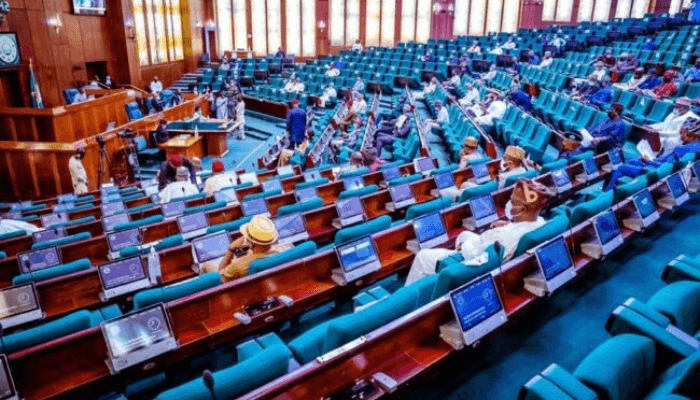
Nigeria’s proposed Sokoto–Badagry Super Highway has come under increased scrutiny following the approval of a $516.33 million external loan by the House of Representatives, with stakeholders raising concerns over funding, transparency, and long-term fiscal implications.
The 1,068-kilometre project, stretching from Illela in Sokoto State to Badagry in Lagos, is designed to connect northern agricultural zones with southern commercial centres across seven states—Lagos, Ogun, Oyo, Kwara, Niger, Kebbi, and Sokoto—potentially boosting trade and regional integration.
However, despite its economic promise, analysts warn that the project’s estimated multi-trillion-naira cost could add pressure to Nigeria’s rising debt burden. Observers also note uneven progress across sections of the corridor, with some areas showing active construction while others remain largely untouched.
Critics have questioned the project’s timing and execution. Chekwas Okorie, a former presidential candidate, warned that the administration of Bola Ahmed Tinubu could face future probes over its handling of major infrastructure initiatives.
While acknowledging the strategic importance of projects like the Sokoto–Badagry and Lagos–Calabar highways, Okorie argued that resources could be better directed toward pressing issues such as insecurity and agricultural development. He also raised concerns about transparency, citing a lack of open competitive bidding and limited disclosure of contract details.
Similarly, former presidential candidate Martins Onovo expressed reservations about the scale of government borrowing and alleged cost discrepancies in infrastructure contracts, calling for stricter adherence to due process.
Political analyst Aminu Yakudima emphasised the need for the government to prioritise urgent socio-economic challenges, including poverty alleviation, security, and economic empowerment, over large-scale infrastructure spending.
Experts also highlighted the importance of transparency and accountability. Vahyala Kwaga of BudgIT stressed that while infrastructure development is necessary, projects must follow proper procurement processes and undergo rigorous cost-benefit analysis.
Echoing similar concerns, Johnson Chukwu, Managing Director of Cowry Asset Management, argued that priority should be given to rehabilitating existing critical road networks before embarking on new large-scale projects.
Public affairs analyst Jide Ojo noted that while the administration may be pursuing ambitious infrastructure to build a legacy, such projects must meet strict standards of feasibility, transparency, and sustainability, particularly when financed through public debt.
APC defends borrowing strategy
In response to the criticism, the All Progressives Congress defended the government’s borrowing approach, describing it as a necessary tool for economic development.
APC National Director of Publicity, Bala Ibrahim, argued that critics often overlook the long-term benefits of infrastructure investments. He cited the United States as an example of a heavily indebted nation that continues to thrive economically.
“Borrowing is not the issue; what matters is how the funds are utilised. Strategic investments in infrastructure can unlock economic growth, attract investment, and improve ease of doing business,” he said.
Ibrahim dismissed claims that the borrowing is linked to political considerations ahead of the 2027 elections, maintaining that the projects are designed to deliver long-term economic value.
Balancing ambition and fiscal reality
While the Sokoto–Badagry Super Highway is widely seen as a potentially transformative project, the debate highlights broader concerns about Nigeria’s fiscal sustainability, project prioritisation, and governance standards.
As the government pushes forward with large-scale infrastructure development, stakeholders say the focus must now shift to ensuring transparency, proper execution, and measurable economic returns to justify the rising costs.