Nigerian Firms Remain Cautiously Optimistic Despite Tax, Insecurity and High Interest Rates
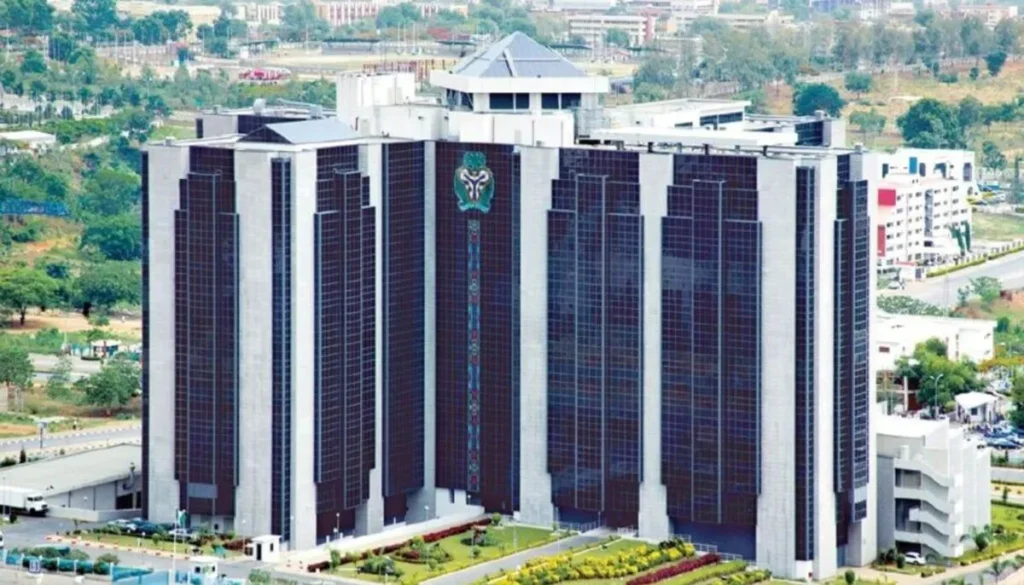
Nigerian businesses remained cautiously optimistic about the economy in September despite identifying multiple taxation, insecurity and high interest rates as their biggest operating challenges.
The latest Central Bank of Nigeria Business Expectations Survey showed that the Business Confidence Index stood at 13.4 points during the month.
Although the index moderated slightly from August, it remained firmly in positive territory.
The survey indicates that businesses expect operating conditions to improve over the coming months, supported primarily by stronger demand, economic diversification and improved access to finance.
The optimism was strongest among industrial firms.
The industry’s confidence index increased from 17.1 points in August to 19.4 points in September.
Services-sector confidence, however, moderated from 13.3 points to 10.2 points, while the agriculture sector’s index declined from 13.9 to 12.8 points.
Despite the variations, all three sectors remained optimistic about the economic outlook.
The optimism is notable because firms continue to face significant structural challenges.
High or multiple taxation ranked as the largest constraint, recording a constraint index of 67.1 points.
It was followed by insecurity at 66.2 points and high interest rates at 64.3 points.
An unfavourable political climate recorded 61.8 points, while high bank charges stood at 61.5 points.
Competition, unclear economic laws and an unfavourable economic environment were also identified as significant constraints.
The survey suggests that the macroeconomic recovery underway in Nigeria has not eliminated the structural costs associated with operating a business.
For many companies, particularly smaller firms, the combination of taxes, levies, security expenses, expensive financing and other regulatory costs can significantly reduce profit margins.
The taxation concern comes as Nigeria moves deeper into the implementation of its tax-reform programme.
The Federal Government has introduced reforms aimed at simplifying tax administration, reducing multiple taxation and broadening the tax base.
However, businesses continue to complain about the practical burden created by overlapping charges and levies at different levels of government.
Interest rates remain another major concern.
The CBN reduced its benchmark rate to 23% in September, but businesses continue to expect borrowing costs to remain relatively high in the near term.
The central bank’s own survey found that respondents expect borrowing rates to remain elevated across the review periods, although they anticipate some moderation over the following six months.
Despite these pressures, businesses expect confidence to strengthen substantially.
The Business Confidence Index is projected at 23.6 points in December 2026 and 36.1 points by March 2027.
Respondents also expressed a generally positive outlook for the naira, expecting modest appreciation against the US dollar over the forecast period.
The findings align with other recent indicators showing that economic activity is expanding.
Nigeria’s composite Purchasing Managers’ Index rose to 53.0 points in September, marking its fourth consecutive month of expansion.
Output, new orders, employment and raw-material inventories all increased during the month, while supplier delivery times improved.
The picture emerging from the data is therefore mixed but increasingly interesting.
Nigeria’s macroeconomic indicators are improving, businesses are reporting expansion and confidence remains positive, but companies continue to operate under significant cost pressures.
The critical question for the final quarter of 2026 will be whether the improvement in macroeconomic stability eventually translates into cheaper credit, lower operating costs and stronger consumer demand.