
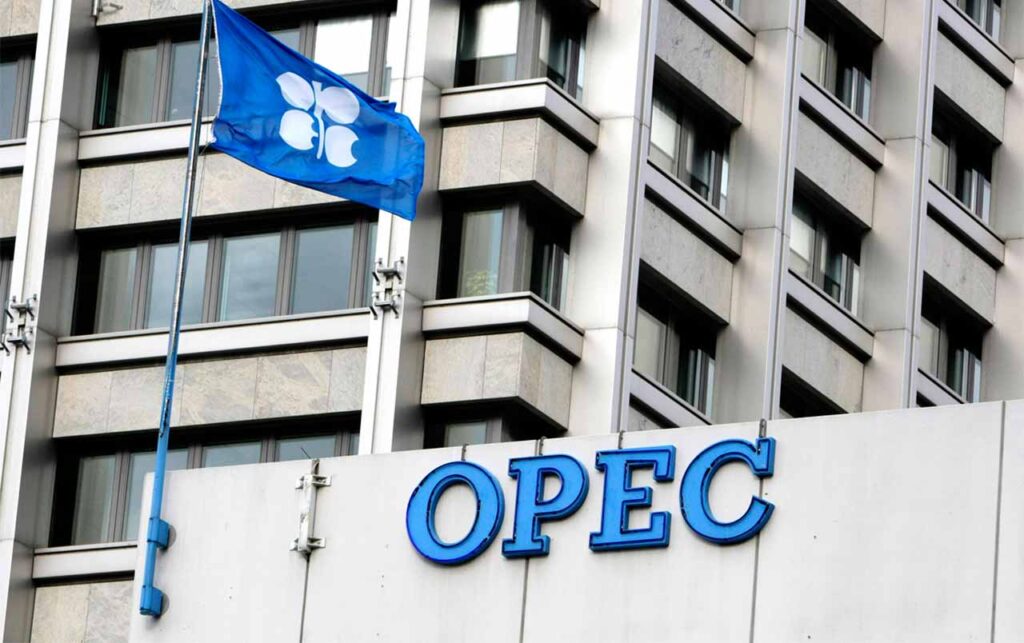
The United Arab Emirates is set to formally withdraw from the OPEC+ alliance effective May 1, marking a major shift in global oil market coordination with potential implications for price stability and Nigeria’s fiscal outlook.
The decision follows years of tension between Abu Dhabi’s ambitious production expansion plans and the output limits imposed by the Vienna-based group. Analysts say the move reflects a strategic pivot by the Gulf nation to maximise returns from its hydrocarbon resources amid the global energy transition.
The exit is seen as a victory for the expansion-focused strategy led by the Abu Dhabi National Oil Company, which has invested heavily in upstream capacity but has been constrained by OPEC+ quotas.
Weakened market buffer
The immediate impact of the UAE’s departure is expected to weaken OPEC+’s spare production capacity buffer, a key mechanism used to stabilise global oil markets. According to data from Rystad Energy, the UAE accounted for about 1.54 million barrels per day of spare capacity as of early 2026—roughly 25 percent of the alliance’s total buffer.
Analysts warn that losing control over such a significant portion of spare capacity could reduce the group’s ability to respond to supply shocks, particularly at a time of heightened geopolitical tensions around critical energy routes like the Strait of Hormuz.
While the UAE is not expected to immediately flood the market due to logistical and regional constraints, its exit weakens the coordinated policy framework that has historically helped stabilise oil prices.
Expansion ambitions drive split
At the heart of the decision are the UAE’s long-term production goals. ADNOC is pursuing major expansion projects, including developments at the Upper Zakum, Bu Hasa, and South East Bab fields, as part of plans to raise production capacity to 5 million barrels per day by 2027 and potentially 6 million barrels thereafter.
Industry analysts note that the country has consistently operated below its installed capacity due to quota restrictions, prompting frustration within its leadership and reinforcing the push for greater production flexibility.
Implications for Nigeria
For oil-producing countries like Nigeria, the UAE’s exit introduces new risks. The alliance’s reduced cohesion could weaken its ability to influence global oil prices, potentially affecting revenue for countries heavily dependent on crude exports.
Muda Yusuf, Chief Executive of the Centre for the Promotion of Private Enterprise, warned that the development could have negative consequences for Nigeria.
“The objective of OPEC is to ensure favourable oil prices for member countries. With a major player exiting, that influence is diminished,” he said, cautioning that Nigeria could face a “double setback” if oil prices decline while domestic production remains below target.
Nigeria has struggled to meet its output targets due to infrastructure challenges and security issues, limiting its ability to fully benefit even when prices are strong.
Questions over OPEC cohesion
Energy experts say the UAE’s decision raises broader concerns about the future of OPEC+. Wumi Iledare noted that the move highlights growing tensions between countries seeking to expand production capacity and the constraints imposed by quota systems.
“If this trend continues, OPEC’s ability to enforce discipline could weaken gradually through rising non-compliance,” he said.
Recent production data underscores these concerns. OPEC+ output has fallen significantly below its quotas, partly due to geopolitical disruptions, further complicating the group’s ability to present a unified front to the market.
Analysts warn that a less coordinated oil market could lead to increased price volatility, with potential downward pressure on prices. For Nigeria, this risk is compounded by persistent domestic challenges, including production shortfalls, high operating costs, and revenue leakages.
As the global energy landscape evolves, the UAE’s exit signals a shift toward greater national control over oil production strategies, raising questions about whether other producers may eventually follow suit.