
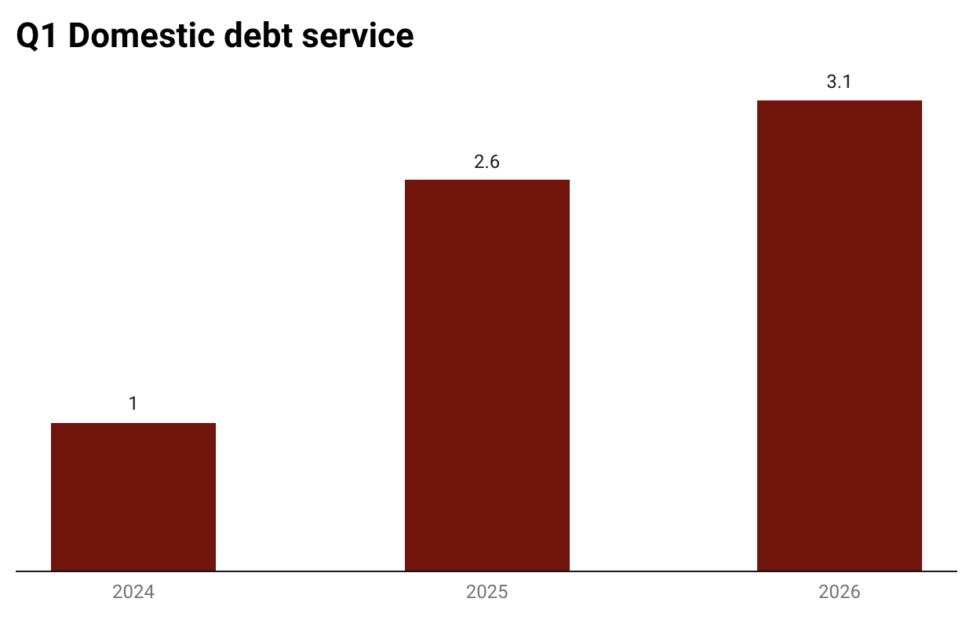
The rising cost of servicing Nigeria’s domestic debt is becoming an increasing concern as borrowing costs remain high and the Federal Government continues to depend heavily on the local debt market to finance its fiscal requirements.
According to economists, the growing reliance on naira-denominated borrowing has helped the government reduce its exposure to foreign exchange risks. However, the strategy has also increased the burden of domestic interest payments at a time when interest rates remain elevated.
Domestic Borrowing Reduces FX Risk
Dumebi Oluwole, Lead Economist at Stears, explained that borrowing more from the domestic market allows the government to reduce its exposure to fluctuations in the foreign exchange market.
She noted that external debt is typically obtained in foreign currencies and must be repaid in the same currency. Consequently, a depreciation of the naira can significantly increase the naira value of both the principal and interest payments on foreign-currency debt.
According to Oluwole, shifting more borrowing towards the domestic market therefore provides some protection against exchange-rate movements because naira-denominated debt is repaid in naira.
High Interest Costs Remain a Concern
Despite the reduction in foreign exchange exposure, Oluwole cautioned that the strategy does not remove the broader vulnerabilities associated with Nigeria’s rising debt burden.
She noted that the government continues to face significant pressure from high domestic interest rates, which increase the cost of servicing naira-denominated debt.
While the shift towards domestic borrowing may help the government manage foreign exchange risks, Oluwole argued that it has not fundamentally addressed the underlying fragility of Nigeria’s debt position.
The situation highlights the difficult balance facing policymakers: reducing exposure to foreign exchange volatility while managing the rising cost of borrowing in the domestic market.