
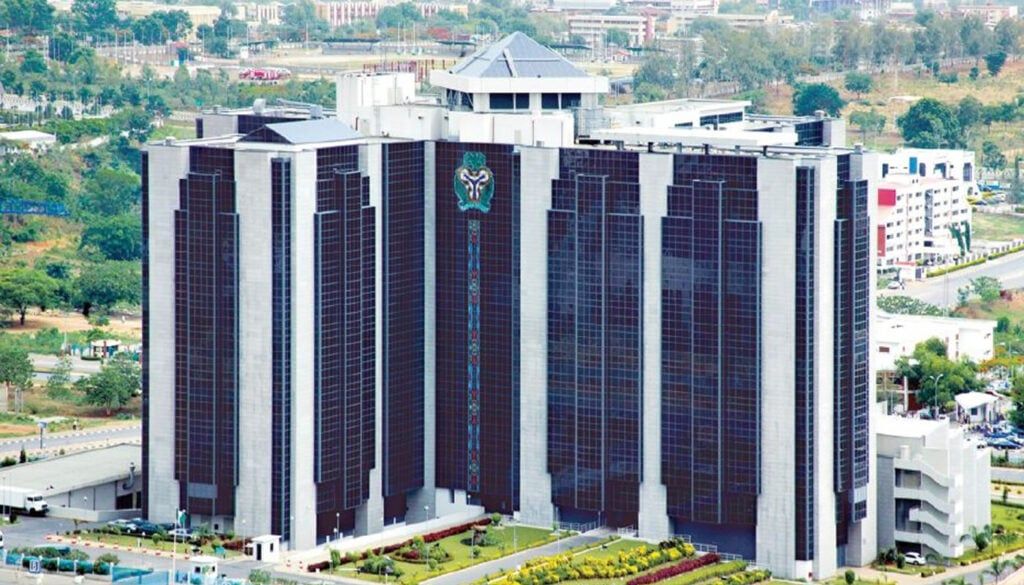
Nigeria’s banking industry remained resilient in 2025, successfully navigating regulatory tightening, higher impairment charges, and macroeconomic headwinds while continuing to expand balance sheets and attract investor confidence.
A defining development during the year was the Central Bank of Nigeria’s (CBN) recapitalisation programme, under which 33 of Nigeria’s 37 banks raised a combined ₦4.65 trillion, with about 72.6% of the capital sourced domestically, according to the CBN and the Securities and Exchange Commission (SEC).
At the same time, the CBN ended all COVID-19 regulatory forbearance measures, requiring banks to fully recognise impaired loans, discontinue restructuring concessions, and comply with Single Obligor Limits (SOL). These changes significantly increased impairment provisions across the industry, weighing on earnings.
As a result, the combined profit after tax (PAT) of the ten commercial banks analysed declined 11.9% year-on-year to ₦4.26 trillion, even as the industry continued to record strong balance sheet expansion.
What the data is saying
The 2025 results reflect a banking industry undergoing a structural transition rather than one experiencing financial weakness.
Although profitability declined following the withdrawal of regulatory reliefs, banks continued to demonstrate resilience by strengthening capital, expanding deposits, growing assets, and maintaining their role as the primary source of financial intermediation in Nigeria.
Collectively, the ten banks increased total assets by 14% to ₦196.8 trillion, while shareholders’ funds grew 24% to ₦24.3 trillion. Customer deposits expanded by ₦22.3 trillion, while banks extended an additional ₦3.65 trillion in loans despite adopting a more cautious lending approach.
Industry-wide prudential indicators, however, reflected increased pressure. The Capital Adequacy Ratio (CAR) fell to 10.4%, while the Non-Performing Loan (NPL) ratio increased to 8.12%, well above the regulatory benchmark of 5%. Return on Equity (ROE) also declined sharply to 19.1%, highlighting the impact of higher impairment charges.
These figures suggest that although banks remained fundamentally sound, 2025 was characterised by balance sheet strengthening rather than aggressive earnings expansion.
More insights
The ranking methodology assessed banks across nine financial indicators, including profitability growth, asset growth, return on equity, deposit mobilisation, loan growth, operational efficiency, asset quality, capital strength, and shareholder returns.
Several banks consistently emerged as top performers across multiple categories:
- Wema Bank delivered one of the strongest all-round performances, leading in asset growth (41.2%), ROE (44.4%), and loan growth (44.7%), while ranking highly in deposit growth, cost efficiency, capital adequacy, and dividend payout.
- GTCO maintained its reputation for operational efficiency, recording the industry’s lowest Cost-to-Income Ratio (28%), the highest Capital Adequacy Ratio (43.8%), and the highest Dividend Payout Ratio (50.2%).
- Access Holdings reinforced its position as Nigeria’s largest banking group by assets and deposits, leading in deposit growth (53.4%) while maintaining the industry’s largest balance sheet (₦51.6 trillion) and deposit base (₦34.6 trillion).
- FCMB emerged as the fastest-growing bank in terms of profitability, posting an impressive 141% increase in PAT, while also recording the largest improvement in Return on Equity.
- Stanbic IBTC consistently ranked among the industry’s strongest performers in profitability, asset growth, ROE, deposit growth, operational efficiency, and asset quality.
- Fidelity Bank recorded the industry’s lowest NPL ratio (2.4%), reflecting strong credit risk management.
Despite the decline in overall industry profitability, Zenith Bank remained Nigeria’s most profitable bank, reporting over ₦1 trillion in profit after tax, although growth remained relatively modest compared with previous years.
Category leaders
| Performance Metric | Best Performing Bank |
| Profit After Tax Growth | FCMB (141%) |
| Asset Growth | Wema Bank (41.2%) |
| Return on Equity | Wema Bank (44.4%) |
| Deposit Growth | Access Holdings (53.4%) |
| Loan Growth | Wema Bank (44.7%) |
| Cost-to-Income Ratio | GTCO (28%) |
| Capital Adequacy Ratio | GTCO (43.8%) |
| Lowest NPL Ratio | Fidelity Bank (2.4%) |
| Dividend Payout Ratio | GTCO (50.2%) |
What you should know
The 2025 financial year marked one of the most significant regulatory transitions for Nigeria’s banking industry in recent years.
The end of COVID-era regulatory forbearance forced banks to recognise previously deferred credit risks, resulting in higher impairment charges and lower industry profits. Simultaneously, the CBN’s recapitalisation programme required banks to strengthen their capital bases ahead of stricter regulatory requirements.
Despite these pressures, the sector remained fundamentally resilient. The analysis suggests that future industry leaders will increasingly be determined not merely by size, but by their ability to combine strong capital buffers, prudent risk management, operational efficiency, sustainable profitability, customer acquisition, and disciplined balance sheet growth.
As recapitalisation progresses and macroeconomic conditions improve, banks with diversified earnings, robust capital positions, superior asset quality, and efficient operations appear best positioned to generate long-term value for shareholders while supporting Nigeria’s economic growth.