
FG Pays ₦1.23 Trillion Towards Power-Sector Debts as Government Targets 19,000MW Transmission Capacity
The Federal Government has paid ₦1.23 trillion towards outstanding debts owed to electricity generation companies as part of efforts to address liquidity problems that have affected operations across Nigeria’s power sector.
The Minister of Power, Joseph Tegbe, disclosed the payment after a Federal Executive Council meeting in Abuja, explaining that outstanding obligations had contributed to difficulties in supplying gas to power plants.
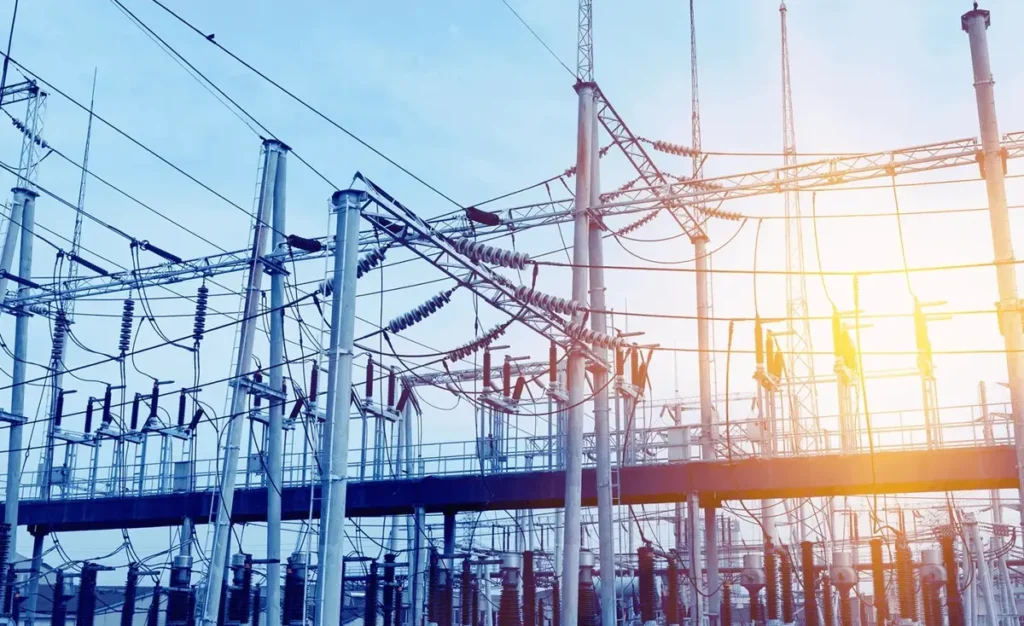
The government is also pursuing transmission infrastructure upgrades, including new transmission lines, large power transformers and plans to expand the grid’s capacity to move electricity.
The payment represents progress in addressing one of the sector’s longstanding challenges: the accumulation of unpaid obligations among participants in the electricity value chain.
Power generation companies depend on revenue from electricity sales to meet operational costs, maintain equipment and settle payments to gas suppliers and other service providers. When payments are delayed, the resulting cash-flow pressure can affect the availability of fuel and the ability to maintain reliable generation.
Debt payments target a major liquidity problem
According to the minister, the government has paid ₦1.23 trillion out of an outstanding debt figure of ₦3.3 trillion.
The remaining balance is approximately ₦2.07 trillion, meaning that about 37.3 per cent of the stated debt has been paid, based on the figures disclosed.
The minister linked the outstanding obligations to challenges in supplying feedstock gas to generating companies. Gas-fired plants account for a significant part of Nigeria’s grid-connected electricity generation, making dependable gas supplies important to the system’s performance.
Reducing arrears could improve cash flow for power-sector participants and help ease pressure on gas supply arrangements. However, debt repayment alone will not resolve every constraint affecting electricity delivery.
Gas availability, plant maintenance, transmission bottlenecks, distribution infrastructure, metering, commercial losses and payment discipline all influence how much electricity ultimately reaches consumers.
The government will therefore need to combine financial interventions with operational and structural reforms if the payments are to produce sustained improvements.
Transmission capacity targeted to rise sharply
Tegbe said the government intended to increase transmission capacity from the current level of approximately 5,000 megawatts to about 19,000 megawatts.
The planned expansion would represent a substantial increase in the grid’s ability to transport electricity from generation sources to distribution networks.
The government has approved several infrastructure projects as part of this effort. One involves the commencement of construction on three double-circuit underground and overhead transmission lines at the Katampe Transmission Substation in Abuja, a major hub serving the North-Central region.
Another project involves the design, manufacture and supply of three 300-megavolt-ampere power transformers rated at 330/132/33 kilovolts for the Egbin Transmission Substation, which serves the Lagos electricity corridor.
The minister said the transformers would need to be custom-manufactured, with production expected to take between three and six months.
The projects are intended to strengthen transmission infrastructure and reduce constraints that can prevent generated electricity from being delivered efficiently to consumers.
However, the targeted 19,000MW figure is a future transmission-capacity goal, not a statement that Nigeria is currently generating or delivering that quantity of electricity.
Government audits ageing transmission infrastructure
The power ministry is also conducting an audit of infrastructure across three major energy zones: Abuja–Kaduna–Karu, Benue–Enugu–Port Harcourt and other connected areas identified by the ministry.
The exercise is intended to identify ageing equipment and determine where replacement or rehabilitation is needed to improve grid reliability.
Ageing infrastructure can increase the risk of equipment failure, constrain power transfers and raise maintenance costs. A systematic assessment could help the government prioritise investments according to operational needs rather than relying solely on emergency repairs.
The government is also planning an east-west super grid running from Sokoto through Funtua, Abuja, Akwanga and Benue to Epe in Lagos State.
If delivered as planned, the project could improve connections across major parts of the country. Its contribution will depend on financing, construction progress, equipment availability and coordination with existing transmission and generation assets.
More than 300 containers of power equipment to be cleared
The minister also disclosed that President Bola Tinubu had directed the clearance of more than 300 containers of power equipment reportedly left at Nigerian ports, some for as long as 20 years.
The government intends to work with the Nigerian Ports Authority and the Nigeria Customs Service to inspect the containers and determine the condition of the equipment.
Usable items could be deployed to support the electricity network, while obsolete or unusable equipment would be disposed of appropriately. The government also plans to reconcile the associated port charges and costs between the relevant agencies.
The initiative could provide access to equipment already brought into the country, although the quantity that can be used will depend on its condition, compatibility with current infrastructure and the cost of restoring it to service.
New control centre expected to improve grid monitoring
The ministry is also advancing the construction of a new National Control Centre in Osogbo to replace the existing facility, which the minister said was built 64 years ago.
A modern control centre could improve real-time monitoring and help system operators identify faults, manage electricity flows and coordinate responses to disruptions.
Such capabilities are important as the transmission network becomes more complex and additional infrastructure is brought online.
Execution will determine the impact on consumers
The ₦1.23 trillion debt payment and planned transmission investments represent steps towards addressing financial and physical constraints within Nigeria’s electricity sector.
For households and businesses, however, the key measure of success will be more reliable electricity, fewer disruptions and a reduced dependence on expensive alternative power sources.
That outcome will require the government to follow through on debt settlement, improve payment discipline across the market, ensure adequate gas supplies and complete transmission projects on schedule.
The proposed increase in transmission capacity is ambitious, and its impact will depend on how effectively it is translated into operational infrastructure. The government’s immediate challenge is to turn financial commitments and approved projects into consistent improvements in electricity delivery.




