
EIB Global and FCMB Commit €85 Million to Nigerian Agriculture, With 70% Targeted at Cocoa and Dairy
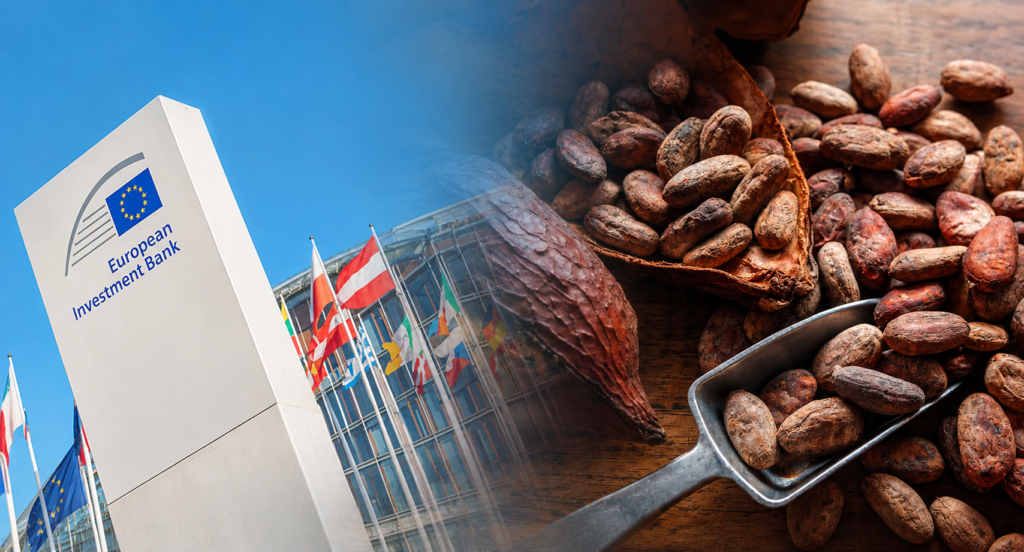
EIB Global, the international development arm of the European Investment Bank Group, and First City Monument Bank (FCMB) have agreed to provide €85 million in financing to support businesses across Nigeria’s agricultural value chains, with at least 70% of the funding targeted at cocoa and dairy-related activities.
The agreement was announced during the International Monetary Fund and World Bank Group Annual Meetings in Bangkok, Thailand, and reported by BusinessDay on Sunday. The initiative is intended to improve access to finance for agricultural businesses while strengthening local processing capacity and helping companies meet environmental and social standards.
The financing is particularly significant for cocoa and dairy because both value chains face constraints involving production capacity, processing, logistics and the consistency of domestic supply.
For cocoa, the funding is expected to support processing businesses, provide liquidity to farmers and cooperatives, and improve the traceability of products. Better access to working capital can help participants purchase produce, manage seasonal cash-flow needs and invest in equipment or processing facilities.
The traceability component is also important because exporters serving the European market face increasingly stringent requirements for demonstrating the origin of agricultural commodities and their compliance with environmental rules. Businesses that cannot provide reliable farm-level information risk encountering barriers when selling into markets that require verified supply chains.
The programme is intended to support compliance with the European Union Deforestation Regulation, which covers cocoa among other commodities. Investment in mapping, documentation and traceability systems could help Nigerian producers and exporters demonstrate compliance while improving transparency across the supply chain.
In the dairy sector, the financing is designed to address gaps that constrain the availability of locally produced milk and the growth of processing businesses. The EIB described the operation as its first investment covering the dairy sector outside the European Union.
Improving domestic dairy production could help processors obtain a more reliable supply of raw milk, reduce supply-chain weaknesses and create opportunities for local farmers. However, achieving these outcomes will require investment not only in processing but also in animal health, feed, cold-chain infrastructure, collection systems and reliable transport.
The partnership also includes technical assistance to support FCMB’s climate strategy and help Nigeria’s agricultural sector manage environmental and social risks. Such support can be important for smaller businesses that lack the expertise or resources to meet increasingly complex financing and export requirements.
The European Investment Bank Group said the programme aligns with its wider efforts to support sustainable agricultural value chains and generate opportunities for businesses in both Nigeria and Europe. The partnership was presented as a way to encourage more value creation within Nigeria rather than leaving producers concentrated in the supply of unprocessed commodities.
For Nigerian businesses, the financing could provide an opportunity to expand operations, improve productivity and move into higher-value processing. For farmers and cooperatives, improved liquidity could make it easier to sell produce through more organised supply chains, provided the funding reaches eligible businesses and is offered on commercially workable terms.
Nevertheless, the €85 million commitment is not a guarantee that all agricultural financing constraints will be resolved. The eventual impact will depend on how the funds are allocated through FCMB, the eligibility criteria applied to borrowers and the ability of businesses to repay their facilities.
Access to credit remains only one part of the challenge. Agricultural businesses also need reliable power, transport infrastructure, suitable storage, stable market access and policies that encourage investment in processing.
The partnership nevertheless represents a targeted attempt to direct development financing towards sectors with export potential, employment opportunities and links to rural livelihoods. If effectively implemented, it could strengthen Nigeria’s cocoa and dairy value chains while supporting more sustainable agricultural production.




