Dangote Signs $450 Million Deal for 700,000-Bpd Kenya Refinery Project
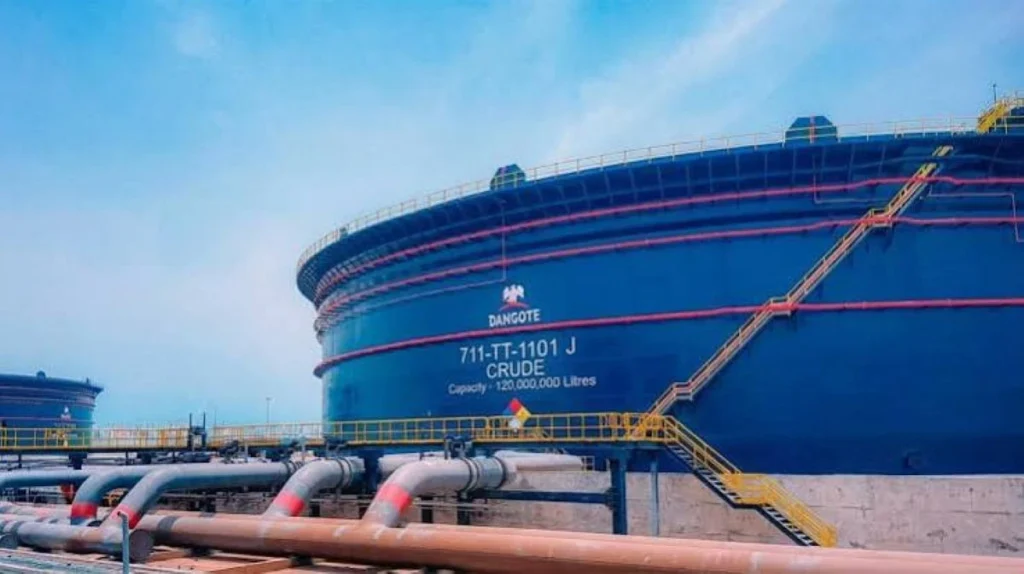
Dangote Group has signed a contract worth more than $450 million with Engineers India Limited (EIL) for the development of a planned 700,000-barrels-per-day greenfield refinery and petrochemical complex in Lamu, Kenya.
Engineers India disclosed the contract in a filing with the Indian stock exchanges on Tuesday, September 22, 2026, marking another major collaboration between the Indian engineering company and Dangote Group.
Under the agreement, EIL will provide Project Management Consultancy (PMC) and Engineering, Procurement and Construction Management (EPCM) services for the Kenyan project. (The Financial Express)
The contract represents a continuation of EIL’s relationship with Dangote after the Indian company played a similar project-management and engineering role in the development of the 650,000-barrels-per-day Dangote Petroleum Refinery and Petrochemicals complex in Lagos.
What you should know
The proposed Lamu refinery would be one of the largest refining projects ever planned in Africa.
With a planned capacity of 700,000 barrels per day, the facility would actually have a slightly higher nameplate capacity than Dangote’s original 650,000-bpd refinery in Lagos.
The project is designed as an integrated refinery and petrochemical complex, meaning it would not simply process crude oil into fuels but would also produce petrochemical products.
EIL said the Kenyan project is intended to increase fuel production in East Africa, reduce dependence on petroleum imports, strengthen regional energy security and potentially supply petroleum products to international markets. (Business Upturn)
EIL gets a repeat mandate from Dangote
The Kenyan contract builds on a relationship that was established during the construction of the Dangote refinery in Nigeria.
EIL previously served as the Project Management Consultant and EPCM consultant for the Lekki refinery and petrochemical complex.
The Indian firm is also involved in the expansion of the Nigerian facility toward 1.4 million barrels per day.
Its selection for the Kenya project therefore gives Dangote access to an engineering partner already familiar with the group’s approach to developing extremely large refining and petrochemical assets. (The Financial Express)
For EIL, the contract also adds a major international project to its order book and expands its presence in Africa’s refining and energy infrastructure market.
The Lamu refinery will be bigger than the original Nigerian project
The planned Kenyan facility is designed for 700,000 barrels per day, compared with the original 650,000-bpd design capacity of the Dangote refinery in Lagos.
That makes the Lamu project another exceptionally large single-site refining investment for Dangote.
The scale is significant because East Africa remains heavily dependent on imported refined petroleum products.
A large domestic refining facility in Kenya could therefore alter the region’s petroleum supply chain by shifting part of the market from imported finished products toward locally refined fuel.
Why Lamu matters to East Africa
Kenya occupies a strategic position in East Africa’s energy and logistics network.
A major refinery at Lamu could potentially serve not only the Kenyan market but also neighbouring countries that currently depend heavily on imported petroleum products.
This gives the project a regional dimension beyond Kenya itself.
The combination of a large refinery, petrochemical production and access to the Indian Ocean could also position Lamu as an important energy and industrial hub if the project progresses as planned.
Dangote is building a continental refining strategy
The Kenyan project is particularly significant because it follows Dangote’s emergence as one of Africa’s largest private-sector players in refining.
The group’s Nigerian refinery is already operating at large scale, while the company is pursuing an expansion that would take the facility toward 1.4 million barrels per day.
Adding a proposed 700,000-bpd refinery in Kenya would give Dangote another major refining hub on the opposite side of the African continent.
That would extend the group’s refining ambitions from West Africa into East Africa and potentially create a broader regional petroleum-products network.
The project also expands Dangote’s petrochemical ambitions
The Lamu project is not limited to fuel production.
The inclusion of a petrochemical complex means the investment is designed to capture value further down the petroleum value chain.
Petrochemicals are used in the production of plastics, chemicals, packaging, industrial materials and numerous consumer products.
For Dangote, developing refining and petrochemical capacity together allows crude oil to serve as the starting point for multiple product categories rather than relying entirely on fuel sales.
This is broadly consistent with the model being developed around the Nigerian refinery.
What EIL’s role means
EIL’s appointment does not mean the Indian company is financing the refinery or necessarily constructing every component itself.
Its role as PMC and EPCM consultant places it primarily within the project’s management, engineering and execution framework.
Project Management Consultancy involves coordinating and overseeing project execution, while EPCM covers engineering, procurement and construction management rather than necessarily taking the same fixed-price turnkey responsibility associated with a traditional EPC contractor.
That distinction is important because the more-than-$450 million contract is EIL’s consultancy mandate, not necessarily the total construction cost of the Kenyan refinery.
A major project for Indian engineering
The deal is also significant for Engineers India.
EIL is a state-owned Indian engineering consultancy operating under India’s Ministry of Petroleum and Natural Gas, with expertise across refining, oil and gas, petrochemicals and other industrial sectors.
Winning another large Dangote mandate gives the company an opportunity to export its engineering expertise into one of Africa’s largest planned energy projects. (Business Upturn)
It also strengthens the commercial relationship between Indian engineering companies and African industrial projects.
The biggest challenge will be execution
Signing the engineering and project-management contract is an important development, but it is only one stage of a project of this scale.
A 700,000-bpd refinery requires enormous capital investment, reliable crude supply, extensive infrastructure, financing, construction capability and access to large regional markets.
The project will also have to navigate land, environmental, regulatory, logistical and financing considerations before construction can translate into actual refining capacity.
That means the EIL agreement should be viewed as a significant project-development milestone rather than evidence that the refinery is already close to completion.
The project could reshape regional fuel trade
If completed at the planned scale, the Lamu refinery could reduce East Africa’s dependence on imported refined petroleum products.
It could also create a major new source of fuel supply for regional economies and potentially turn Kenya into an exporter of refined products.
For Dangote, that would create an opportunity to participate in petroleum markets beyond Nigeria and West Africa.
For East Africa, the project could potentially improve supply security while creating demand for logistics, engineering, construction, port services and other supporting industries.
What investors should watch
Several issues will determine whether the Lamu refinery ultimately delivers on its ambitions:
- Project financing and total capital cost
- Construction timeline
- Crude-oil supply arrangements
- Infrastructure around Lamu
- Refining margins
- Regional petroleum demand
- Petrochemical market conditions
- Government approvals and environmental requirements
- Competition from other refineries
- Dangote Group’s ability to finance multiple large projects simultaneously
The scale of the investment means financing and execution will remain particularly important.
The bigger picture
The $450 million-plus EIL contract represents more than another engineering agreement for Dangote Group.
It is another step in Dangote’s attempt to build a continental energy and petrochemical footprint, following the development and expansion of its flagship refinery in Nigeria.
The Lamu project would give the group a second major refining hub in Africa, this time positioned on the Indian Ocean and closer to the East African market.
For Engineers India, the deal strengthens an already established relationship with Dangote and gives the company another opportunity to apply the experience gained from one of Africa’s largest refinery projects.
The bigger question now is whether Dangote can translate the engineering and planning phase into a fully financed and operational 700,000-bpd refinery and petrochemical complex.
If the project reaches completion at the proposed scale, it would significantly expand Dangote’s role in Africa’s petroleum supply chain and potentially make Lamu one of the continent’s most important new energy hubs.