Dangote Rejects Monopoly Claims as Refinery IPO Opens to Nigerian Investors
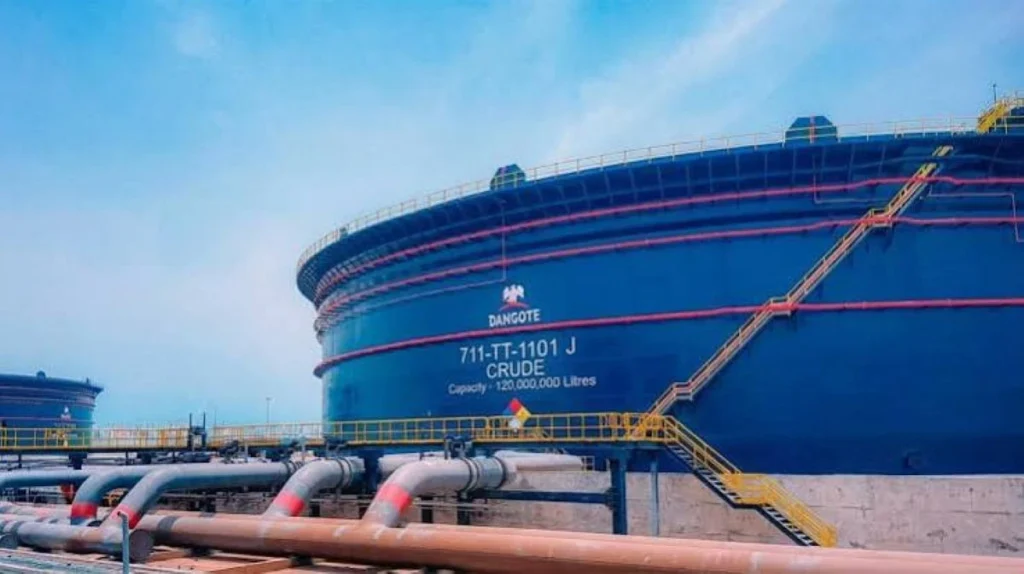
Aliko Dangote, Chairman of Dangote Group, has dismissed accusations that he is running a monopoly in Nigeria’s oil-refining sector, arguing that the opportunity to invest in the industry was available to everyone, including foreign investors.
Dangote made the comments during an interview with Al Jazeera, where he defended his position in Nigeria’s refining industry and argued that his refinery represents the result of taking on an investment opportunity that others could also have pursued. (Al Jazeera)
His comments come shortly after the Dangote Petroleum Refinery and Petrochemicals IPO opened on September 14, offering 4.1 billion ordinary shares at N525 per share to raise about N2.15 trillion.
The public offering is being positioned as a mass-market investment opportunity, with access extended to retail investors through banks and digital investment platforms. The minimum subscription is 10 shares, meaning investors can participate with N5,250 before applicable charges. (Reuters)
What you should know
The monopoly debate surrounding Dangote’s refinery is largely connected to the company’s growing importance in Nigeria’s petroleum-products market.
The refinery currently has a processing capacity of about 700,000 barrels per day and has become an increasingly important source of refined petroleum products for Nigeria and international markets.
Dangote has argued that his position is the result of private investment and entrepreneurship rather than the exclusion of competitors.
At the same time, describing an industry as competitive involves more than whether other investors theoretically had the opportunity to enter.
Market structure also depends on factors such as the number and scale of competitors, barriers to entry, access to crude, infrastructure, distribution networks and the ability of new firms to compete effectively.
Dangote says the opportunity was open to everyone
Dangote’s central argument is that the refining opportunity was not reserved for him.
He has maintained that investors, including international companies, could have committed capital to building refineries in Nigeria but did not do so at the scale required.
His refinery was built over roughly a decade at an estimated cost of $20 billion, making it one of the largest privately financed industrial projects in Africa. (Reuters)
From Dangote’s perspective, the size of the investment and the risks involved were part of the reason he was able to establish such a significant position in the sector.
The refinery has changed Nigeria’s fuel market
The refinery’s emergence has materially changed Nigeria’s petroleum-products supply structure.
For decades, Nigeria relied heavily on imported refined petroleum products despite being a major crude-oil producer.
The Dangote refinery provides domestic refining capacity on a scale that was previously unavailable from private operators.
As production has increased, the company has also begun exporting products to international markets.
Reuters reported that the refinery became a significant supplier to Europe in 2026 amid disruptions to refined-product supplies from the Middle East. It reported $1.82 billion in net profit in the first half of 2026, compared with a $476 million loss in the same period of the previous year. (Reuters)
But scale creates legitimate competition questions
Dangote’s argument that investment was available to everyone addresses one part of the monopoly debate.
The other question is whether the refinery’s scale creates market power as it becomes increasingly dominant in domestic refining.
A company does not necessarily become a legal monopoly simply because it is the largest producer.
The relevant question is whether competitors exist and whether the company has the ability to control prices or exclude effective competition within a defined market.
Nigeria’s refining landscape is therefore likely to remain closely watched as Dangote expands while other private and government-backed refining projects develop.
Capacity expansion could make the refinery even more dominant
Dangote plans to increase the refinery’s processing capacity from around 700,000 barrels per day to 1.4 million barrels per day by 2029.
The expansion is expected to cost billions of dollars and would put the facility among the world’s largest refineries. (Reuters)
At that scale, Dangote would have the capacity to process a substantial amount of crude and produce large volumes of petrol, diesel, aviation fuel and other petroleum products.
The expansion therefore makes the competitive structure of Nigeria’s downstream petroleum market even more important.
The IPO changes the ownership story
The refinery IPO introduces another important dimension to the debate.
Dangote remains the dominant shareholder, but the public offer gives ordinary Nigerians and institutional investors an opportunity to acquire shares in the business.
The offer involves 4.1 billion shares at N525 each, targeting approximately N2.15 trillion. Reuters estimates the refinery’s valuation at roughly N63 trillion, or $47.6 billion, based on the offer documentation. (Reuters)
This means the refinery is moving from being almost entirely a privately controlled industrial asset toward becoming a company with a broader shareholder base.
Retail investors are a major target
The IPO has been deliberately structured to encourage mass participation.
Investors can subscribe for as few as 10 shares, requiring N5,250 before charges.
Banks, fintech investment platforms and NGX Invest have been used to distribute the offer digitally, making it accessible to investors who may never previously have participated in a major Nigerian IPO. (Reuters)
The response has been significant.
Several digital investment platforms experienced technical difficulties as demand surged following the launch, with Reuters reporting that some platforms experienced traffic several times higher than normal. (Reuters)
The IPO could broaden ownership of the refinery
The public offer is expected to attract a diverse group of investors, including retail investors, professionals, pension funds and institutional investors.
That creates a different ownership structure from the traditional model of a large industrial company being controlled almost entirely by its founder and private shareholders.
However, buying shares does not give retail investors operational control of the refinery.
The Dangote Group remains the controlling shareholder, while public investors participate economically through their ownership of shares.
The refinery is raising capital for expansion
The IPO is not simply about giving existing owners an opportunity to sell shares.
The capital being raised is intended to support the refinery’s expansion and increase its ability to raise additional financing for future projects.
The planned expansion would take capacity to 1.4 million barrels per day.
Dangote has also discussed further expansion across Africa and potential international capital-market access for the refinery.
International markets are part of the longer-term plan
Dangote has previously indicated that the refinery could eventually pursue an international listing, potentially giving the business access to a much wider pool of global investors.
A foreign listing would also subject the company to additional regulatory, reporting and corporate-governance requirements.
That would represent another stage in the transformation of the refinery from a privately financed industrial project into a globally financed energy company.
The monopoly debate will not disappear with the IPO
The IPO changes who owns part of the refinery, but it does not automatically resolve questions about market concentration.
If Dangote remains the dominant producer after the IPO, the company’s market position will continue to be assessed based on its share of the relevant market and its relationship with competitors, suppliers and customers.
The existence of thousands or millions of shareholders does not itself make a concentrated market competitive.
Similarly, being the largest producer does not automatically establish that a company is operating unlawfully as a monopoly.
Those are separate questions that depend on market structure and applicable competition rules.
What investors should watch
For investors considering the refinery’s shares, several factors will be important:
- Refinery utilisation and production volumes
- Crude-oil supply and cost
- Refining margins
- Domestic fuel demand
- Export volumes
- Petrol and diesel pricing
- Progress toward the 1.4 million bpd expansion
- Capital expenditure requirements
- Debt and financing costs
- Profit and cash-flow growth
- Competition from other Nigerian refineries
The refinery’s enormous scale creates significant growth potential, but it also means investors are buying exposure to the highly cyclical global energy market.
The bigger picture
Dangote’s rejection of monopoly accusations comes at a defining moment for his refinery.
The company has grown from a massive private industrial project into one of the most important refining businesses in Africa, while its IPO is now opening ownership to Nigerian retail and institutional investors.
Dangote’s argument is that the opportunity to build such a refinery was available to other investors, including foreign companies, but that he was the entrepreneur who ultimately committed the capital and accepted the risks. (Al Jazeera)
The counter-question is whether the refinery’s enormous scale could eventually give it significant market power as it expands toward 1.4 million barrels per day.
The IPO adds another layer to the story by turning the refinery into a widely held public company without necessarily changing its controlling ownership.
Ultimately, the most important test will be how the refinery’s growing scale affects competition, fuel availability, prices, exports and returns to shareholders.
The Dangote refinery is no longer simply a private industrial investment. It is becoming a major participant in Nigeria’s energy market and, through the IPO, an investment asset for the Nigerian public.