
Dangote Refinery IPO Exposes Barriers to Cross-Border Investment Across Africa
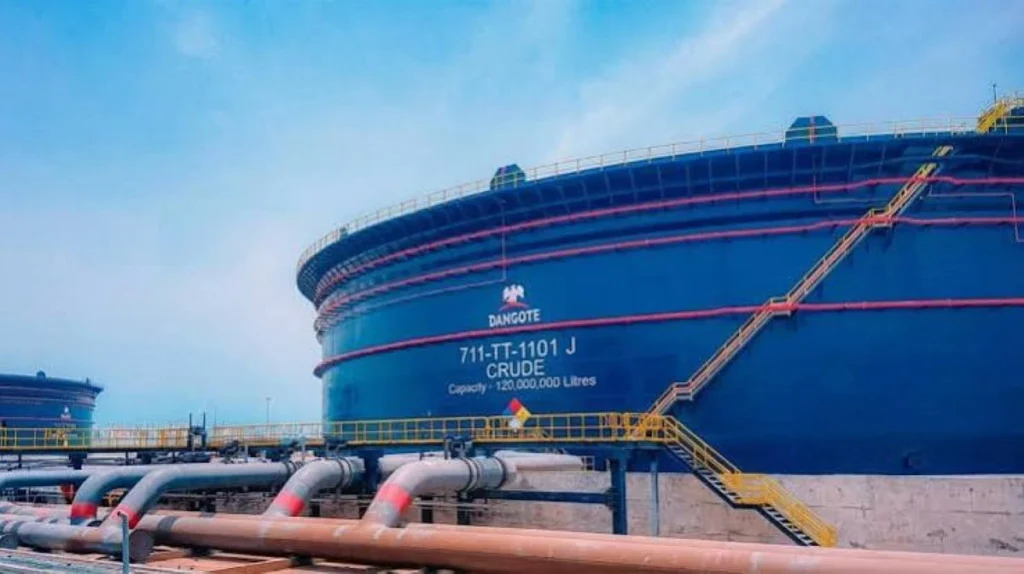
The public share offering of Dangote Petroleum Refinery has highlighted the difficulty of mobilising investment across African borders, despite growing interest in regional industrial projects and efforts to integrate the continent’s financial markets.
The $1.6 billion offering was presented as an opportunity for investors across Africa to own a stake in one of the continent’s largest industrial assets. However, the offer was not initially registered as a public offering outside Nigeria, leaving prospective investors in other countries to navigate different national regulations and limited access to authorised investment channels.
The restrictions exposed a gap between Africa’s ambition to integrate its economies and the fragmented regulatory systems governing its capital markets.
Nigeria’s Securities and Exchange Commission approved the offering within its jurisdiction, but that approval did not automatically allow the shares to be marketed publicly in other African countries. Investors elsewhere therefore needed to satisfy their own regulators’ requirements or find alternative ways to participate.
The disparity illustrates how administrative and regulatory barriers can limit the pool of capital available to finance major African businesses.
Demand outside Nigeria was reportedly substantial. Dangote said the capital markets in Kenya and Botswana alone could have fully subscribed the offering, while prospective investors in several countries faced delays in securing the necessary approvals.
The offering is part of Dangote’s wider effort to broaden ownership of the refinery and bring more individual investors into the company. Investors can purchase as few as 10 shares for N5,250, equivalent to approximately $3.96 at the exchange rate cited by Reuters.
For Nigeria, the offering has implications beyond the refinery itself. A successful listing could help deepen the domestic capital market, widen public participation in a major industrial company and demonstrate that local savings can support large-scale productive investment.
But the regional limitations also show that Nigeria cannot fully realise the benefits of African investment integration through domestic regulation alone.
Investors need clearer cross-border rules, reliable settlement systems, accessible brokerage services and a framework that allows regulators to cooperate when securities are offered in multiple markets.
Without such arrangements, businesses seeking regional investment must navigate separate approval processes, increasing the cost and complexity of fundraising. Retail investors, meanwhile, may be excluded even when they have the funds and willingness to participate.
The challenge is particularly relevant as African countries seek to expand trade and industrial development under the African Continental Free Trade Area. Trade integration can increase the movement of goods and services, but investment integration is equally important if regional savings are to finance factories, energy projects, logistics networks and other productive assets.
Dangote has indicated that future projects, including a proposed refinery in Kenya, could be listed in local markets while remaining accessible to investors across the continent. Such an approach would require greater coordination between regulators and exchanges.
The immediate lesson from the Nigerian offering is that attracting investor interest is only part of the task. Countries must also build the financial infrastructure that enables investors to participate efficiently.
For Africa to finance more of its own industrial development, it will need not only large companies and willing investors, but also capital markets that work across national boundaries.




