
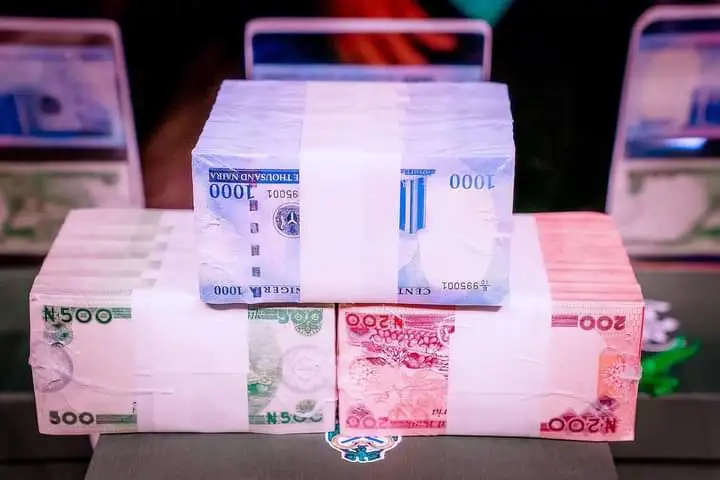
Nigeria’s cash liquidity cycle showed signs of gradual normalisation in February 2026, as currency held outside banks declined slightly to ₦5.20 trillion, reflecting easing demand for physical cash after the year-end spending surge.
According to data from the Central Bank of Nigeria (CBN), cash outside the banking system fell by 0.058% in February, while the country’s total money supply declined to ₦123.14 trillion, down from ₦123.35 trillion recorded in January.
Despite the drop in liquidity outside banks, total currency in circulation remained relatively stable at ₦5.73 trillion, indicating that a significant portion of cash is still retained within the formal banking system.
Post-holiday cash demand begins to ease
The moderation follows months of elevated withdrawals during the festive season, when households and businesses typically increase cash usage for transactions.
Data from the CBN’s Money and Credit Statistics shows that cash outside banks peaked at ₦5.41 trillion in December 2025, before easing to ₦5.21 trillion in January and further declining to ₦5.20 trillion in February.
Analysts say the trend reflects households and businesses redepositing excess cash after the holiday season, a pattern consistent with Nigeria’s seasonal liquidity cycle.
Typically, demand for physical cash rises sharply during year-end festivities, followed by a gradual return of funds into the banking system in the first quarter of the year.
Cash remains dominant despite digital growth
Historical data also shows that cash holdings rose steadily in late 2025, climbing from ₦4.65 trillion in October to ₦5.41 trillion in December, before moderating again in early 2026.
While the recent decline indicates improving liquidity recycling within the financial system, cash continues to play a dominant role in Nigeria’s economy, particularly within the informal sector where digital payment adoption remains limited.
The Central Bank of Nigeria noted that the gradual return of excess cash into banks supports financial intermediation and improves the effectiveness of monetary policy transmission.
Liquidity cycle stabilising
Financial experts say the ongoing moderation suggests Nigeria’s liquidity cycle is stabilising after the festive spending spike, even as the country continues to expand digital payment channels.
However, the latest data also underscores the entrenched role of physical cash in everyday transactions, highlighting the challenge of balancing traditional cash usage with the rapid growth of electronic and mobile payment systemsacross the country.