AFC Says Dangote Group’s Investments Critical to Unlocking Africa’s Industrial Potential
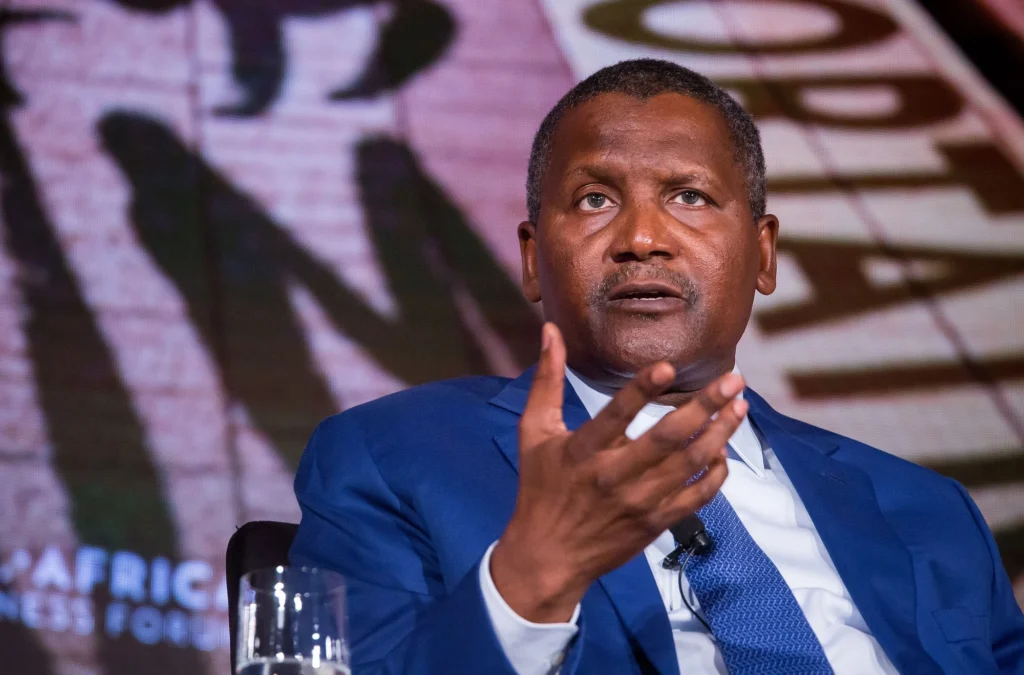
The Africa Finance Corporation (AFC) has described the Dangote Group’s sustained investments across Africa as critical to unlocking the continent’s economic potential and accelerating industrial growth.
AFC President and Chief Executive Officer, Samaila Zubairu, made the remarks at the Lagos Economic Summit themed “The Real Deal: Africa’s Greatest Investment Opportunity” on Friday, September 4, 2026, according to a statement from the Dangote Group.
Zubairu noted that recent economic reforms have helped improve foreign exchange stability, strengthen reserves and ease inflationary pressures. However, he stressed that the next phase of Africa’s economic transformation must focus more strongly on industrial expansion, productivity and employment.
What you should know
The comments highlight a shift in the economic conversation from macroeconomic stabilisation to productive growth.
For countries such as Nigeria, stabilising inflation, improving foreign exchange liquidity and strengthening external reserves are important because they create a more predictable environment for businesses and investors.
However, macroeconomic stability alone does not automatically translate into higher living standards. The next challenge is ensuring that improved stability supports greater investment in factories, infrastructure, energy, agriculture, logistics and other productive sectors.
This is where large-scale African businesses such as the Dangote Group become important.
Why Dangote’s investments matter
Dangote Group has built a significant presence across several areas of the African economy, including cement, fertiliser, refining and food-related industries.
Large industrial investments can have effects beyond the companies making them. New production facilities can create direct employment while also generating demand for local suppliers, logistics providers, contractors, professional services and other businesses.
Industrial capacity can also help reduce dependence on imported products by allowing countries to produce more goods domestically.
For Africa, where many economies continue to rely heavily on imported manufactured products, expanding domestic and regional production capacity remains an important part of long-term economic development.
From economic stability to productivity
Zubairu’s comments point to a critical distinction between stabilising an economy and growing its productive capacity.
A stable currency and lower inflation can improve business planning, but businesses still need access to reliable electricity, transportation infrastructure, financing, skilled labour and efficient supply chains.
Productivity growth is particularly important because it allows businesses to produce more goods and services with the same or fewer resources.
Higher productivity can ultimately support stronger wages, greater competitiveness and improved economic output.
Employment is the next major test
Africa’s rapidly growing population makes employment creation one of the continent’s most important economic priorities.
Industrial investments can contribute to employment both directly and indirectly. A large manufacturing or processing facility may employ thousands of workers while supporting many more jobs through suppliers and service providers.
This makes private-sector investment particularly important to governments seeking to translate economic reforms into tangible improvements in household incomes and living standards.
Why investors should pay attention
For investors, the message from AFC is that Africa’s opportunity is increasingly tied to real economic activity rather than financial markets alone.
The strongest opportunities may emerge in sectors capable of solving structural problems while also benefiting from population growth and rising domestic demand.
These include manufacturing, energy, infrastructure, agriculture, logistics, financial services and industrial processing.
Companies with the capital, scale and operational capacity to build infrastructure and production facilities across African markets could therefore play an increasingly important role in the continent’s economic transformation.
Nigeria’s opportunity
Nigeria remains central to this conversation because of its large population, extensive natural resources and significant consumer market.
The country’s recent reforms have been aimed at addressing major macroeconomic distortions, but the long-term success of those reforms will depend heavily on whether they encourage new productive investment.
If businesses can operate with greater certainty around foreign exchange, inflation, taxation, energy supply and regulation, investment decisions can become easier to make.
The challenge is therefore to convert improved macroeconomic conditions into factories, jobs, higher productivity and increased domestic production.
The bigger picture
AFC’s endorsement of Dangote Group’s investments reflects a broader argument about Africa’s development: the continent needs more capital directed toward productive assets and industrial capacity.
Macroeconomic reforms can create the foundation, but sustained industrial investment is what can turn that foundation into stronger production, employment and economic output.
For Africa, the real investment opportunity may ultimately lie in building the capacity to produce more of what its growing population consumes—and creating the jobs and businesses that come with that expansion.