
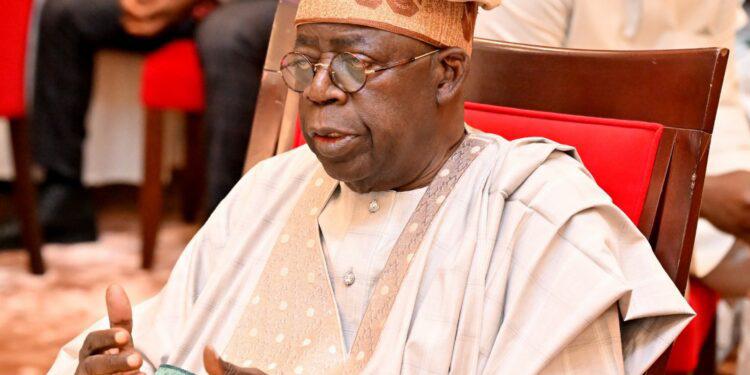
President Bola Ahmed Tinubu has instructed key members of his economic team to develop strategies to reduce the impact of the ongoing Middle East crisis on Nigerians, particularly as fuel prices continue to rise across the country. The directive was disclosed in a statement issued by presidential spokesperson Bayo Onanuga after the president addressed a civic reception in Yenagoa.
The move comes at a time when petrol prices in Nigeria have climbed to about ₦1,350 per litre, largely driven by escalating geopolitical tensions in the Middle East that have disrupted global oil supply dynamics. According to the president, his administration is aware of the economic strain these developments are placing on citizens and is already exploring policy options to ease the burden. Tinubu acknowledged the growing concerns about rising fuel costs, noting that while the government understands the hardship faced by Nigerians, it must also consider global realities shaping energy prices.
He directed the country’s economic managers, particularly officials in the Ministries of Finance and Budget as well as the Head of Service, to review economic data and develop practical measures that could help cushion the impact on households and businesses. The president emphasised that his administration remains committed to ensuring that governance translates into tangible improvements in people’s lives, including infrastructure development, job creation, improved electricity supply, and better economic opportunities.
The directive comes amid broader geopolitical developments affecting global energy markets. Recent tensions between United States and Iran have disrupted oil supply expectations and pushed global crude prices upward. However, both countries recently agreed to a two-week ceasefire in the conflict, a move that could potentially stabilise global energy markets. The agreement includes plans to reopen the Strait of Hormuz, one of the world’s most critical oil transit routes through which a significant share of global crude shipments passes each day.
The ceasefire reportedly followed a decision by Donald Trump to suspend planned military strikes, while diplomatic mediation led by Pakistan with support from China helped de-escalate tensions. These geopolitical developments have had immediate consequences for global oil prices and have also affected domestic fuel costs in oil-importing markets such as Nigeria.
During his visit to Bayelsa State, President Tinubu also commissioned several major infrastructure projects aimed at boosting economic development in the region. Among the projects inaugurated was a 60-megawatt gas-fired Independent Power Plant in Elebele, designed to strengthen electricity supply and support industrial growth. The president also commissioned the 630-metre Angiama–Oporoma Bridge, a key infrastructure project expected to improve connectivity within riverine communities in the state.
Additionally, Tinubu unveiled a new city road project in Yenagoa intended to enhance transportation and ease movement within the state capital. He noted that strong collaboration between federal and state governments is essential for accelerating development and delivering projects that directly improve the quality of life for citizens. According to him, such infrastructure investments are expected to stimulate economic activities and create new opportunities for residents and businesses.
Energy analysts note that the Strait of Hormuz remains one of the most strategically important maritime routes for global oil supply. Any disruption in the area often triggers volatility in international oil prices, which can quickly translate into higher fuel costs in countries that rely heavily on imported refined petroleum products. Iran’s geopolitical influence over the strait continues to be a major factor shaping global energy markets.
As tensions in the Middle East continue to evolve, global oil markets remain sensitive to developments in the region. For Nigeria, fluctuations in international crude prices have direct implications for domestic fuel pricing and broader economic stability, making the government’s response to the situation increasingly important for households and businesses across the country.