
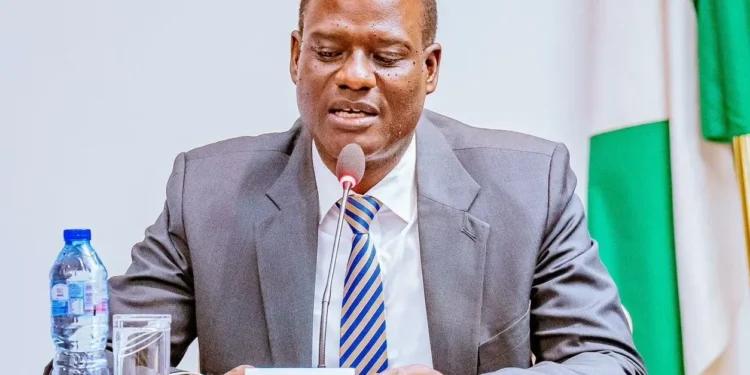
The Presidential Fiscal Policy and Tax Reforms Committee has dismissed reports suggesting that the Minister of State for Finance, Taiwo Oyedele, admitted that Nigeria’s newly introduced tax laws contained errors. The committee described the claims as misleading and a misrepresentation of the minister’s remarks.
The clarification was issued in a statement released by the committee and shared on Oyedele’s X account, following media reports published on April 11 which suggested that the minister acknowledged mistakes in the country’s new tax framework and indicated that a finance bill would be required to correct them. According to the committee, those reports distorted his comments and created the impression that the reforms were fundamentally flawed.
The committee explained that earlier references to discrepancies were linked to the complexities of the legislative process rather than errors in the tax laws themselves. It noted that issues sometimes arise during manual documentation and the multiple stages involved in drafting, reviewing, and finalising legislation. However, it insisted that such occurrences should not be interpreted as an admission that the laws themselves were defective.
Responding to the media reports, the committee said its attention had been drawn to what it described as misleading coverage claiming that Oyedele had “finally admitted errors in the new tax laws.” It added that some publications further misrepresented the minister’s comments by suggesting that Nigerians had been asked to wait for the outcome of a legislative probe. According to the committee, that interpretation was inaccurate because the legislative review process had already been concluded and certified copies of the laws had been published by the National Assembly of Nigeria since early January 2026.
The committee warned that such narratives risk confusing the public and undermining the purpose of the tax reforms, stressing that the portrayal of the minister’s comments was both misleading and unhelpful to ongoing reform efforts.
Oyedele, who also serves as chairman of the Presidential Fiscal Policy and Tax Reforms Committee, made the remarks while speaking at the 2026 annual conference of the Nigerian Bar Association Section on Legal Practice. During the event, he explained that the tax reforms were designed to address long-standing structural inefficiencies within Nigeria’s tax system, particularly disparities in the way individuals and corporate entities are taxed.
He noted that under the previous tax framework, individuals could face an effective tax rate of around 19 percent, while registering the same activity as a company could push the tax burden above 40 percent. According to him, such an arrangement runs contrary to global best practices and discouraged business formalisation.
Speaking during a fireside chat at the conference in Lagos, Oyedele also highlighted early indicators that the reforms are already producing results. The committee said the country has witnessed a sharp increase in tax registrations and the formalisation of businesses, with thousands of informal enterprises now seeking official registration daily. It also revealed that the number of individuals captured within the tax system has risen significantly, increasing from fewer than 10 million to more than 100 million taxpayers.
The committee attributed these developments to several provisions introduced under the reforms, including exemptions for small companies, higher tax thresholds for low-income earners, and tax relief measures covering essential services such as food, healthcare, education, transportation, and housing. The reforms also created the position of a Tax Ombud aimed at protecting taxpayer rights and ensuring fair treatment within the tax system.
Officials further emphasised that engagement with stakeholders remains ongoing as the government continues to refine implementation where necessary. They explained that legislative updates through finance bills are a normal part of improving tax policy over time and should not be viewed as evidence of fundamental weaknesses in the reforms.
Nigeria’s current tax reform programme began in June 2025 when Bola Ahmed Tinubu signed four major tax reform laws intended to strengthen revenue mobilisation and reduce the country’s dependence on oil income. As part of the broader reform agenda, the federal government later introduced presumptive tax rules in March 2026 targeting Micro, Small, and Medium Enterprises in an effort to expand the national tax base.
The reforms have not been without controversy. In December 2025, concerns were raised by Abdulsammad Dasuki regarding discrepancies between the gazetted versions of the tax legislation and the versions passed by lawmakers in the National Assembly, further fueling debate around the implementation of the new framework. Despite these concerns, the Presidential Fiscal Policy and Tax Reforms Committee maintains that the reforms remain intact and continue to move forward as part of Nigeria’s broader effort to modernise its tax system and improve fiscal stability.