
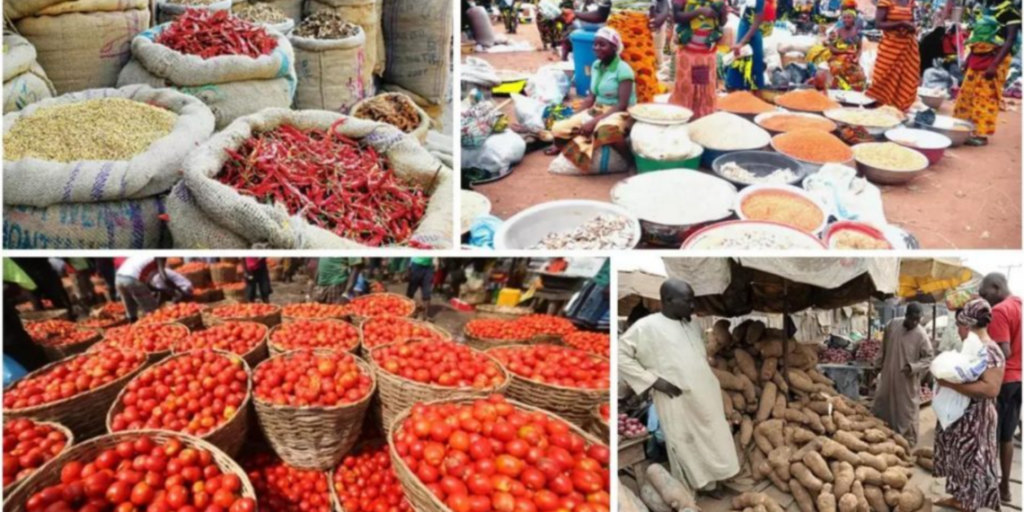
Food prices in Nigeria have remained elevated despite significant government interventions and a surge in food imports valued at N7.65 trillion in 2025, raising concerns about the effectiveness of policy measures aimed at easing the cost-of-living burden on households.
Insights from economic and development experts, supported by official data, suggest a growing disconnect between fiscal efforts and actual market outcomes, as increased spending on palliatives and imports has not translated into improved food affordability across the country.
Data from National Bureau of Statistics indicates that food and beverage imports rose sharply from N3.83 trillion in 2023 to N6.58 trillion in 2024, and further to N7.65 trillion in 2025. Despite this, food inflation remained significant, standing at 14.31% year-on-year in March 2026, contributing heavily to Nigeria’s overall inflation rate of about 15.38%.
Government spending on food-related interventions has also been substantial. According to BudgIT’s GovSpend platform, the Federal Government spent N9.74 billion on food palliatives in 2024. This followed a 2023 intervention where N5 billion was allocated to each of the 36 states and the Federal Capital Territory, totaling N185 billion for the procurement and distribution of grains such as rice.
Additionally, the government introduced a zero-duty policy on selected food imports in 2024, which temporarily reduced food inflation from 40.8% in June 2024 to 8.89% in January 2025. However, stakeholders note that the policy also led to unintended consequences, including losses for local farmers.
Experts argue that the persistence of high food prices is largely driven by structural inefficiencies rather than insufficient spending. Agricultural economist Dr. Adebayo Oladipo explained that weak supply chains, poor storage infrastructure, and significant post-harvest losses continue to undermine the impact of government interventions. According to him, increased funding alone cannot lower prices without addressing these systemic challenges.
Development expert Dr. Zainab Usman highlighted rising fuel prices as a key factor driving up transportation and logistics costs, which are passed along the food value chain from producers to consumers. Similarly, economist Ibrahim Yusuf pointed to exchange rate volatility as a major contributor, noting that both imported food and agricultural inputs are affected by foreign currency pressures.
Other experts stressed the risks associated with heavy reliance on imports. Aminu Barko of the University of Abuja noted that while imports may provide short-term relief, they expose the country to global price fluctuations and foreign exchange constraints, underscoring the need for stronger domestic production.
Security challenges in major food-producing regions also continue to limit agricultural output, while climate-related disruptions such as floods and droughts are affecting planting cycles and harvest yields. Environmental economist Hadiza Bello warned that without climate-resilient farming practices, these shocks will continue to impact food availability and pricing.
For households, the implications remain severe. With food accounting for a large share of consumer spending, rising prices are forcing many families to reduce both the quantity and quality of their meals, deepening the broader cost-of-living crisis.
Experts emphasize that addressing the issue requires coordinated structural reforms rather than short-term interventions. These include investments in mechanisation, rural infrastructure, storage facilities, and improved security in farming regions.
Recent government initiatives reflect efforts to tackle these challenges. The Federal Government has announced reforms in agricultural education and approved funding support through the Bank of Agriculture to provide affordable credit to smallholder farmers. The bank has also secured additional financing in partnership with the African Export-Import Bank to strengthen Nigeria’s agricultural value chain.
Despite these measures, analysts maintain that sustainable price stability will depend on long-term investments and comprehensive reforms aimed at improving productivity, reducing inefficiencies, and building a more resilient food system.