Nigeria’s Passenger Car Imports Surge 145.6% to N1.18 Trillion in H1 2026
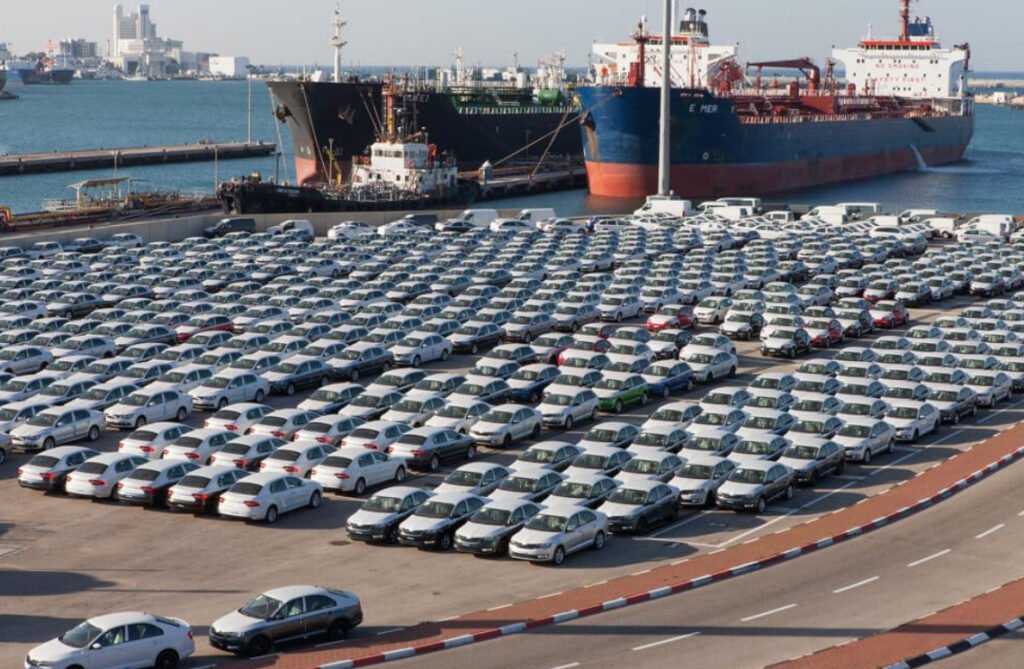
Nigeria’s passenger motor car imports surged 145.6% year-on-year to N1.18 trillion in the first half of 2026, highlighting the sharp increase in spending on imported vehicles and contributing to a broader rise in the country’s transport equipment import bill.
The figure compares with N479.26 billion recorded in the corresponding period of 2025, representing an increase of approximately N697 billion within one year.
The data is based on analysis of the Q1 and Q2 2026 Foreign Trade Statistics reports released by the National Bureau of Statistics (NBS).
Transport equipment imports rose from N1.75 trillion in the first quarter to N1.99 trillion in the second quarter, while passenger motor car imports increased from N552.34 billion in Q1 to N624.75 billion in Q2.
Overall, Nigeria imported N3.73 trillion worth of transport equipment and parts in H1 2026, up 44.2% from N2.59 trillion recorded in the first half of 2025.
What you should know
The sharp increase in passenger motor car imports means Nigerians and businesses spent significantly more on imported vehicles during the first half of 2026 than they did a year earlier.
Passenger motor car imports alone accounted for roughly 32% of the N3.73 trillion transport equipment and parts import bill during the period.
The increase is particularly significant because vehicle imports require foreign exchange. As importers pay overseas suppliers, higher vehicle import demand can translate into greater demand for US dollars and other foreign currencies.
However, the increase in the naira value of imports does not necessarily mean that the number of vehicles imported increased by 145.6%.
The reported figure is measured in naira, meaning it reflects both changes in import volumes and changes in the naira cost of imported vehicles. Changes in vehicle prices and exchange rates can therefore contribute significantly to the increase.
Passenger car imports continued to rise through Q2
The quarterly data shows that the increase was not concentrated entirely in the first three months of the year.
Passenger motor car imports rose from N552.34 billion in Q1 to N624.75 billion in Q2, an increase of about N72.41 billion, or roughly 13.1% quarter-on-quarter.
Transport equipment imports also increased from N1.75 trillion in Q1 to N1.99 trillion in Q2, representing an increase of about N240 billion.
This suggests that import activity remained strong as the year progressed rather than fading after the first quarter.
Why vehicle imports matter for Nigeria’s FX market
Vehicles are largely imported products, meaning their purchase ultimately creates demand for foreign currency.
When vehicle importers obtain dollars to pay foreign manufacturers, exporters or dealers, those transactions form part of Nigeria’s broader demand for foreign exchange.
The effect becomes particularly relevant when considered alongside Nigeria’s other major import categories, including machinery, refined petroleum products, pharmaceuticals, food, chemicals and industrial inputs.
A sustained increase in vehicle imports therefore adds another layer of demand to the FX market.
However, the impact should not be interpreted as automatically negative for the naira. What matters is the balance between foreign-currency demand from importers and the supply of dollars coming from oil receipts, foreign investment, remittances and other sources.
Higher import spending does not necessarily mean more cars
This is an important distinction when interpreting the N1.18 trillion figure.
A 145.6% increase in the naira value of passenger car imports does not mean Nigeria imported 145.6% more vehicles.
For example, if the average foreign-currency price of vehicles increased, or if the naira value of the dollar increased during the period, the total naira value of imports could rise substantially even without a comparable increase in the number of vehicles entering the country.
The NBS trade data therefore shows the value of the imports, rather than simply providing a direct measure of the number of cars purchased.
Transport equipment bill rises 44.2%
The broader transport equipment category recorded a considerably slower increase than passenger motor cars.
Nigeria’s transport equipment and parts imports rose from N2.59 trillion in H1 2025 to N3.73 trillion in H1 2026, representing a 44.2% increase.
This means the additional N1.14 trillion spent on transport equipment and parts was not driven solely by passenger cars.
The wider category includes other forms of transport equipment and parts, reflecting broader spending on transportation-related assets.
The divergence between the 145.6% growth in passenger motor car imports and the 44.2% growth in the wider transport equipment category suggests that passenger vehicles were a particularly strong component of the increase.
What could be driving the increase?
Several factors could contribute to the surge in vehicle import values.
One is pent-up demand. Nigerians and businesses that delayed vehicle purchases during periods of severe FX shortages and naira volatility may have returned to the market as access to foreign exchange improved.
Another factor is the growing cost of vehicles themselves. Global vehicle prices, freight charges, insurance and other costs can increase the naira value of imported vehicles.
The changing exchange-rate environment also matters because importers ultimately convert foreign-currency costs into naira.
There may also be increased demand from businesses, logistics operators and households replacing older vehicles or expanding their fleets.
The trade data alone, however, does not isolate the contribution of each factor.
Implications for local vehicle manufacturing
The surge in imported vehicle spending also highlights the challenge facing Nigeria’s domestic automotive industry.
Every increase in vehicle imports represents spending on foreign-produced vehicles rather than vehicles manufactured or assembled locally.
Nigeria has repeatedly sought to encourage domestic vehicle assembly and increase local content in the automotive industry.
A stronger local manufacturing ecosystem could gradually reduce the country’s dependence on imported finished vehicles while creating jobs and developing domestic supply chains for components, maintenance and related services.
However, local assembly itself still requires imported machinery, components and sometimes semi-knocked-down vehicle kits, meaning the transition away from imports is unlikely to happen immediately.
The long-term objective would therefore be to move progressively from importing finished vehicles toward producing more of the value chain domestically.
What the increase means for consumers
For Nigerian consumers, the rise in import values can translate into higher vehicle prices, particularly when combined with high financing costs, insurance expenses, maintenance costs and other ownership expenses.
Imported vehicles are also exposed to exchange-rate movements.
A stronger naira can reduce the naira cost of vehicles priced in dollars, while renewed naira weakness can quickly increase the cost of importing and replacing vehicles.
This makes the stability of the FX market increasingly important for dealers and consumers alike.
What investors and businesses should watch
The key issue going forward is whether the surge represents a temporary release of pent-up demand or the beginning of a sustained increase in vehicle imports.
Investors and businesses should watch:
- Import volumes: whether the number of vehicles entering Nigeria is actually increasing significantly.
- Exchange-rate movements: because imported vehicles are highly sensitive to FX costs.
- Vehicle prices: both international prices and domestic dealer prices.
- FX liquidity: improved dollar availability could support continued imports.
- Local assembly: increased domestic production could eventually reduce dependence on completely built-up vehicle imports.
- Consumer purchasing power: stronger household incomes and business activity could sustain vehicle demand.
The bigger picture
Nigeria’s N1.18 trillion passenger motor car import bill in the first half of 2026 is a significant increase from the N479.26 billion recorded a year earlier.
The development points to stronger spending on imported vehicles at a time when Nigeria is also attempting to improve domestic production and reduce structural dependence on imports.
The most important nuance is that the 145.6% increase is a rise in the naira value of imported passenger cars, not necessarily a 145.6% increase in the number of cars imported.
Nevertheless, the broader N3.73 trillion transport equipment and parts bill shows that transportation-related imports remain a major component of Nigeria’s external trade.
For the economy, the trend creates a balancing act: stronger vehicle demand can signal economic activity and business investment, but a heavy reliance on imported vehicles also creates foreign-exchange demand and sends a significant amount of spending overseas.
The longer-term opportunity for Nigeria is therefore not simply to import more vehicles, but to develop enough domestic automotive capacity to capture a larger share of the value created by the country’s growing demand for transportation.