
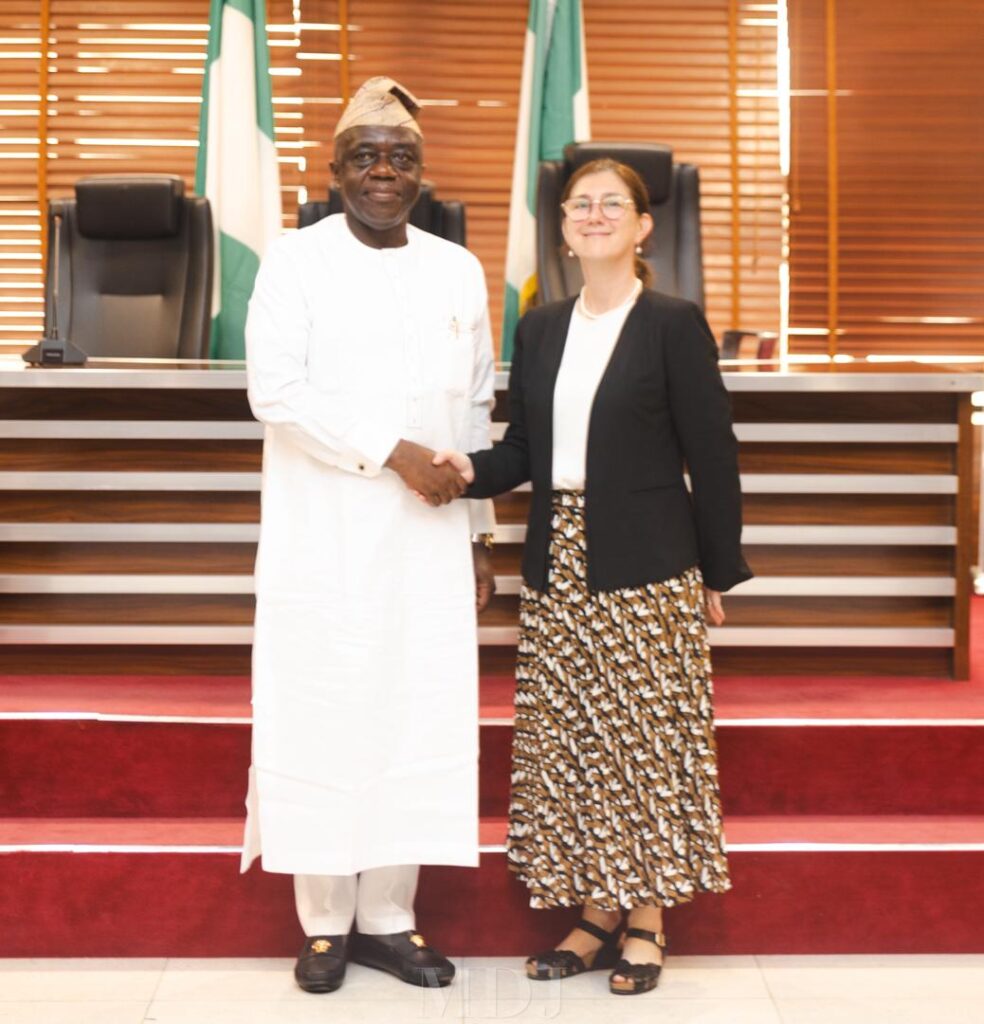
Nigeria may begin rejecting World Bank loan facilities if prolonged approval and disbursement delays continue, according to the Accountant-General of the Federation (AGF), Dr. Shamseldeen Ogunjimi, who warned that extended bureaucratic timelines could undermine the government’s willingness to proceed with future financing arrangements.
The warning was disclosed in a statement issued by the Director of Press and Public Relations at the Office of the Accountant-General of the Federation, Bawa Mokwa, following a meeting in Abuja between Nigerian officials and a World Bank delegation led by Mrs. Treed Lane.
Speaking during the courtesy visit, Ogunjimi stressed that Nigeria expects faster processing of loan approvals and fund releases, particularly because the financing facilities are loans that carry repayment obligations rather than grants or aid packages.
According to the AGF, delays extending beyond six months could force the Nigerian government to reconsider participation in certain loan arrangements, especially where such delays threaten project timelines, fiscal planning, and broader development objectives.
He emphasized that as a responsible borrower, Nigeria should not face unnecessarily prolonged approval procedures that slow down the execution of critical infrastructure and development projects. Ogunjimi therefore urged the World Bank to accelerate both the approval and disbursement processes for projects tied to Nigeria’s economic priorities.
The AGF noted that the effectiveness of development financing depends heavily on timely access to funds, especially for projects operating within strict implementation schedules. He added that delayed disbursement creates disruptions for project execution, budget coordination, and public financial management.
As part of ongoing reforms, Ogunjimi disclosed that the Office of the Accountant-General had already begun addressing several concerns previously raised by the World Bank, particularly in areas related to audit reporting and public financial management systems.
He revealed that Nigeria’s 2023 Audit Report would be submitted to the Office of the Auditor-General for the Federation within two weeks, while work on the 2024 and 2025 audit reports was already in progress.
The AGF also assured the World Bank delegation that efforts were underway to modernize the Government Integrated Financial Management Information System (GIFMIS), including replacing obsolete digital infrastructure with updated technology aimed at improving efficiency, accountability, and transparency in government financial operations.
According to him, these reforms form part of broader efforts by the Federal Government to strengthen public financial management systems and improve confidence in Nigeria’s fiscal administration framework.
In her remarks, the leader of the World Bank delegation, Mrs. Treed Lane, congratulated Ogunjimi on his recent appointment as African Chairman of the Association of Accountants-General. She also encouraged Nigeria to sustain its digitalization reforms and ensure timely submission of financial statements to the Auditor-General, describing such measures as critical to achieving seamless financial management processes.
The discussions come amid growing scrutiny over the pace of disbursement for World Bank loans approved for Nigeria in recent years. The World Bank had earlier explained why approximately six loan facilities worth nearly $2 billion, approved for Nigeria in 2024, had yet to be disbursed almost a year after approval.
The issue gained further attention following reports that the World Bank approved about $8.40 billion in fresh loans for Nigeria between June 2023 and August 2025. The financing covered 15 major projects spanning sectors such as energy, healthcare, education, governance, and rural infrastructure.
Based on official exchange rates as of August 2025, the total approved funding was valued at approximately N12.89 trillion. Of the amount, $1.95 billion came from the International Bank for Reconstruction and Development (IBRD), while $6.50 billion was sourced from the International Development Association (IDA).
The IBRD typically provides financing on commercial or near-commercial terms to middle-income and creditworthy low-income countries, while the IDA offers concessional loans and grants targeted at poorer economies.
Responding to concerns about delayed disbursement, the World Bank’s Senior External Affairs Officer, Mansir Nasir, explained that project financing from the institution is not released as a lump sum. Instead, disbursements are made in stages based on project milestones, financing structures, and fulfillment of agreed conditions between the World Bank and the borrowing country.
According to Nasir, projects financed under instruments such as Investment Project Financing (IPF) or Program-for-Results (PforR) require specific implementation benchmarks before additional funds can be released. He noted that project disbursement schedules are publicly available on the World Bank’s portal.
The concerns over delayed financing also emerge as Nigeria’s debt exposure to the World Bank continues to rise. Data from the Debt Management Office showed that Nigeria’s debt to the World Bank increased by $2.08 billion within one year, reaching $19.89 billion as of December 31, 2025, compared to $17.81 billion recorded at the end of 2024.
The growing debt profile, combined with delays in accessing approved funds, has intensified discussions around the efficiency, sustainability, and long-term implications of Nigeria’s reliance on multilateral borrowing to finance development projects.