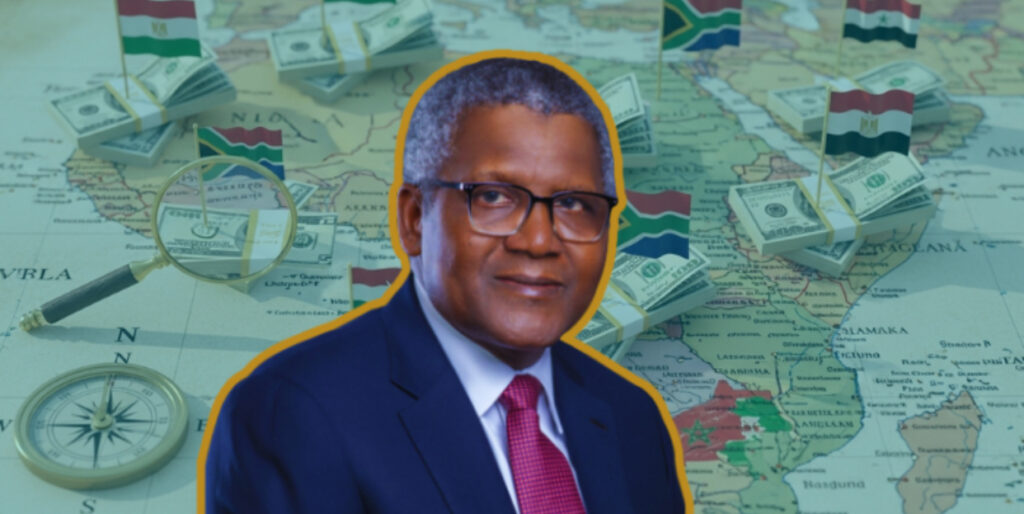
Yoweri Museveni has disclosed that he met with Aliko Dangote as discussions surrounding a proposed regional refinery project in East Africa continue to gain momentum.
Museveni revealed the meeting in a post published on his official X account on Sunday, May 17, amid growing speculation that Dangote is considering the construction of another large-scale refinery in East Africa, similar to the 650,000 barrels-per-day Dangote Petroleum Refinery located on the outskirts of Lagos, which is currently regarded as Africa’s largest refinery.
What Museveni is saying
According to Museveni, the meeting with Dangote took place in Nakasero, one of Kampala’s major commercial and administrative districts, where discussions focused on the proposed East African regional refinery initiative.
The Ugandan President reiterated Uganda’s longstanding opposition to exporting raw materials without local processing and value addition, explaining that the country deliberately delayed crude oil production for years in order to prioritise domestic refining capacity.
▪ “That is why Uganda delayed oil production because we insisted on first having a refinery. Without refining our oil, it would not make economic or strategic sense to simply export crude oil while others benefit from the finished products,” Museveni stated.
He added that Uganda welcomes the concept of a larger regional refinery because it aligns with the country’s broader objective of promoting African economic integration and shared industrial growth across the continent.
Museveni stressed that African economies can no longer afford to operate as fragmented markets if they intend to develop globally competitive industrial projects. He also noted that Uganda remains prepared to support the proposed regional refinery initiative while continuing work on its domestic refinery project in Hoima.
Get up to speed
Discussions around a potential East African refinery project first gained wider attention during the Africa Finance Corporation Summit held in Nairobi, Kenya, in April.
Speaking during a panel session alongside William Ruto and Museveni, Dangote disclosed that his company was willing to replicate a refinery similar to the Lagos facility as part of broader plans to expand refining capacity across Africa.
▪ “We are discussing that we are going to have a joint refinery in Tanga to benefit all of us. My commitment today here is that we will lead the refinery. We’ll make sure that that refinery is built within the next four to five years,” Dangote said at the summit.
Initial reports suggested the refinery could be located in Tanga and process crude oil sourced from countries including the Democratic Republic of Congo and South Sudan. However, later reports indicated that Kenya was also being considered as a potential host country for the project.
Museveni did not disclose whether Uganda itself was under consideration as the eventual site for the refinery.
What you should know
Dangote’s latest refinery ambitions in East Africa come as the billionaire continues to pursue an aggressive expansion strategy for the Lagos refinery complex.
▪ The refinery, which currently processes approximately 650,000 barrels of crude oil per day, is expected to undergo a major expansion that could increase total refining capacity to around 1.4 million barrels per day, potentially positioning it among the largest refining facilities globally.
▪ To support the planned expansion, African Export-Import Bank has reportedly underwritten $2.5 billion as part of a broader $4 billion syndicated term loan package.
▪ Earlier in February, the Dangote Group also signed a $400 million agreement with XCMG Construction Machinery to accelerate construction and expansion activities linked to the refinery project.
Beyond fuel refining, the planned expansion is also expected to significantly increase polypropylene production capacity from roughly 900,000 metric tonnes annually to about 2.4 million metric tonnes per year, strengthening the refinery’s role within Africa’s industrial and manufacturing value chain.