
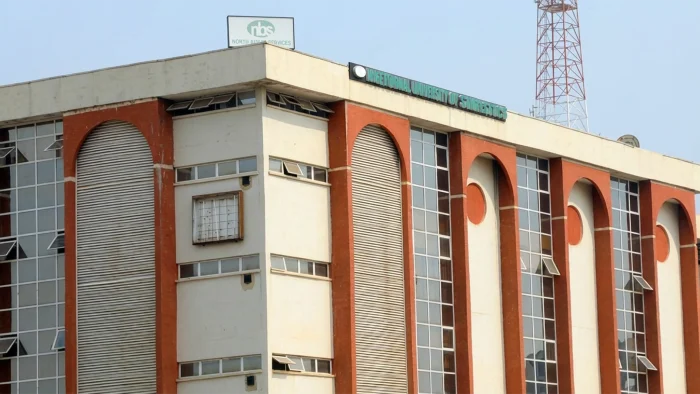
Lagos State has emerged as the most indebted state in Nigeria, with a combined domestic and external debt profile of N1.22 trillion and $1.17 billion respectively as of the fourth quarter (Q4) 2025.
This was disclosed by the National Bureau of Statistics (NBS) in its latest report on Nigeria’s domestic and external debt for Q4 2025, released on Monday.
According to the report, Nigeria’s total public debt rose from N153.29 trillion ($103.94 billion) in Q3 2025 to N159.28 trillion ($110.97 billion) in Q4 2025, representing a 3.90 percent increase on a quarter-on-quarter basis.
A breakdown of the figures showed that total external debt stood at N74.43 trillion, while domestic debt accounted for N84.85 trillion during the period under review. External debt made up 46.73 percent of total public debt, while domestic debt constituted 53.27 percent.
At the subnational level, Lagos recorded the highest domestic debt at N1.22 trillion, followed by Rivers State with N378.81 billion. Jigawa State reported the lowest domestic debt at N1.60 billion, while Ondo State followed with N8.42 billion.
In terms of external obligations, Lagos again ranked highest with $1.17 billion, followed by Kaduna State with $684.29 million. The Federal Capital Territory recorded the lowest external debt at $26.80 million, while Zamfara State followed with $41.93 million.
Other states with notable debt profiles include Bauchi State, which recorded $220.57 million in external debt and N156.05 billion domestically; Delta State with $63.42 million external and N248.83 billion domestic debt; and Enugu State with $99.88 million external and N157.60 billion domestic debt.
The rising debt burden has continued to generate concern among analysts and citizens, particularly as debt servicing obligations place increasing pressure on government revenues.
Earlier in the month, the World Bank warned that Nigeria’s growing debt service costs are limiting its capacity to fund critical infrastructure projects. The institution noted a decline in capital spending to 1.0 percent of GDP from 1.3 percent in 2024, attributing the drop to rising debt servicing costs crowding out investment.
Similarly, the International Debt Report 2025 highlighted the need for Nigeria and other Sub-Saharan African countries to pursue export diversification and fiscal reforms to address mounting debt challenges. The report noted that debt levels and servicing burdens continue to rise even as economic growth remains subdued, pointing to ongoing fiscal pressures.
Analysts say addressing the country’s debt trajectory will require a combination of prudent borrowing, improved revenue generation, and structural reforms to ensure long-term fiscal sustainability.