Euro Holds Near N1,548 as Naira Strengthens on Rising FX Reserves
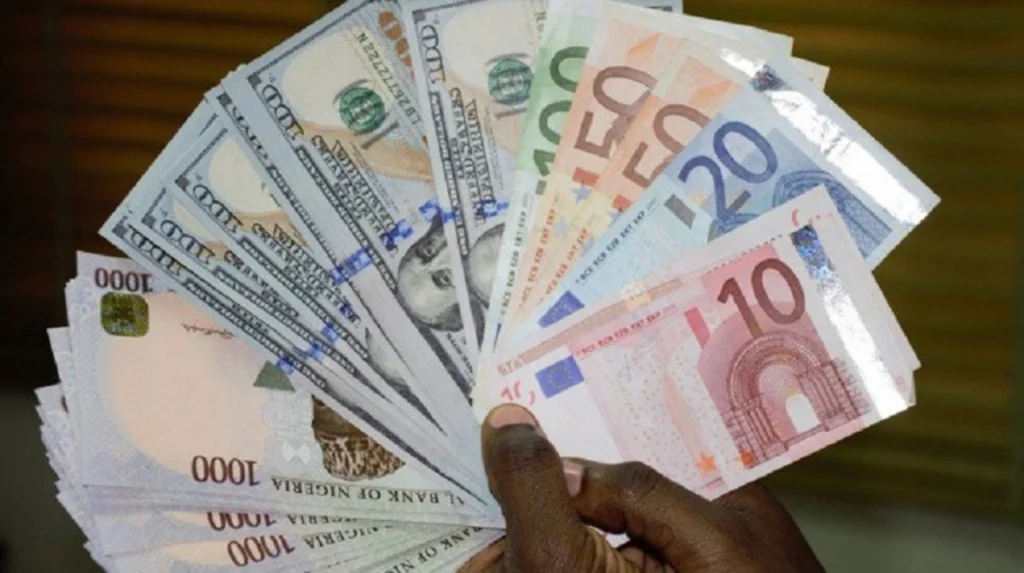
The Euro-to-Naira exchange rate has remained relatively stable around N1,548/€, supported by the recent appreciation of the Nigerian naira and improving foreign exchange liquidity.
The naira’s recent strengthening has reduced arbitrage opportunities between the official and parallel foreign exchange markets, encouraging more transactions through formal channels such as the Nigerian Autonomous Foreign Exchange Market (NAFEM).
The premium that previously characterised the parallel market against major trading currencies, including the euro and US dollar, has also narrowed. The parallel-market exchange rate for the euro was recently around N1,560/€, indicating a relatively small gap with the official market.
Rising Reserves Strengthen CBN’s FX Position
Nigeria’s gross external reserves have risen above $54 billion, fluctuating between $54.08 billion and $54.13 billion. The level represents the country’s highest reserve position since December 2008.
The substantial accumulation of external reserves has strengthened the Central Bank of Nigeria’s (CBN) capacity to influence foreign exchange market conditions and support the naira’s exchange rate against major currencies, including the euro and US dollar.
The stronger reserve position effectively gives the CBN a larger foreign exchange buffer to manage periods of volatility, provide liquidity to legitimate corporate and retail demand, and reduce pressure arising from speculative activity.
The improvement in the CBN’s FX position has also supported market sentiment, with stronger reserve buffers reducing incentives for speculative hoarding and helping to reinforce expectations of greater exchange-rate stability.
Euro Steady Against Dollar Ahead of US CPI
Meanwhile, the euro has remained relatively stable against the US dollar at around $1.16 during Thursday’s European trading session.
The EUR/USD pair has traded within a narrow range of approximately $1.1566 to $1.1641 for the third consecutive week, reflecting cautious positioning among investors ahead of fresh US inflation data.
Market direction is expected to become clearer following the release of the United States’ August Consumer Price Index (CPI).
The report is expected to show relatively stable inflation, with headline and core CPI projected at 3.4% and 2.4% year-on-year, respectively.
A stronger-than-expected inflation reading could influence expectations around US monetary policy and provide support for the dollar, potentially putting pressure on the euro. Conversely, softer inflation could weaken the dollar and provide further support for the euro.
For Nigerian currency markets, movements in both the EUR/USD pair and the naira’s domestic exchange rate will remain important determinants of the euro-naira cross rate in the near term.