
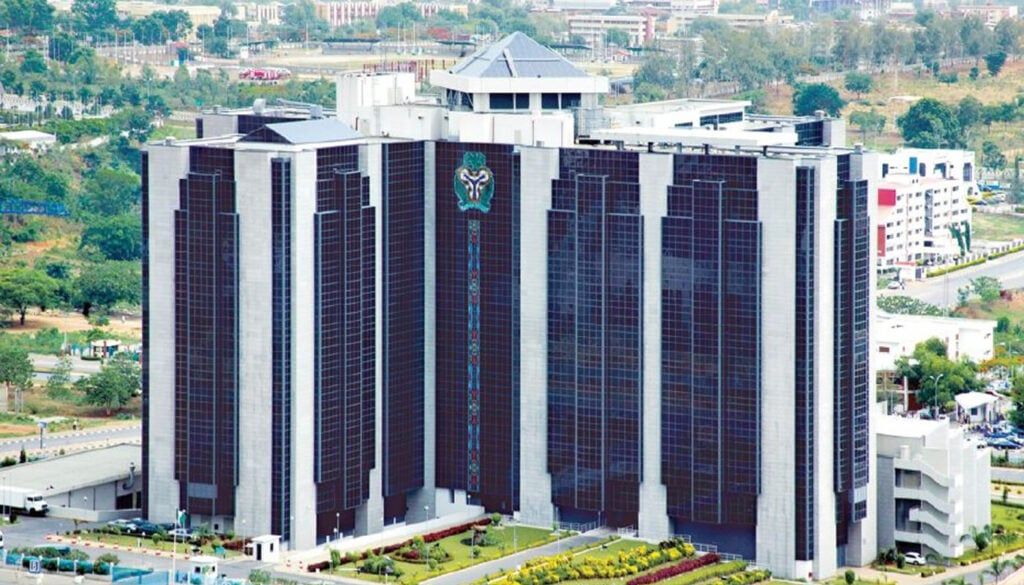
The Monetary Policy Committee (MPC) of the Central Bank of Nigeria has retained the Monetary Policy Rate (MPR) at 26.5% following the conclusion of its 305th meeting held in Abuja.
The decision was announced by Olayemi Cardoso after the MPC meeting, which was attended by 11 committee members.
The committee also voted to retain all other key monetary policy parameters, signalling a cautious policy stance as the apex bank continues to monitor inflationary pressures and broader macroeconomic developments.
What the apex bank is saying
According to the CBN, the decision to maintain the benchmark interest rate was driven by persistent inflationary pressures and the need to sustain macroeconomic stability across the economy.
▪ The Cash Reserve Ratio (CRR) was retained at 45% for commercial banks and 16% for merchant banks.
▪ The Standing Facilities Corridor was maintained at +50/-450 basis points around the MPR.
▪ The apex bank also retained the CRR on non-TSA public sector deposits at 75%.
The MPC noted concerns over the recent rise in inflation, particularly the consecutive increases recorded in March and April 2026, which continue to shape the committee’s monetary policy decisions.
Get up to speed
Nigeria’s inflation trend has remained a major factor influencing monetary policy decisions despite signs of moderation earlier in the year.
▪ Nigeria’s headline inflation rate rose to 15.69% in April 2026 from 15.38% recorded in March, according to recent data released by the National Bureau of Statistics.
▪ At its 304th meeting held in February 2026, the MPC reduced the MPR by 50 basis points from 27% to 26.5%, marking the first rate cut after a prolonged monetary tightening cycle.
▪ The Liquidity Ratio was also retained at 30% during the February meeting.
▪ The Standing Facilities Corridor had similarly been maintained at +50/-450 basis points around the MPR.
The CBN has continued to balance inflation control with efforts aimed at supporting exchange-rate stability and broader economic recovery.
More insights
Financial analysts had largely projected that the MPC would maintain rates at current levels amid persistent domestic and global economic uncertainties.
▪ Analysts speaking on Nairametrics’ Drinks and Mics podcast had predicted a hold decision ahead of the meeting.
▪ Inflationary pressures, exchange-rate volatility, and geopolitical risks were cited as major reasons for maintaining the current policy stance.
▪ The recent surge in global crude oil prices alongside renewed geopolitical tensions in the Middle East has heightened concerns over imported inflation risks.
▪ Market participants also expect the CBN to remain cautious while assessing the impact of previous tightening measures on inflation, credit conditions, and broader economic activity.
The decision to maintain rates suggests that the MPC remains focused on containing inflation while carefully monitoring the effect of elevated borrowing costs on businesses, investments, and economic growth.
What you should know
The Monetary Policy Rate serves as the benchmark interest rate through which the CBN influences lending rates, liquidity conditions, inflation management, and broader macroeconomic stability.
▪ Higher interest rates typically increase borrowing costs for businesses and consumers but may also help moderate inflationary pressures.
▪ Nigeria’s private sector and business community have repeatedly expressed concerns over high borrowing costs and their implications for investment, expansion, and productivity growth.
▪ Inflation remains one of the CBN’s major policy concerns despite moderating from the elevated levels recorded in 2025.