CBN mops up N4.72 trillion through OMO auctions as short-term bills approach 20%
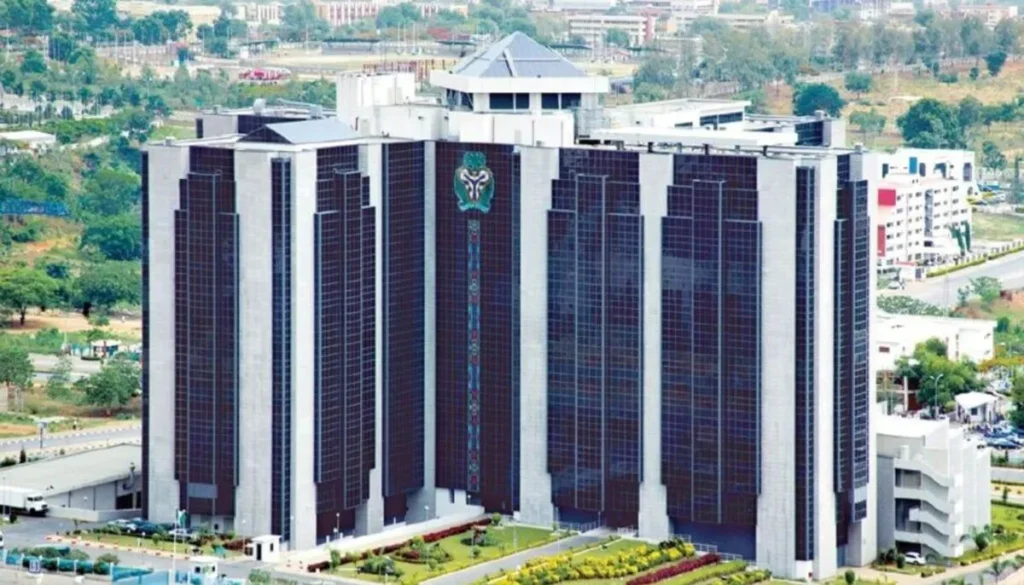
The Central Bank of Nigeria (CBN) withdrew a combined N4.72 trillion from the banking system through four Open Market Operations (OMO) auctions conducted between August 26 and 27, 2026, as the apex bank continued its aggressive liquidity-management operations.
The four auctions attracted strong investor demand across the 96-day, 97-day, 132-day and 152-day instruments, with yields on the shorter-dated securities approaching 20%.
However, the liquidity impact of the OMO sales was largely offset by funds flowing back into the banking system through primary market repayments.
According to CBN financial data, approximately N4.3 trillion returned to the banking system through primary market repayments over the same two-day period.
Across the four OMO auctions, the CBN offered a combined N2 trillion, meaning the amount ultimately sold was significantly higher than the amount initially offered.
What you should know
OMO bills are short-term securities issued by the CBN to manage liquidity in the banking system.
When the CBN sells OMO bills to banks and other investors, money is effectively moved out of the banking system and into the central bank’s securities, reducing the amount of liquidity available for lending and other transactions.
This makes OMO auctions an important monetary-policy tool, particularly when the CBN wants to absorb excess naira liquidity and strengthen the transmission of its monetary policy stance.
The latest figures show that the CBN is willing to accept significantly more subscriptions than the initial offer when investor demand is strong.
However, the simultaneous repayment of maturing or existing primary-market instruments means the net liquidity impact can be considerably smaller than the headline OMO withdrawal suggests.
N4.72 trillion withdrawn against N2 trillion offered
The four OMO auctions conducted between August 26 and 27 had a combined offer size of N2 trillion.
Despite this, the CBN ultimately withdrew approximately N4.72 trillion through the transactions.
This means the amount absorbed was more than twice the combined amount initially offered.
The unusually large allotment highlights the strength of investor appetite for short-term government securities at prevailing yields.
With fixed-income instruments offering attractive returns, banks, institutional investors and other market participants have continued to show strong demand for government and central-bank securities.
Shorter tenor yields approach 20%
One of the notable features of the latest auctions was the relatively high yield on the shorter-dated OMO paper.
Yields approached the 20% level, reflecting the broader high-interest-rate environment in Nigeria’s money market.
Investors have increasingly had to balance the opportunity to lock in elevated fixed-income yields against expectations for future monetary-policy changes, inflation and liquidity conditions.
For the CBN, higher OMO yields can also make sterilisation more attractive to investors because they provide competitive returns compared with alternative short-term instruments.
N4.3 trillion flows back into the system
Despite the aggressive OMO mop-up, approximately N4.3 trillion flowed back into the banking system through primary market repayments during the same two-day period.
This creates an important distinction between gross liquidity withdrawal and net liquidity impact.
On a gross basis, the CBN withdrew N4.72 trillion through OMO transactions.
But when the N4.3 trillion in primary-market repayments is considered, the immediate net liquidity effect across the two channels was much smaller.
In simple terms, the CBN was simultaneously taking liquidity out through OMO sales and putting liquidity back through repayments.
This suggests that the headline N4.72 trillion mop-up should not be interpreted as a corresponding N4.72 trillion reduction in banking-system liquidity.
Strong demand remains a defining feature of the market
The latest auction results also reinforce a trend that has characterised Nigeria’s fixed-income market throughout 2026: very strong demand for short-term government and central-bank securities.
Investors have consistently shown willingness to commit large amounts of capital to Treasury Bills and OMO instruments, particularly when yields remain elevated.
The strong appetite is partly driven by institutional investors seeking relatively attractive naira-denominated returns while managing liquidity and portfolio risk.
It also reflects the importance of fixed-income securities in the current Nigerian investment environment, where high yields have competed strongly with equities for institutional capital.
Implications for the banking system
Aggressive OMO operations can influence the amount of liquidity available to commercial banks.
When banks invest more heavily in CBN securities, less money remains immediately available for other uses, including lending and purchases of financial assets.
This can contribute to tighter money-market conditions and reinforce the CBN’s broader monetary-policy stance.
However, the substantial primary-market repayments recorded alongside the OMO auctions demonstrate that liquidity conditions depend on several operations occurring simultaneously.
The CBN’s overall liquidity management therefore cannot be assessed by OMO sales alone.
Implications for investors
For investors, the latest auction reinforces the attractiveness of short-term fixed-income instruments in the current environment.
Yields approaching 20% provide investors with an opportunity to earn relatively high returns on short-duration naira assets.
However, investors also need to consider the possibility of falling yields if monetary conditions ease.
A decline in interest rates would generally make existing higher-yielding securities more valuable, potentially creating capital gains for investors holding them before yields fall.
Conversely, investors who lock money into longer-duration instruments could face reinvestment and interest-rate risks if market conditions change.
The bigger picture
The latest OMO transactions show that the CBN continues to actively manage liquidity through frequent market operations.
The N4.72 trillion gross withdrawal is significant, but the simultaneous N4.3 trillion primary-market repayment means the overall liquidity picture is more nuanced.
The combination of large investor subscriptions, substantial CBN allotments and elevated yields indicates that demand for short-term naira securities remains exceptionally strong.
Going forward, investors will be watching the CBN’s OMO and Treasury Bills auctions closely for signals about liquidity conditions, interest rates, inflation expectations and the direction of monetary policy.