CBN Allots N12.82 Trillion in September OMO Auctions as Stop Rates Fall 170bps
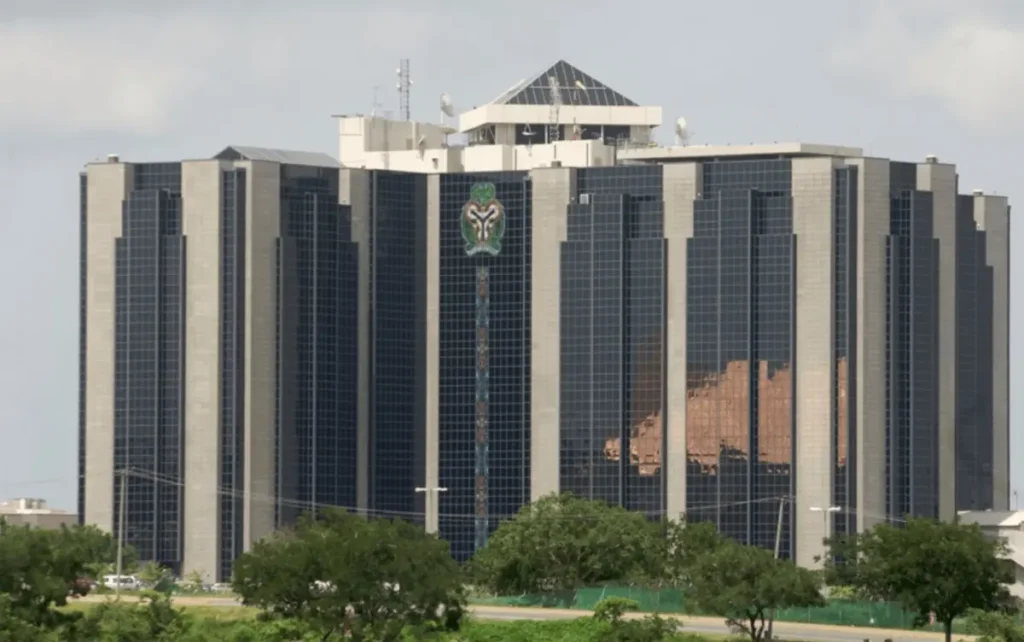
The Central Bank of Nigeria (CBN) allotted approximately N12.82 trillion through four Open Market Operations (OMO) auctions in September 2026, as investors submitted a combined N20.58 trillion in bids against only N3.9 trillion offered.
Analysis of the CBN’s OMO auction results for September 1, 8, 16 and 24 shows that investor demand remained strong throughout the month, even as the yields accepted by the central bank declined significantly.
The most notable development was the sharp reduction in OMO stop rates, with accepted rates on longer-tenor instruments falling by approximately 170 basis points during the month.
The combination of strong demand and falling rates points to a significant shift in Nigeria’s short-term fixed-income market, particularly as investors adjusted their expectations following changes in the monetary-policy environment.
What you should know
OMO auctions are one of the CBN’s tools for managing liquidity in the financial system.
The central bank sells securities to investors, effectively absorbing liquidity from the market for the duration of the instruments.
Investors submit bids indicating how much they are willing to invest and the interest rate they require.
The stop rate is the rate at which the CBN accepts bids.
When stop rates fall, it generally means investors are willing to accept lower yields on the securities being offered.
The September auctions therefore produced an interesting combination: demand remained high even as the return investors demanded declined.
Investors bid N20.58 trillion for N3.9 trillion offered
The level of oversubscription was substantial.
Across the four September auctions, investors submitted approximately N20.58 trillion in bids against only N3.9 trillion offered by the CBN.
That means total bids were roughly 5.3 times the amount offered.
The CBN ultimately allotted approximately N12.82 trillion, significantly above the combined initial offer figure.
This indicates that the central bank accepted substantial additional demand beyond the amounts initially advertised at the auctions.
However, the amount allotted should not be interpreted as N12.82 trillion of new money entering the financial system.
OMO securities represent financial-market transactions in which the CBN absorbs liquidity from investors in exchange for securities.
Stop rates fall sharply during September
The major story from the September auctions was the decline in accepted yields.
Longer-tenor OMO stop rates fell by approximately 170 basis points between the beginning and end of the month.
A 170-basis-point decline is equivalent to 1.70 percentage points.
For investors, this means the return available on comparable newly issued OMO securities declined materially within just four weeks.
For the CBN, lower stop rates can reduce the cost of sterilising liquidity through OMO operations.
Strong demand despite lower yields
Normally, investors demanding lower yields can indicate that they expect interest rates to fall further or that they have strong demand for the available securities.
The September data suggests both factors may have been relevant.
Investors continued submitting large bids even as the CBN reduced the rates at which it was willing to accept funds.
This may indicate that investors were increasingly comfortable locking funds into short-term government-backed instruments at lower yields, particularly amid expectations of a changing monetary-policy environment.
However, bid volumes alone cannot reveal the precise motivation of investors.
Individual investors and institutions may have different liquidity requirements, portfolio mandates and expectations.
Monetary-policy changes provide important context
The decline in OMO rates occurred against a changing Nigerian interest-rate environment.
The CBN recently reduced its Monetary Policy Rate from 26.5% to 23%, representing a 350-basis-point reduction.
The policy adjustment changed the reference point for short-term rates and altered expectations across Nigeria’s fixed-income market.
The decline in OMO stop rates is therefore consistent with a broader repricing of short-term financial assets.
However, OMO yields do not automatically move one-for-one with the MPR.
Actual auction rates depend on market liquidity, investor demand, expected inflation, government securities yields and the CBN’s own liquidity-management objectives.
What falling OMO yields mean for investors
For fixed-income investors, falling stop rates mean that newly invested funds are earning less than they would have at the beginning of the month.
An investor buying an instrument at a 17% annualised rate, for example, would receive a higher yield than an investor buying a comparable instrument at 15.3%.
This creates an incentive for investors to consider the timing of their investments and the expected direction of interest rates.
Existing investments with higher locked-in yields can become relatively more attractive when new securities are issued at lower rates.
At the same time, investors expecting further rate cuts may accept lower current yields because they anticipate that future opportunities could offer even lower returns.
Implications for banks and liquidity
OMO operations are closely connected to banking-system liquidity.
When the CBN sells securities, investors use available funds to purchase them, reducing the liquidity available in the financial system.
The central bank can therefore use OMO operations to manage excess liquidity and influence short-term money-market conditions.
The size and frequency of the September operations show that liquidity management remained an important part of the CBN’s monetary-policy operations even as its policy rate moved lower.
This is why a reduction in the MPR should not automatically be interpreted as meaning that liquidity conditions will immediately become loose.
The CBN still has other instruments available to influence liquidity.
Falling yields could affect Treasury bills and other securities
OMO securities compete with other short-term fixed-income instruments, including Treasury bills.
When OMO yields decline, investors may reassess the relative attractiveness of Treasury bills, government bonds, bank deposits and other fixed-income opportunities.
If the repricing becomes broad-based, it can push yields across the domestic fixed-income market lower.
That would reduce borrowing costs for issuers over time, although the actual effect depends on demand, government borrowing requirements and inflation expectations.
For savers, however, declining yields can mean lower returns on relatively low-risk investments.
The inflation question remains important
One of the key issues investors must consider is the relationship between nominal yields and inflation.
A 15% annual return may appear attractive in nominal terms, but its real value depends on how quickly consumer prices are rising.
If inflation falls alongside interest rates, investors may still maintain positive real returns.
If interest rates decline faster than inflation, however, the real return available from fixed-income securities can become less attractive.
This makes the CBN’s inflation trajectory an important factor in determining how far OMO yields can fall without significantly changing investor behaviour.
The bigger picture
The September OMO auctions reveal a Nigerian fixed-income market undergoing a significant repricing.
Investors submitted N20.58 trillion in bids against N3.9 trillion offered, while the CBN ultimately allotted approximately N12.82 trillion across four auctions.
The standout development was not simply the size of the allotments but the fact that investor demand remained strong even as longer-tenor stop rates fell by about 170 basis points.
This suggests that investors were willing to accept lower returns for CBN OMO instruments, while the central bank was able to absorb substantial liquidity at progressively cheaper rates.
For banks and institutional investors, the trend means portfolio returns from short-term securities could continue to decline if the repricing persists.
For the CBN, lower OMO rates could make liquidity-management operations less expensive.
The key question going forward is whether the decline in OMO yields represents the beginning of a sustained lower-rate environment or simply a repricing phase as the market adjusts to the CBN’s new monetary-policy framework.
Either way, September’s auctions mark a clear shift from the high-yield environment that characterised Nigeria’s fixed-income market earlier in 2026.