
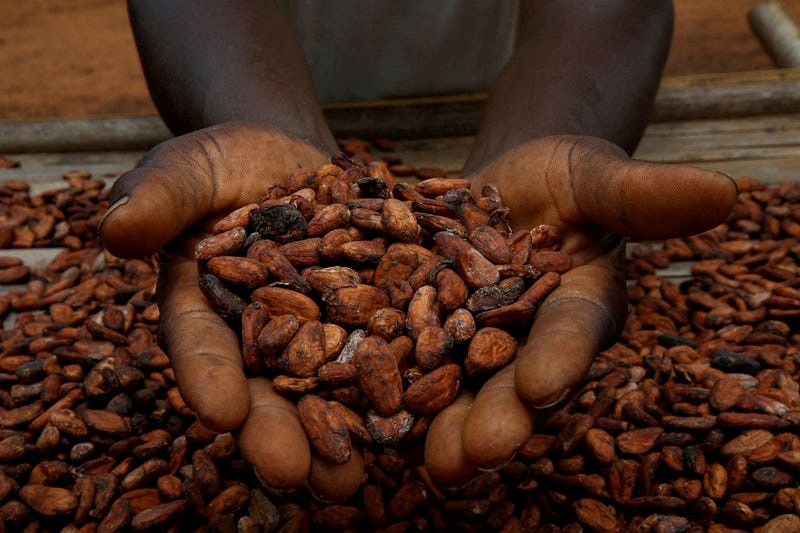
The Bank of Industry (BOI) has launched an €85 million long-term financing facility to expand Nigeria’s domestic cocoa processing industry, reduce dependence on raw cocoa bean exports, and promote value addition across the country’s cocoa value chain.
The initiative was announced by the Managing Director and Chief Executive Officer of BOI, Dr. Olasupo Olusi, during the Cocoa Value Addition Summit 2026 held in Abuja.
Speaking at the summit, themed “From Bean to Brand,” Olusi said the bank’s financing strategy is designed to encourage the processing of agricultural commodities within Nigeria rather than exporting raw materials with limited economic value.
The facility is being funded through a partnership between the European Investment Bank (EIB) and the Bank of Industry, with additional support from the European Union under its Global Gateway initiative.
What the data is saying
The €85 million financing programme signals a strategic shift towards developing Nigeria’s agro-processing industry by increasing domestic manufacturing capacity within the cocoa sector.
Rather than exporting raw cocoa beans—which generate relatively lower revenues—the initiative seeks to support businesses involved in producing higher-value products such as cocoa butter, cocoa liquor, cocoa powder, chocolate, and other finished cocoa-based products.
Expanding local processing has the potential to significantly increase export earnings because processed cocoa products command higher prices in international markets than unprocessed beans. It also creates greater opportunities for industrialisation, employment generation, technology transfer, and increased domestic manufacturing.
The partnership with the European Investment Bank and support from the European Union’s Global Gateway initiative provides access to long-term development financing, which is often critical for processors seeking to invest in modern production facilities, equipment, and supply chain infrastructure.
For Nigeria, strengthening domestic cocoa processing aligns with broader government efforts to diversify export earnings away from crude oil while increasing value addition in the agricultural sector.
More insights
Nigeria is one of Africa’s leading cocoa producers, but like many commodity-exporting countries, it still exports a significant portion of its cocoa in raw form.
Processing more cocoa locally allows the country to retain a greater share of the value created along the global supply chain. Beyond higher export revenues, local processing stimulates related industries such as packaging, logistics, manufacturing, retail, and food production.
The financing programme also complements ongoing efforts to expand non-oil exports and improve Nigeria’s trade balance by increasing exports of manufactured agricultural products rather than primary commodities.
If successfully implemented, increased domestic processing could enhance the competitiveness of Nigerian cocoa products in global markets while providing farmers with a more stable and diversified market for their produce.
What you should know
The Bank of Industry (BOI) is Nigeria’s foremost development finance institution, providing long-term financing to businesses across key sectors of the economy, including manufacturing, agriculture, and small and medium-sized enterprises.
The European Investment Bank (EIB) is the lending institution of the European Union and supports sustainable development projects globally through long-term financing.
The Global Gateway is the European Union’s international investment strategy aimed at supporting infrastructure, digital transformation, energy, transport, education, and sustainable economic development in partner countries.
The €85 million cocoa processing facility reflects Nigeria’s growing focus on moving “from bean to brand”—producing more finished and semi-finished cocoa products locally to increase export value, create jobs, strengthen industrial capacity, and reduce reliance on the export of raw agricultural commodities.