
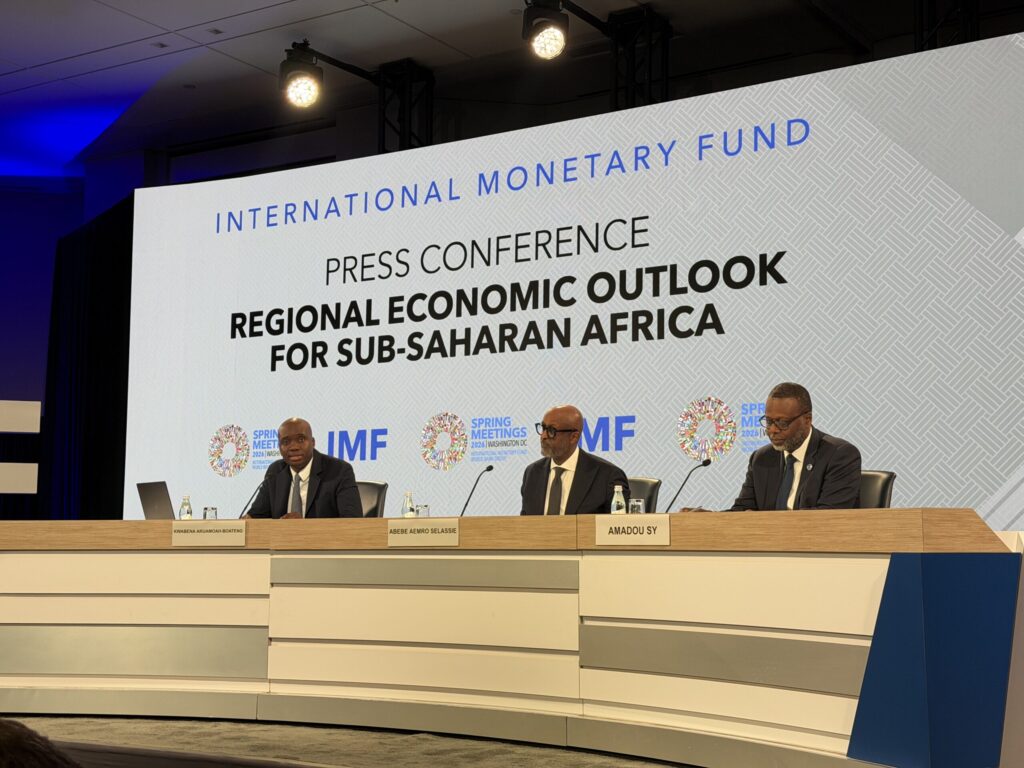
The International Monetary Fund (IMF) has advised Nigeria to implement targeted and disciplined policy measures to cushion the growing cost-of-living pressure triggered by the ongoing tensions in the Middle East.
Speaking during the presentation of the April 2026 Regional Economic Outlook for Sub-Saharan Africa, the Director of the IMF’s African Department, Abebe Aemro Selassie, outlined a series of short-, medium-, and long-term policy steps Nigeria should take to manage rising economic pressures.
According to the IMF, Sub-Saharan Africa entered 2026 with its strongest economic momentum in more than a decade, but geopolitical tensions in the Middle East have triggered a surge in energy prices, fertilizer costs, and shipping expenses, while global financial conditions are tightening.
Reforms strengthening growth but raising price pressures
The IMF acknowledged that recent economic reforms implemented in Nigeria—including exchange-rate adjustments, the removal of fuel subsidies, and tighter monetary policy—helped support stronger growth and improved fiscal balances in 2025.
However, the Fund noted that these reforms have also increased the economy’s exposure to global shocks, allowing rising international costs to feed more directly into domestic prices.
As a result, Nigerian households are now facing heightened inflationary pressure, particularly through higher transport and food costs.
Key policy recommendations for Nigeria
To manage these pressures, the IMF advised Nigeria to focus on protecting vulnerable households while maintaining economic reforms.
The Fund’s policy guidance includes several key measures:
Targeted social protection:
Authorities should provide time-bound and targeted support to households most affected by rising food and transportation costs rather than introducing broad subsidies.
Maintaining tight monetary policy:
The IMF stressed the importance of credible and disciplined monetary policy to anchor inflation expectations and prevent secondary inflationary effects.
Sustaining structural reforms:
Despite social pressures, the Fund warned Nigeria against reversing key reforms, arguing that policy consistency is critical for long-term economic stability.
Prioritizing government spending:
The government should protect essential social and development expenditures even while operating under fiscal constraints.
Improving revenue generation:
The IMF also urged authorities to strengthen tax administration, reduce unnecessary exemptions, and leverage digital technologies to expand domestic revenue.
Managing debt and fiscal pressures
On public debt strategy, the IMF advised Nigeria to maintain borrowing levels aligned with its repayment capacity while continuing efforts to manage liabilities effectively.
The Fund recommended extending debt maturities and reducing refinancing risks in order to strengthen fiscal sustainability.
At the same time, policymakers must balance the need for economic stabilization with worsening welfare conditions, especially as higher fuel prices and transport costs ripple through the economy following the escalation of the Middle East crisis.
Regional outlook weakens amid global uncertainty
Across Sub-Saharan Africa, the IMF reported that economic prospects remain fragile despite recent improvements.
Regional growth accelerated to 4.5% in 2025, the fastest pace in more than a decade, supported by improved policy frameworks and favorable global conditions.
However, the outlook for 2026 has weakened, with growth now projected to slow to 4.1%, while inflation across the region is expected to rise to around 5%.
External vulnerabilities are also increasing, particularly among oil-importing countries, which face deteriorating trade balances and higher living costs.
While oil-exporting nations such as Nigeria could benefit from higher global crude prices, the IMF warned that price volatility remains a significant risk.
Declining foreign aid adds further pressure
Another challenge highlighted by the IMF is the structural decline in official development assistance, commonly known as foreign aid.
Unlike previous cycles where aid reductions were temporary, the Fund noted that current cuts appear more permanent, raising concerns about funding for essential services such as healthcare, food assistance, and social protection programs.
The IMF also warned that rising global food prices could trigger serious humanitarian consequences, particularly in fragile regions such as the Sahel, where economies already face supply chain disruptions, higher fertilizer costs, and transport constraints.
IMF calls for strategic reforms across Africa
To navigate these challenges, the IMF urged African governments to adopt more strategic and efficient economic policies.
Key priorities include:
- Reallocating public spending toward high-impact sectors
- Improving efficiency in government expenditure
- Accelerating structural reforms to stimulate private sector growth
- Expanding regional trade through the African Continental Free Trade Area
The IMF concluded that while the economic resilience built in recent years provides an important buffer, maintaining those gains will require strong policy discipline, targeted interventions, and sustained reform momentum as governments confront rising socio-economic pressures.