
NEC Approves Additional ₦130 Billion for Police Training Institutions, Bringing Total Commitment to ₦230 Billion
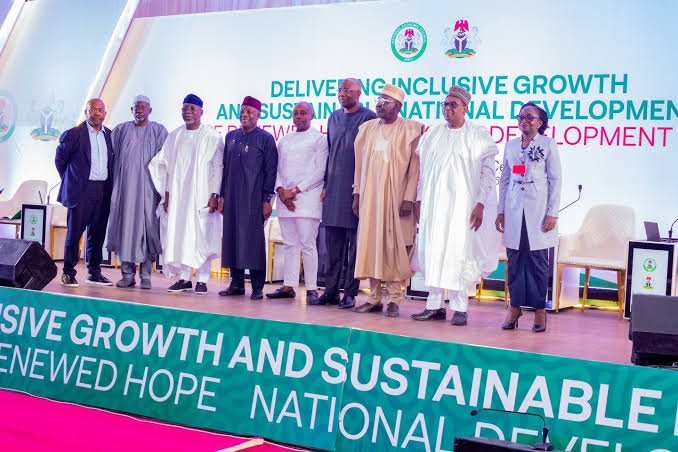
The National Economic Council has approved an additional ₦130 billion for the rehabilitation and modernisation of police training institutions across Nigeria, bringing the total funding commitment for the programme to ₦230 billion.
The approval was reached during the Council’s 162nd meeting, chaired by Vice President Kashim Shettima, as the Federal Government prepares for expanded police recruitment and ongoing efforts to establish state police.
The additional allocation follows an earlier ₦100 billion commitment towards the rehabilitation of police training institutions, increasing the overall funding envelope to ₦230 billion.
The programme is expected to strengthen the infrastructure and institutional capacity required to train additional police personnel, particularly as Nigeria prepares for the proposed recruitment of 50,000 new officers.
The decision also comes amid ongoing constitutional and legislative developments surrounding the establishment of state police, which would require additional training capacity and institutional support across the country.
Rehabilitation work underway at 13 locations
Presenting an update to the Council, the NEC ad hoc committee responsible for the rehabilitation of police training institutions disclosed that work had commenced at 13 locations nationwide.
Approximately 30 per cent of the rehabilitation projects had been completed at the time of the meeting.
The additional ₦130 billion is expected to support the continuation and expansion of ongoing works, improve training facilities and strengthen the capacity of the institutions to accommodate increased recruitment.
The rehabilitation programme is particularly important because expanding police personnel numbers without corresponding improvements in training infrastructure could place additional pressure on existing institutions.
The proposed recruitment of 50,000 officers would require adequate accommodation, classrooms, training equipment, operational facilities and other institutional resources.
The additional funding commitment is therefore intended to address some of the infrastructure requirements associated with expanding the country’s policing capacity.
NEC endorses $850 million in proposed World Bank financing
Beyond the police training allocation, the Council also endorsed two major development programmes involving proposed World Bank financing of approximately $850 million.
The proposed financing is intended to support disaster preparedness, climate resilience and early childhood development across Nigeria.
The disaster-related programme is expected to strengthen the country’s ability to prepare for and respond to emergencies, particularly in communities exposed to flooding, climate-related risks and other environmental disasters.
Improving disaster preparedness has become increasingly important as several parts of Nigeria continue to experience environmental and infrastructure challenges that affect livelihoods, agriculture, housing and economic activities.
The early childhood development programme is expected to support interventions aimed at improving outcomes for young children, including access to essential services and development opportunities.
However, the Council’s endorsement of the proposed financing should not be interpreted as evidence that the World Bank has already disbursed the funds. Further project preparation, financing approvals and implementation arrangements remain necessary.
Broader economic concerns
The Council also reviewed Nigeria’s economic performance, including developments in inflation, government revenue and the broader macroeconomic environment.
The meeting came as the country continued to experience a gradual decline in headline inflation, although the improvement in inflation figures has not fully translated into relief for households facing high food prices and living costs.
The Federal Government has continued to emphasise the importance of improving economic stability while strengthening public institutions and expanding infrastructure investment.
The latest decisions reflect two different aspects of that agenda: strengthening internal security institutions through additional funding and mobilising development financing for climate resilience and early childhood development.
For the police training programme, the immediate challenge will be ensuring that the additional funding translates into completed facilities, improved training standards and greater institutional capacity.
The proposed World Bank-backed programmes will similarly depend on effective project preparation, financing approvals and implementation.
Ultimately, the ₦230 billion police training commitment and the proposed $850 million development financing package represent significant funding initiatives, but their economic and social impact will depend on how effectively the resources are deployed.




