
Nigeria Produces 65 Million Tonnes of Yam but Captures Less Than $1 Million in Export Earnings
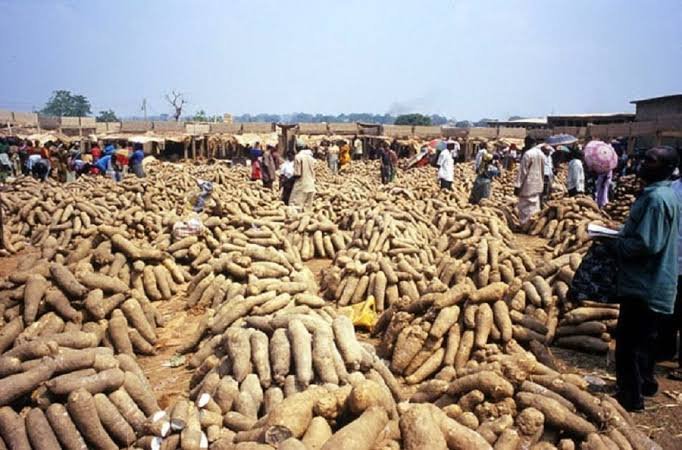
Nigeria remains the world’s largest yam producer, accounting for approximately two-thirds of global output, but its dominance in production has translated into remarkably limited participation in the international yam trade.
The country produced approximately 65.3 million metric tonnes of yam in 2024, representing about 70.7 per cent of global production, according to figures from the Food and Agriculture Organization cited in recent industry analysis.
Despite this enormous production capacity, Nigeria exported only 1,621 tonnes of yam valued at approximately $465,000, highlighting the country’s inability to convert its agricultural advantage into substantial foreign exchange earnings.
The contrast is particularly striking when compared with Ghana, which produces significantly less yam but generated approximately $62 million from yam exports in 2025, according to the Ghana Export Promotion Authority.
Ghana’s export performance demonstrates that international agricultural competitiveness depends on more than the volume of crops produced. Processing, grading, packaging, certification, transportation and reliable market access are equally important.
Nigeria’s yam industry continues to face significant weaknesses across these areas, preventing farmers and exporters from taking advantage of established demand in international markets.
The country has a substantial domestic production base, with yam cultivation concentrated across several states in the Middle Belt and other agricultural regions.
However, production growth has not been matched by the development of the infrastructure required to preserve quality and move large quantities of the commodity efficiently to overseas buyers.
A major problem is the absence of adequate cold-chain infrastructure, modern packaging facilities and efficient port-handling arrangements.
Yam is a perishable agricultural commodity, meaning that poor storage conditions, excessive handling and transportation delays can cause deterioration before the produce reaches its destination.
For exporters, this creates financial risks because international buyers require consistent quality, proper grading and reliable delivery schedules.
Nigeria’s export procedures also involve multiple regulatory agencies, increasing the time and cost required to complete shipments.
Exporters may need to navigate separate processes involving customs, quarantine, inspection, certification and other documentation requirements.
This contrasts with Ghana’s more centralised export arrangement, where key agencies operate through a coordinated export packhouse system that allows exporters to complete several requirements at one location.
The difference gives Ghanaian exporters a logistical advantage, particularly when dealing with perishable agricultural products that require efficient handling.
Nigeria’s agricultural productivity is another constraint.
Although yam production increased from approximately 56.35 million tonnes in 2020 to 65.32 million tonnes in 2024, the improvement was driven largely by an expansion in harvested land rather than a significant increase in average yields.
The harvested area expanded from approximately 7.13 million hectares in 2020 to 8.02 million hectares in 2024, while average yields increased only marginally from 7.9 tonnes per hectare to 8.15 tonnes.
Nigeria’s average yield also remained below the global average of approximately 8.45 tonnes per hectare and significantly below Ghana’s reported yield of about 18.8 tonnes per hectare.
The figures indicate that Nigeria has considerable room to improve production efficiency through better planting materials, improved farming methods and greater access to agricultural technology.
Farmers have identified the limited availability of improved planting materials as one of the constraints affecting productivity.
The International Institute of Tropical Agriculture has developed leaf-bud cutting technology that can help produce improved yam planting materials, but access remains limited among many smallholder farmers.
Planting methods also influence output. Traditional mound planting can accommodate approximately 4,000 plants per hectare, while ridge planting can support higher planting densities of up to 10,000 plants per hectare under suitable conditions.
Improving access to mechanisation, quality planting materials and effective farm management could therefore increase output without relying entirely on expanding cultivated land.
Nigeria’s failure to establish a commercially competitive yam export industry also has a history of policy and regulatory difficulties.
In 2017, the Federal Government launched an ambitious yam export programme with a target of generating approximately $10 billion annually from international sales within four years.
The programme was intended to strengthen the yam value chain, create employment and improve non-oil export earnings.
An initial shipment of 72 tonnes was flagged off to the United States and the United Kingdom in June 2017, but transportation and handling problems exposed weaknesses in the export supply chain.
The initiative also encountered legal complications because the 1989 Export Prohibition Act listed yam tubers and their derivatives among prohibited export products.
Industry representatives have said the legal restriction discouraged some institutions and development organisations from supporting commercial yam export activities.
The legislation was reportedly repealed in December 2025, removing an important legal obstacle to the export of yam products.
However, the removal of the restriction does not automatically resolve the infrastructure, financing and production challenges facing the industry.
The demand for Nigerian yam exists across West Africa and among diaspora consumers in markets such as the United States, the United Kingdom and Canada.
The challenge is to supply these markets consistently while meeting quality requirements and keeping transportation and handling costs competitive.
For Nigeria, a stronger yam export industry could create opportunities across farming, processing, packaging, storage, logistics and international distribution.
It could also improve rural employment and diversify foreign exchange earnings beyond crude oil and other traditional export commodities.
The country already possesses the production advantage required to become a major international supplier. What remains missing is the coordinated export infrastructure and commercial organisation needed to convert that advantage into revenue.
Until these weaknesses are addressed, Nigeria’s position as the world’s largest yam producer will continue to deliver far less international trade value than its production capacity suggests.




