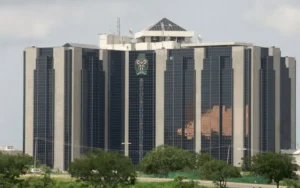
FTSE Frontier 50 Adds Six Nigerian Stocks as Nigeria Prepares to Rejoin Frontier Market
FTSE Russell has added six Nigerian companies to the FTSE Frontier 50 Index, placing some of the country’s largest listed businesses in one of the major benchmarks for frontier-market equities as Nigeria prepares to return to Frontier Market status after a three-year absence.
The development was contained in FTSE Russell’s September 2026 semi-annual review of the FTSE Frontier 50 Index, dated September 4, 2026.
The six Nigerian companies are:
- Aradel Holdings
- Dangote Cement
- FirstHoldCo
- Guaranty Trust Holding Company (GTCO)
- MTN Nigeria Communications
- Zenith Bank
FTSE Russell said the changes will take effect after the close of trading on Friday, September 18, with the revised index becoming effective from Monday, September 21, 2026. This is the same date Nigeria’s reclassification from Unclassified to Frontier Market status becomes effective.
What you should know
The FTSE Frontier 50 is a more concentrated benchmark within FTSE Russell’s broader Frontier Index Series.
Under FTSE Russell’s methodology, the index comprises the 50 largest companies by full market capitalisation that are constituents of the FTSE Frontier Index. It is therefore narrower than the broader Frontier Index Series, which includes large-, mid- and small-cap companies.
This distinction is important because 10 Nigerian companies are being classified as large-cap constituents of the broader FTSE Frontier Index Series, but only six have made it into the more selective Frontier 50.
The other four large-cap Nigerian companies — Nestlé Nigeria, Nigerian Breweries, Presco and Stanbic IBTC Holdings — will be part of the broader FTSE Frontier Index Series but not the Frontier 50.
Nigeria’s six Frontier 50 representatives
The six companies provide exposure to several of Nigeria’s most important sectors.
FirstHoldCo, GTCO and Zenith Bank give the index significant exposure to Nigerian financial services.
MTN Nigeria represents telecommunications, while Dangote Cement provides exposure to industrial goods and Aradel Holdings represents the energy sector.
Their inclusion therefore gives international investors a concentrated route into some of Nigeria’s largest and most prominent listed businesses.
Why the inclusion matters
Index inclusion can increase a company’s visibility among international investors.
FTSE Russell’s indices are designed to serve as performance benchmarks and as a basis for index-tracking investment products. As a result, companies included in major benchmarks can become more visible to fund managers whose investment strategies are linked to those indices.
This could potentially increase demand for the six Nigerian stocks, particularly from investors who benchmark their portfolios against frontier-market indices.
However, index inclusion does not automatically mean billions of dollars will flow into the stocks.
The actual impact will depend on the amount of capital tracking the index, the individual weights assigned to Nigerian companies, available liquidity and broader international appetite for Nigerian assets.
Nigeria is returning to the global frontier-market universe
The development marks another step in Nigeria’s reintegration into global equity benchmarks.
FTSE Russell moved Nigeria from Frontier Market to Unclassified status in September 2023, after persistent difficulties faced by international investors in accessing foreign exchange and repatriating investment proceeds.
Nigeria’s path back began in 2025 when FTSE Russell placed the country on its watch list following improvements in FX liquidity, capital repatriation and market accessibility.
In April 2026, FTSE Russell confirmed that Nigeria would return to Frontier Market status, with September 21 set as the effective date. The process was subsequently subjected to additional assessment following Nigeria’s transition from a T+2 to T+1 settlement cycle in June.
FTSE Russell later confirmed that it had found no material settlement, operational or funding problems that would prevent the reclassification from proceeding.
The six stocks are already major NGX companies
The companies entering the Frontier 50 are not obscure or newly listed businesses. They are among the most valuable companies on the Nigerian Exchange.
As of early September, Dangote Cement, MTN Nigeria and FirstHoldCo ranked among the largest companies on the NGX by market capitalisation, while Aradel Holdings, Zenith Bank and GTCO also ranked among the exchange’s major companies.
Their strong market performance in 2026 also means Nigeria’s return to the frontier universe is occurring at a time when several of its largest stocks have recorded substantial gains.
This could make the reclassification particularly significant for international investors reassessing Nigerian equities.
Visibility is only the first step
For Nigeria, returning to the FTSE Frontier Market classification is important, but the bigger challenge is converting international visibility into actual capital formation.
Greater index visibility can help Nigerian companies attract attention from foreign institutional investors, but investors will ultimately consider factors such as:
- FX liquidity and ability to repatriate capital
- Market liquidity
- Corporate earnings
- Valuations
- Dividend prospects
- Regulatory stability
- Settlement infrastructure
- Macroeconomic conditions
The reclassification therefore improves Nigeria’s position, but it does not remove the factors investors use when deciding whether to allocate capital.
What investors should watch
The immediate focus will be on the behaviour of the six stocks around the September 21 effective date.
Investors will be watching for changes in trading volumes, liquidity and foreign participation as the new index composition takes effect.
The longer-term question is whether Nigeria’s return to the FTSE Frontier universe can help broaden international participation in the country’s capital market.
For the six companies, sustained inclusion will also depend on maintaining the characteristics that make them attractive within the frontier-market universe, including size, liquidity and investability.
The bigger picture
Nigeria’s inclusion of six companies in the FTSE Frontier 50 represents more than an index reshuffle. It is part of the country’s broader return to international equity benchmarks after three years in the Unclassified category.
The six stocks — Aradel Holdings, Dangote Cement, FirstHoldCo, GTCO, MTN Nigeria and Zenith Bank — will give international investors concentrated exposure to some of Nigeria’s largest listed companies.
The development could improve the visibility and investability of Nigerian equities, but the ultimate benefit will depend on whether the country can sustain improvements in FX accessibility, market infrastructure, liquidity and investor confidence.
For Nigeria’s capital market, September 21 is therefore not simply the date a new index composition becomes effective. It marks an opportunity to turn renewed global recognition into deeper foreign participation, stronger liquidity and greater access to long-term capital.