
The Federal Government has expressed its intention to draw lessons from Indonesia’s rise to a $1.4 trillion economy as Nigeria pursues its own goal of becoming a $1 trillion economy under the administration of President Bola Tinubu.
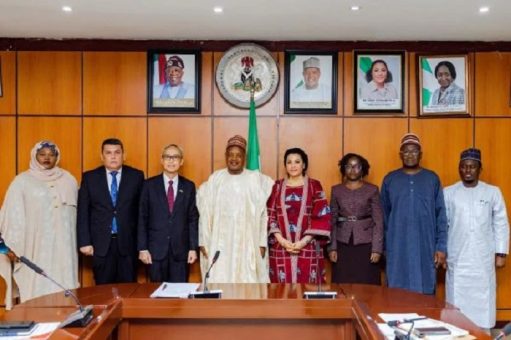
This was disclosed in a statement by the Ministry of Budget and Economic Planning following a courtesy visit by Indonesia’s Ambassador to Nigeria, Bambang Suharto, to the ministry in Abuja. The meeting focused on strengthening economic cooperation and expanding development partnerships between both countries.
Speaking during the visit, the Minister of Budget and Economic Planning, Senator Abubakar Bagudu, said Nigeria is keen to understand the policies and strategies that enabled Indonesia to achieve rapid and sustained economic growth. He noted that Indonesia’s development trajectory offers valuable insights as Nigeria implements its 2026–2030 National Development Plan.
“Indonesia remains a key partner for Nigeria as we pursue inclusive growth and economic transformation. There is significant potential for both countries to benefit from shared knowledge, investment, and innovation,” Bagudu said.
He emphasised that Nigeria’s ambition to build a $1 trillion economy would depend largely on increased private sector participation and stronger collaboration with international partners.
Also speaking, the Minister of State for Budget and Economic Planning, Dr. Doris Uzoka-Anite, highlighted the cultural and economic similarities between Nigeria and Indonesia, noting that these commonalities provide a strong foundation for deeper cooperation. She called for enhanced engagement and knowledge exchange to translate opportunities into tangible economic outcomes.
Earlier, the Permanent Secretary of the ministry, Deborah Odoh, described the visit as a reflection of the longstanding relationship between both countries. She noted that Indonesia’s achievements in governance, economic diversification, and public sector reforms present practical lessons Nigeria can adapt.
According to her, the engagement creates an avenue to strengthen institutional collaboration and identify effective strategies to drive inclusive growth, particularly among countries in the Global South.
In his remarks, Ambassador Suharto reaffirmed Indonesia’s commitment to expanding bilateral relations with Nigeria across key sectors. He pointed to ongoing collaboration in agriculture, including livestock development projects in Sokoto and Kebbi states, as well as increasing partnerships in the pharmaceutical sector, where Indonesian firms are establishing manufacturing facilities in Lagos.
He also disclosed plans to broaden cooperation into strategic industries such as aviation and maritime services, including the development of Maintenance, Repair, and Overhaul (MRO) facilities aimed at positioning Nigeria as a regional hub.
Both countries agreed to deepen their cooperation frameworks, expand investment opportunities, and strengthen partnerships to support sustainable economic growth.