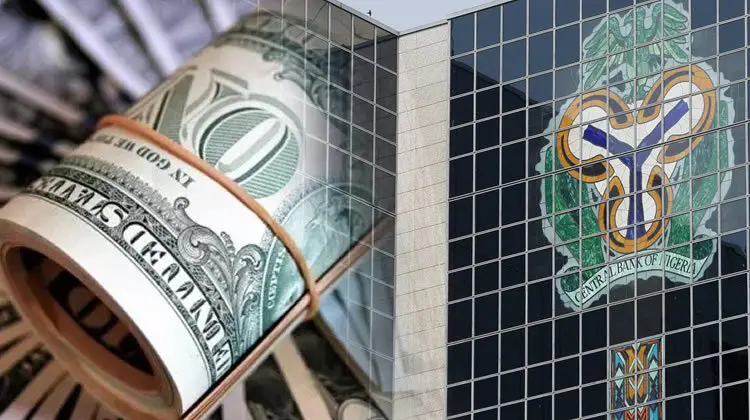

FMDQ Exchange recorded N426.51 trillion ($310.18 billion) in total market turnover between January and July 2026, driven by strong activity across foreign exchange transactions, Open Market Operations (OMO) Bills, fixed-income securities and other money market instruments.
The figure was disclosed in the FMDQ Newsletter Edition 141 – July 2026, which highlighted the Exchange’s market turnover performance for the first seven months of the year.
The seven-month turnover represents a significant increase from the N249.18 trillion recorded between January and April 2026, with the Exchange generating an additional N177.33 trillion in turnover during the subsequent three months.
What you should know
FMDQ Exchange’s turnover has accelerated significantly in the second quarter of 2026, reflecting heightened activity across Nigeria’s financial and money markets.
The Exchange recorded N676.71 trillion in total market turnover for the full year 2025, meaning the N426.51 trillion recorded in the first seven months of 2026 already represents a substantial portion of last year’s full-year activity.
What the data is saying
N426.51 trillion recorded in seven months
Total market turnover between January and July 2026 stood at N426.51 trillion, equivalent to approximately $310.18 billion.
The turnover was driven largely by activity in the foreign exchange market, OMO Bills and other fixed-income and money market instruments.
N177.33 trillion added in three months
Between January and April 2026, FMDQ Exchange recorded N249.18 trillion in turnover.
However, an additional N177.33 trillion was generated between May and July, representing a sharp acceleration in market activity during the three-month period.
Strong pace compared with 2025
FMDQ Exchange recorded N676.71 trillion in total turnover throughout 2025.
With N426.51 trillion already recorded by July 2026, the Exchange has generated roughly 63% of its entire 2025 turnover in just seven months.
The strong pace suggests that elevated activity across Nigeria’s FX, fixed-income and money markets could push full-year 2026 turnover significantly higher if the current trend continues.