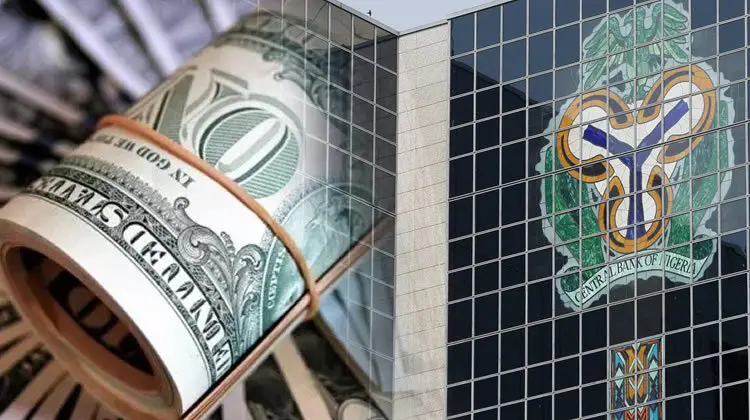

Nigeria’s foreign exchange market recorded its strongest weekly performance of 2026, with total transactions in the FX Spot and Derivatives markets rising above the $4 billion mark for the first time this year.
According to the latest weekly FX market turnover report, total turnover climbed to $4.375 billion in the week ended July 24, 2026, representing an increase of $1.989 billion, or 83.38%, from the $2.386 billion recorded in the preceding week.
The milestone comes just three weeks after the market recorded what was then its highest weekly turnover in about three months, with transactions reaching $3.053 billion in the week ended July 3, 2026.
Analysts attribute the latest surge to a combination of large private-sector foreign exchange transactions and stronger foreign portfolio investment (FPI) inflows.
What the data is saying
The latest figures point to a significant improvement in foreign exchange market activity.
Key highlights include:
- Total FX Spot and Derivatives turnover rose to $4.375 billion.
- This represents a week-on-week increase of $1.989 billion, or 83.38%, from $2.386 billion.
- It is the first time in 2026 that weekly FX turnover has exceeded the $4 billion threshold.
- The latest figure also surpasses the previous 2026 high of $3.053 billion recorded in the week ended July 3, 2026.
The sharp increase suggests a substantial rise in trading activity across Nigeria’s official foreign exchange market.
More insights
A significant increase in weekly FX turnover generally indicates stronger market liquidity and higher participation from banks, corporates, institutional investors, and foreign investors.
The latest performance may reflect increased foreign portfolio investment inflows as Nigeria’s relatively stable exchange rate, elevated interest rates, and stronger external reserves continue to improve investor sentiment.
Large private-sector foreign exchange transactions may also have contributed to the unusually high trading volume, particularly if major corporates executed sizeable dollar purchases or sales during the review period.
Higher turnover also improves market efficiency by increasing the availability of foreign exchange, narrowing pricing gaps, and supporting smoother execution of transactions across the official market.
The development comes as the Central Bank of Nigeria continues to implement foreign exchange reforms aimed at improving market transparency, boosting liquidity, and attracting greater foreign capital into the economy.
What you should know
The latest weekly turnover represents another milestone for Nigeria’s foreign exchange market.
Key highlights include:
- Weekly FX market turnover reached $4.375 billion, the highest level recorded in 2026.
- Transactions increased by 83.38% compared with the previous week’s $2.386 billion.
- The market crossed the $4 billion weekly turnover mark for the first time this year.
- Analysts attribute the surge largely to large private-sector transactions and higher foreign portfolio inflows.
- The strong performance follows earlier improvements in FX market liquidity, exchange rate stability, and Nigeria’s growing external reserves.
The record weekly turnover reinforces evidence that activity in Nigeria’s official foreign exchange market continues to deepen following recent reforms. If stronger liquidity and investor participation are sustained, they could further improve price discovery, strengthen confidence in the official market, and support the CBN’s efforts to maintain exchange rate stability while attracting additional foreign capital into the Nigerian economy.