
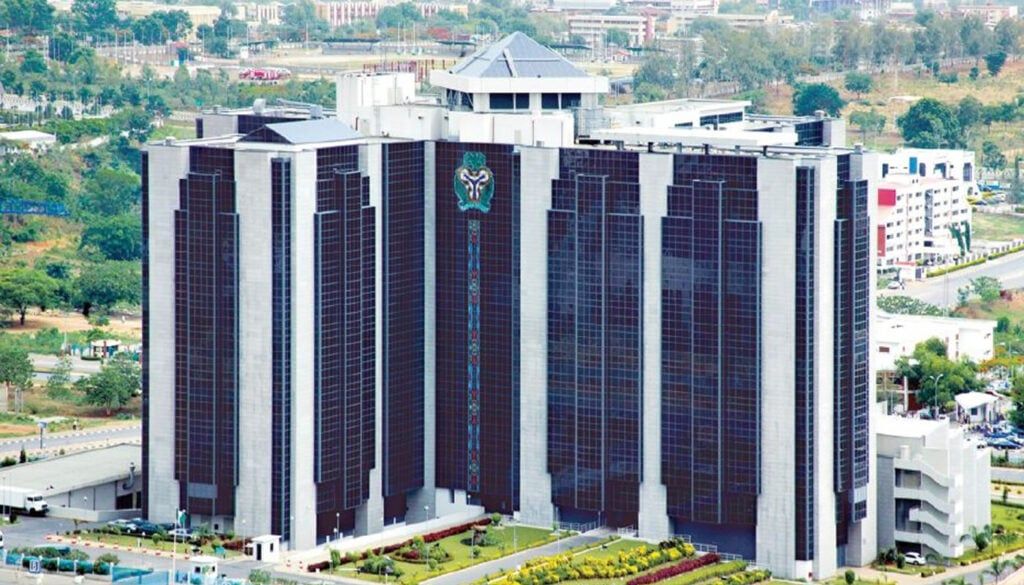
The Central Bank of Nigeria (CBN) is facing renewed calls to begin easing its tight monetary policy after economists, financial analysts, and business leaders argued that persistently high interest rates are weighing on private sector growth, restricting access to credit, and slowing job creation despite signs that inflation is beginning to moderate.
The renewed debate follows the Monetary Policy Committee (MPC)’s decision to retain the Monetary Policy Rate (MPR) at 26.5% at the conclusion of its 306th meeting held in Abuja on July 20–21, 2026.
With commercial lending rates remaining above 30% for many businesses, analysts say financing conditions remain one of the biggest constraints on investment and economic expansion.
What the data is saying
By leaving the MPR unchanged at 26.5%, the CBN has maintained one of the most restrictive monetary policy environments in Nigeria’s recent history.
The decision signals that the apex bank continues to prioritise inflation control, exchange rate stability, and broader macroeconomic stability over stimulating credit growth.
However, critics argue that the current interest rate environment is making borrowing prohibitively expensive for businesses, particularly small and medium-sized enterprises (SMEs), limiting investment, expansion, and employment generation.
Supporters of the decision, on the other hand, believe that maintaining high interest rates is necessary until inflation shows a sustained downward trend and foreign exchange market stability becomes firmly entrenched.
More insights
The debate reflects the delicate balancing act facing the CBN.
Lower interest rates could reduce financing costs, encourage private sector borrowing, stimulate investment, and support economic growth.
However, easing monetary policy too early could increase liquidity in the economy, potentially reigniting inflationary pressures, weakening the naira, and reducing the attractiveness of Nigerian fixed-income assets to foreign investors.
The MPC’s decision suggests that policymakers remain cautious about declaring victory over inflation, preferring to consolidate recent macroeconomic gains before considering any policy easing.
Market participants will therefore be closely watching upcoming inflation data, exchange rate performance, and external economic developments ahead of future MPC meetings.
Should inflation continue its downward trajectory over the coming months, expectations for the first interest rate cut could strengthen.
What you should know
The CBN’s latest policy decision has intensified discussions about the appropriate direction of monetary policy.
Key highlights include:
- The Monetary Policy Rate (MPR) remains at 26.5% following the 306th MPC meeting.
- Commercial borrowing costs for many businesses continue to exceed 30%.
- Critics argue that high interest rates are constraining business investment, access to credit, and job creation.
- Supporters believe maintaining a tight monetary stance is essential to sustain declining inflation, stabilise the exchange rate, and preserve investor confidence.
- Future policy decisions are expected to depend largely on the trajectory of inflation, foreign exchange stability, and broader macroeconomic conditions.
The differing views highlight the difficult policy trade-off confronting the CBN. While businesses are seeking lower borrowing costs to support growth, the apex bank remains focused on ensuring that inflation is brought under lasting control before beginning what could eventually become a gradual monetary easing cycle.