
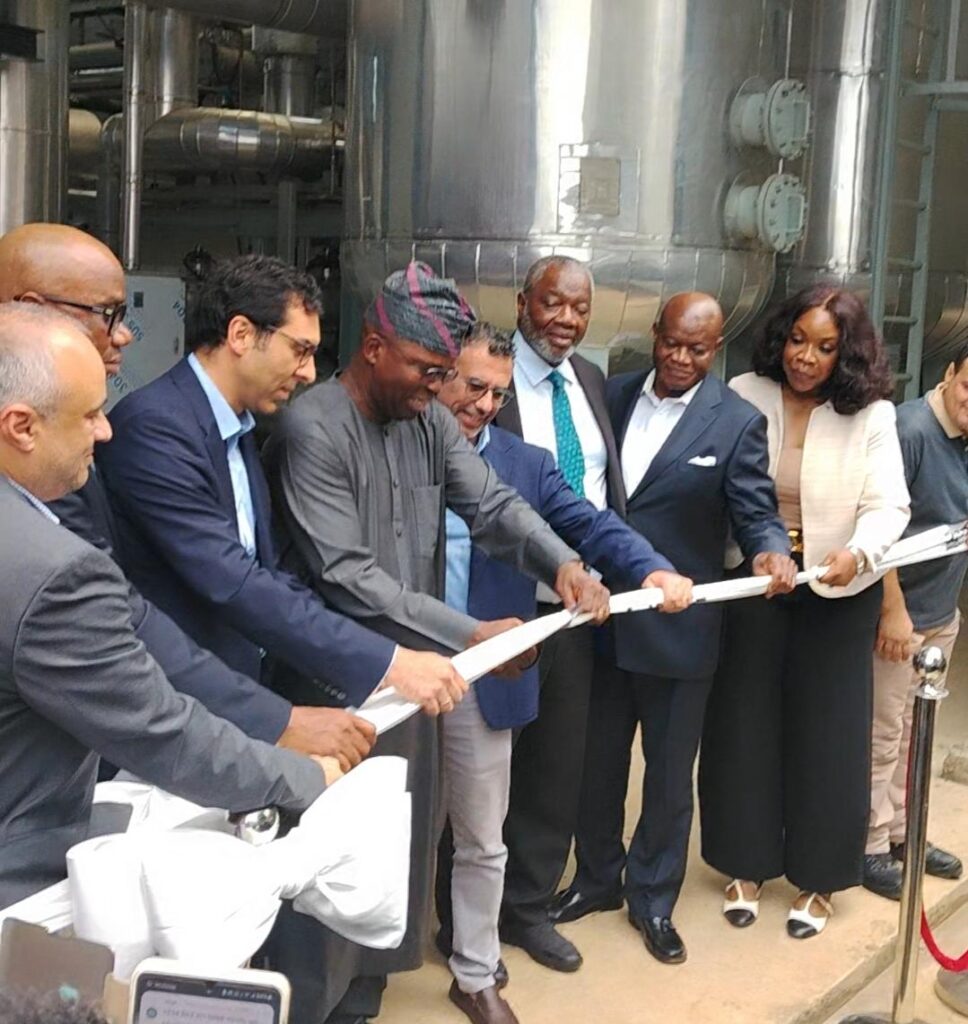
Apex African Gas Nigeria Limited has commissioned a new 70-ton-per-day Air Separation Unit (ASU) plant in Satellite Town, Lagos, in a project valued at more than N10 billion.
The facility was officially commissioned on June 25, 2026, marking a significant expansion of Nigeria’s domestic industrial gas production capacity.
Production capacity rises to 110 tons per day
With the addition of the new plant, Apex African Gas’ total production capacity has increased to 110 tons per day, positioning the company among the largest domestic producers of industrial gases in Nigeria.
The expansion is expected to improve the availability of critical industrial and medical gases across multiple sectors of the economy.
Key products from the facility
The Air Separation Unit will produce:
- Oxygen
- Nitrogen
- Argon
- Specialty industrial gases
These gases are essential inputs for a wide range of industries and applications.
Strategic importance
The new plant is expected to strengthen supply to several critical sectors, including:
Healthcare
Medical oxygen remains a vital resource for hospitals, clinics, and emergency healthcare services. Increased domestic production could improve supply reliability and reduce shortages.
Manufacturing
Industrial gases are widely used in metal fabrication, welding, chemical processing, electronics manufacturing, and other industrial operations.
Energy
The oil and gas sector relies on nitrogen and other specialty gases for drilling, maintenance, testing, and production activities.
Food and beverage processing
Nitrogen and other gases are used in food preservation, packaging, refrigeration, and quality control processes.
Implications for Nigeria’s industrial sector
The investment aligns with broader efforts to deepen local industrial capacity and reduce dependence on imported industrial inputs.
By expanding domestic production of critical gases, the facility could help:
- Improve supply chain reliability.
- Support industrial growth.
- Reduce import dependence.
- Create jobs and technical expertise.
- Enhance healthcare infrastructure through improved oxygen availability.
The commissioning also highlights continued private-sector investment in industrial infrastructure despite broader economic challenges, reflecting growing demand for locally produced industrial and medical gases across Nigeria’s economy.