
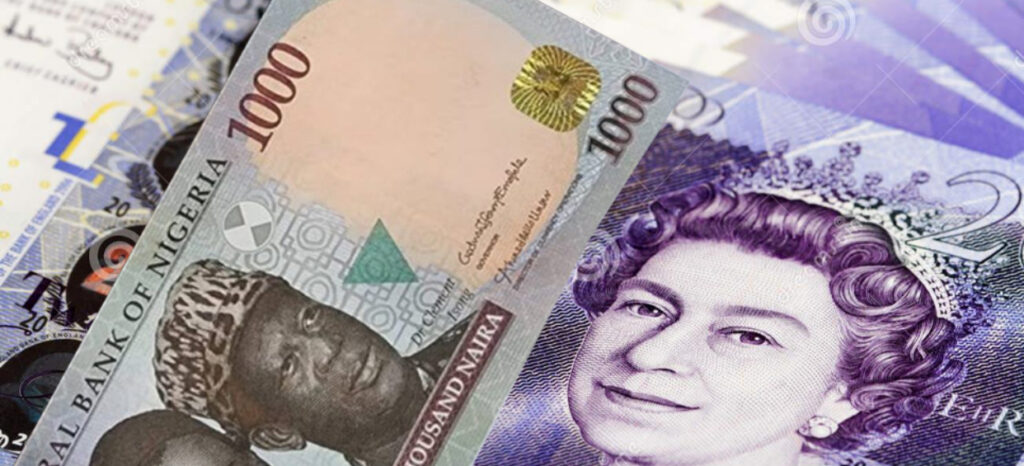
Nigeria’s naira maintained relative strength against the British Pound Sterling in the official foreign exchange market, supported by ongoing liquidity management measures by the Central Bank of Nigeria (CBN) and improved foreign reserve levels.
According to the latest CBN data, the naira closed at N1,823/£1 on Friday, June 5, 2026. During the first week of June, the local currency recorded a modest recovery from approximately N1,845/£1 on June 1, reflecting improved stability in the official market.
What the data is saying
The recent appreciation of the naira comes amid the CBN’s continued efforts to tighten monetary conditions and manage liquidity within the financial system.
- The CBN retained the Monetary Policy Rate (MPR) at 26.5% and maintained the Cash Reserve Ratio (CRR) at 45%, reinforcing its commitment to reducing excess liquidity.
- Nigeria’s foreign reserves remain around $50 billion, providing the apex bank with additional capacity to support the naira and intervene in the foreign exchange market when necessary.
- Crude oil prices hovering around $100 per barrel have also contributed positively to reserve accumulation and foreign exchange earnings.
Market participants continue to monitor supply conditions in the official FX market, where demand from manufacturers, importers, and service providers remains elevated despite ongoing reforms aimed at improving foreign currency availability.
More insights
Although the official exchange rate has remained relatively stable around the N1,810–N1,815/£1 range, the parallel market continues to trade at a premium.
- Recent market data showed the pound trading above N1,850/£1 in the parallel market.
- Exchange rate movements in the local market remain heavily influenced by dollar liquidity and domestic market dynamics rather than real-time movements in global sterling markets.
- Analysts note that sustained stability in oil prices and reserve levels will remain critical to the naira’s performance against major currencies.
Global developments affecting the pound
The British pound has faced pressure globally following stronger-than-expected U.S. economic data, which boosted demand for the U.S. dollar.
- Robust U.S. Non-Farm Payrolls (NFP) figures strengthened the dollar and reduced investor appetite for sterling.
- The pound fell below 1.34 against the U.S. dollar, declining by approximately 0.37% in recent trading sessions.
- Markets are increasingly pricing in the possibility of tighter U.S. monetary policy, supporting further dollar strength.
Geopolitical developments in the Middle East have also contributed to market volatility.
- A ceasefire agreement involving Israel and Lebanon helped ease some immediate concerns, reducing safe-haven demand for the dollar.
- However, tensions involving Iran, Gulf security concerns, and uncertainty surrounding nuclear negotiations continue to support the U.S. dollar as a defensive asset.
Outlook
The outlook for the GBP/NGN exchange rate will largely depend on the CBN’s ability to sustain foreign exchange liquidity, maintain reserve buffers, and manage inflationary pressures.
While strong reserves and elevated oil prices provide support for the naira, persistent demand for foreign currency and global market uncertainties could continue to influence exchange rate movements in the coming months.