
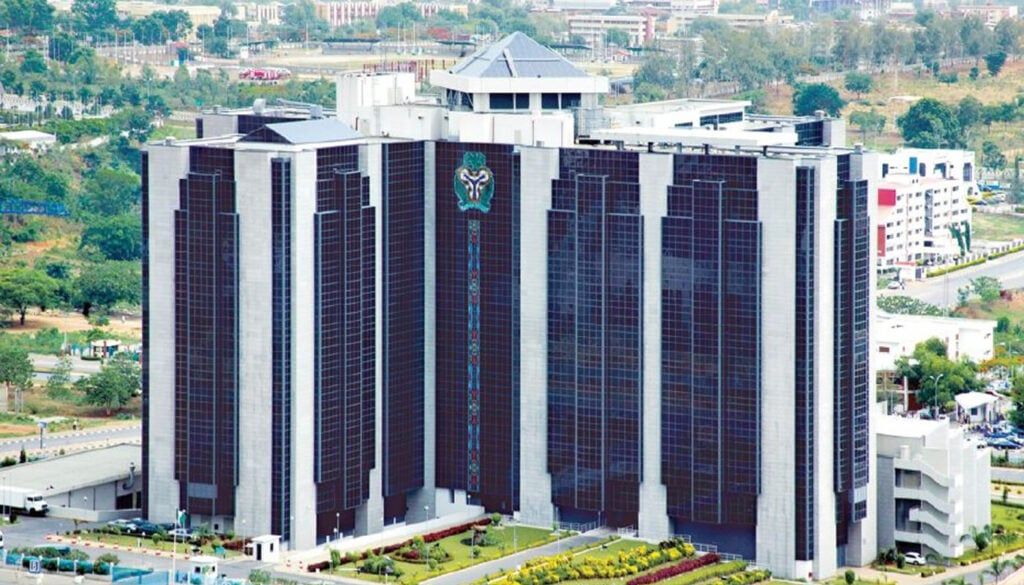
The Central Bank of Nigeria has launched the 4th Edition of its Foreign Exchange (FX) Manual as part of ongoing reforms aimed at improving transparency, liquidity, operational efficiency, and investor confidence in Nigeria’s foreign exchange market.
The revised manual, unveiled in Abuja by Olayemi Cardoso, is scheduled to take effect from June 1, 2026, and introduces several key regulatory changes, including an increase in the allowable advance payment for imports from 15% to 30%.
According to the apex bank, the updated manual is intended to harmonise FX procedures, standardise market practices, and provide a clearer operational framework for authorised dealers, corporates, exporters, importers, and other market participants.
What the CBN Governor is saying
Speaking during the launch attended by banks’ managing directors and other stakeholders, Olayemi Cardoso said the revised FX Manual represents another major step in strengthening Nigeria’s macroeconomic stability and improving confidence in the foreign exchange market.
▪ “In today’s global environment, marked by volatility and complex cross-border financial flows, the integrity of a country’s FX governance framework is essential for sustaining resilience and confidence,” Cardoso stated.
▪ He noted that the revised manual aligns with global best practices and reflects extensive technical reviews and stakeholder consultations.
▪ According to him, the last edition of the FX Manual was issued in 2018, making the latest update necessary to reflect current domestic realities and evolving global financial conditions.
▪ The CBN Governor added that the reforms are designed to establish a forward-looking regulatory framework capable of improving clarity, consistency, transparency, and market efficiency.
More insights
The revised FX Manual introduces several operational changes aimed at simplifying FX transactions and reducing bottlenecks across the system.
▪ The allowable advance payment for imports has been increased from 15% to 30%, providing importers with greater flexibility in settling international trade obligations.
▪ Personal Travel Allowance (PTA) and Business Travel Allowance (BTA) disbursements will now be processed using a 75% electronic and 25% cash structure.
▪ The apex bank also introduced free processing of Form NXP alongside provisions covering service exports, Pan-African Payment and Settlement System (PAPSS) transactions, remittances by technology companies, and non-resident investment accounts.
▪ Payments for services and tuition fees of up to $25,000 per semester are now permitted under the revised framework.
▪ Export proceeds holders and ordinary domiciliary account holders will continue to enjoy unrestricted access to funds, while foreign extractive companies are entitled to 100% repatriation of export proceeds.
▪ The manual further removes the requirement for Form A in domiciliary account remittances.
The CBN stated that the reforms are expected to improve operational efficiency for authorised dealers and deepen confidence among both domestic and international investors.
Cardoso urges compliance
Olayemi Cardoso urged banks, government agencies, exporters, importers, and private sector participants to comply fully with the revised FX framework to ensure the success of the reforms.
▪ “Your cooperation is indispensable, and your partnership remains central to the stability and credibility of the Nigerian FX market,” he said.
▪ The apex bank also disclosed that the FX Manual would be distributed free of charge to authorised dealers to encourage compliance and improve implementation across the market.
▪ According to the CBN, monitoring and oversight mechanisms will also be strengthened to ensure accountability, consistency, and fairness in FX administration.
What you should know
Recent data from the Financial Market Dealers Association showed that Nigeria’s FX market recorded significant structural growth in 2025, driven largely by rising autonomous inflows.
▪ Autonomous inflows accounted for 64.94% of total FX inflows in 2025, underscoring increasing private sector participation in the market.
▪ Total autonomous inflows rose to $72.91 billion in 2025 from $59.29 billion recorded in 2024.
▪ Overall FX inflows into the Nigerian economy climbed to $112.27 billion in 2025, compared to $99.44 billion in the previous year, reflecting improving liquidity conditions and growing investor confidence in Nigeria’s FX market reforms.