
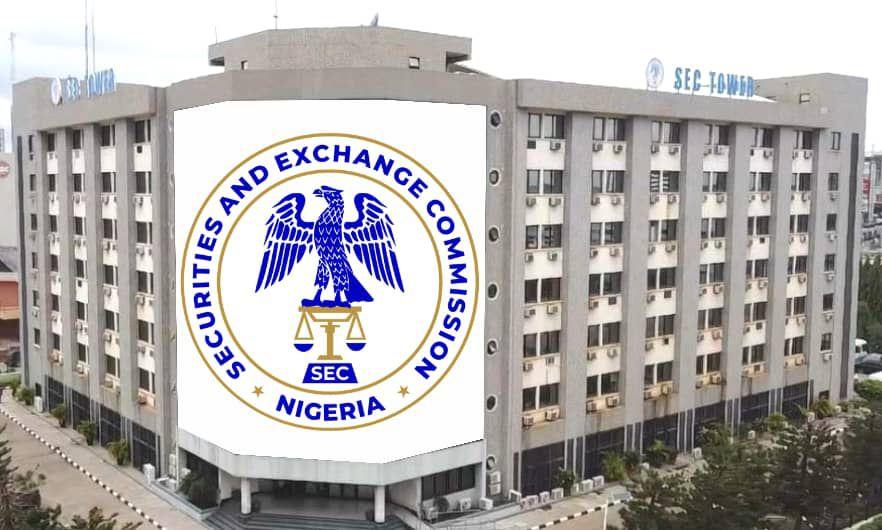
The Director-General of the Securities and Exchange Commission, Emomotimi Agama, has declared that Nigeria’s capital market is shifting aggressively toward artificial intelligence, data analytics and technology-driven regulation as part of efforts to modernise investment systems and deepen market participation.
Speaking at the FSDH Investor Conference 2026 in Lagos on May 13, 2026, Agama said the future of investing would be defined not by the amount of capital investors hold, but by the quality of intelligence and data guiding their decisions.
SEC Targets AI-Driven Market Infrastructure
According to Agama, global investing has entered what he described as the era of “intelligent investing,” powered by artificial intelligence, real-time analytics, distributed ledger systems and algorithmic trading technologies.
“We are at the threshold of what scholars and practitioners are calling the era of intelligent investing — a paradigm in which data does not merely inform decisions, but actively participates in them,” he said.
The SEC boss disclosed that the Commission is pursuing major reforms aimed at aligning Nigeria’s capital market with global best practices, including:
- Transition to T+1 settlement cycles
- Regulation of digital assets
- Frameworks for tokenised securities
- AI governance standards for market operators
- Stronger fintech-bank integration
Agama noted that the proposed AI governance framework would focus on explainability, accountability and algorithmic fairness to ensure transparency in automated investment systems.
“An investor in Nigeria deserves to know not only what decisions were made on their behalf, but how those decisions were reached,” he added.
20 Million Retail Investors Targeted
The SEC also revealed plans to expand retail participation in Nigeria’s capital market through fintech integration strategies targeting approximately 20 million retail investors nationwide.
According to the Commission, the reforms are designed to democratise investing by extending access to formal investment opportunities beyond institutional investors and wealthy individuals.
The framework aims to open wealth-creation opportunities to:
- Small businesses
- Artisans
- Informal sector workers
- Low-income earners
Agama stressed that investor confidence remains central to the SEC’s broader reform strategy.
“Confidence is the ultimate asset in a capital market. Every disclosure we enforce, every fraud we prosecute, every investor we educate adds to the stock of market confidence.”
Nigeria Positions for African Fintech Leadership
The SEC said Nigeria’s growing role in African digital finance and capital market integration could help attract long-term investments into sectors such as infrastructure, gender finance and innovation.
The Commission’s seven-pillar market infrastructure vision is expected to support:
- Faster settlement systems
- Deeper derivatives markets
- Improved market liquidity
- Better investor protection
- Expanded digital finance ecosystems
The establishment of a dedicated Investor Protection Department also signals a shift toward proactive market surveillance and stronger enforcement mechanisms.
Reforms Come Amid Market Boom
The SEC’s technology-focused reforms come as Nigeria’s capital market continues its strong rally under ongoing macroeconomic reforms.
Recently, the Nigerian Exchange Group All-Share Index crossed the historic 250,000-point mark, reflecting rising investor confidence and stronger trading activity.
Analysts say the SEC’s push toward AI governance and intelligent investing could position Nigeria as one of Africa’s leading innovation-driven capital markets if implementation remains consistent and transparent.