Tinubu asks US court to stop release of unredacted FBI, DEA records
Build Your Website in Minutes with One-Click Import – No Coding Hassle!
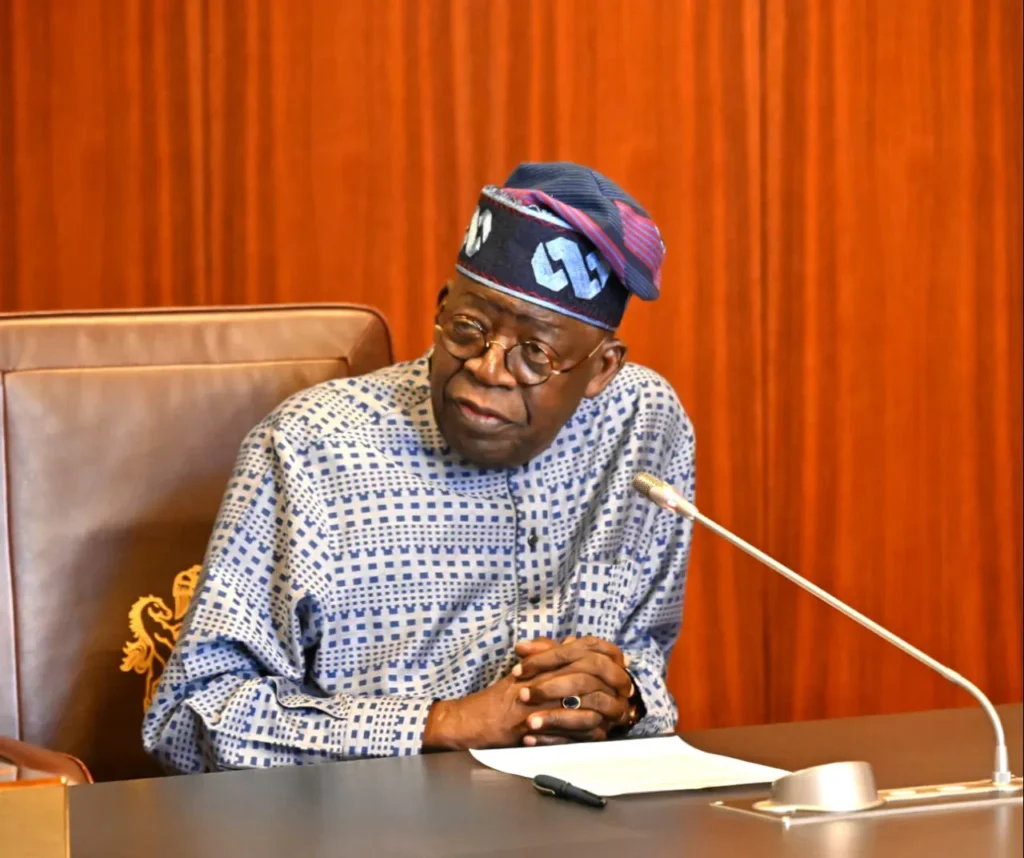
President Bola Tinubu has asked a United States federal court to prevent the release of unredacted records held by the Federal Bureau of Investigation (FBI) and the Drug Enforcement Administration (DEA) concerning historical investigations involving him.
The request was contained in a recent court filing by the President’s legal team in response to a Freedom of Information Act (FOIA) lawsuit brought by US transparency activist Aaron Greenspan.
Tinubu’s lawyers argued that the records contain personal information protected under US privacy laws and that releasing the unredacted documents would amount to an unjustified invasion of the President’s privacy.
The lawyers, Christopher Carmichael, Victor Henderson and Oluwole Afolabi, relied on provisions of the US Freedom of Information Act, particularly Exemption 7(C), which permits law-enforcement agencies to withhold information where disclosure could constitute an unwarranted invasion of personal privacy.
They also argued that Tinubu’s position as Nigeria’s President does not remove his rights to privacy under US law.
According to the legal team, the FOIA process is intended primarily to promote transparency around government activities and should not be used as a means of obtaining private information about individuals.
The lawyers further contended that Greenspan’s request was motivated by political interests in Nigeria and questioned the public-interest basis for releasing personal information contained in the records.
Dispute dates back decades
The latest development is part of a long-running dispute over records relating to Tinubu and events dating back to the early 1990s.
Among the documents sought by Greenspan are the FBI’s files on Tinubu, including interview records known as FBI Form 302, covering investigations from 1992 and 1993.
The records are also connected to a 1993 civil forfeiture case in the United States involving about $460,000 linked to Tinubu. US authorities had alleged that the funds were connected to narcotics trafficking or prohibited financial transactions, and the money was subsequently forfeited.
Tinubu has consistently maintained that the matter was a civil forfeiture proceeding and has denied wrongdoing. His legal position has also been that the case did not result in a criminal conviction for drug trafficking.
The issue resurfaced prominently during Nigeria’s 2023 presidential election, when Tinubu’s opponents cited the US forfeiture case in legal challenges to his candidacy.
However, the Presidential Election Petition Court held in September 2023 that the petitioners had not established that Tinubu had been arrested, arraigned, convicted or sentenced for a criminal offence in the United States.
US court had ordered agencies to process records
Greenspan’s FOIA requests have been pending for several years. He has argued that the records should be made public because Tinubu is the sitting President of Nigeria and the information is therefore of significant public interest.
The FBI and DEA had initially relied on so-called “Glomar” responses, under which US government agencies can refuse to confirm or deny the existence of records in certain circumstances.
However, in April 2025, US District Judge Beryl Howell rejected the agencies’ broad reliance on the approach and ordered them to process records responsive to Greenspan’s requests, subject to applicable legal exemptions.
The agencies have subsequently sought to withhold or redact portions of the documents, citing protections covering law-enforcement information, personal privacy, investigative techniques and the safety of individuals associated with investigations.
Tinubu’s latest intervention seeks to reinforce those protections and prevent the publication of the unredacted records.
Opposition renews call for disclosure
The latest court filing has also reignited political calls for the records to be made public.
Opposition figures have argued that releasing the documents would help resolve longstanding questions surrounding the President’s history in the United States.
The African Democratic Congress, for instance, has called on Tinubu to support disclosure if there is nothing in the records that could damage his reputation.
The controversy has also attracted the attention of former Vice President Atiku Abubakar and other political actors, who have pushed for greater transparency over the records.
Atiku’s representatives have separately challenged efforts to withhold the documents, arguing that claims of privacy or potential danger should not automatically prevent the disclosure of information that may be subject to public-interest scrutiny.
The case remains a FOIA dispute and does not, by itself, establish that Tinubu committed a criminal offence or was prosecuted for drug trafficking in the United States.
The immediate issue before the US court is whether the FBI and DEA can continue to withhold or redact portions of the records or whether additional documents must be released to Greenspan.