
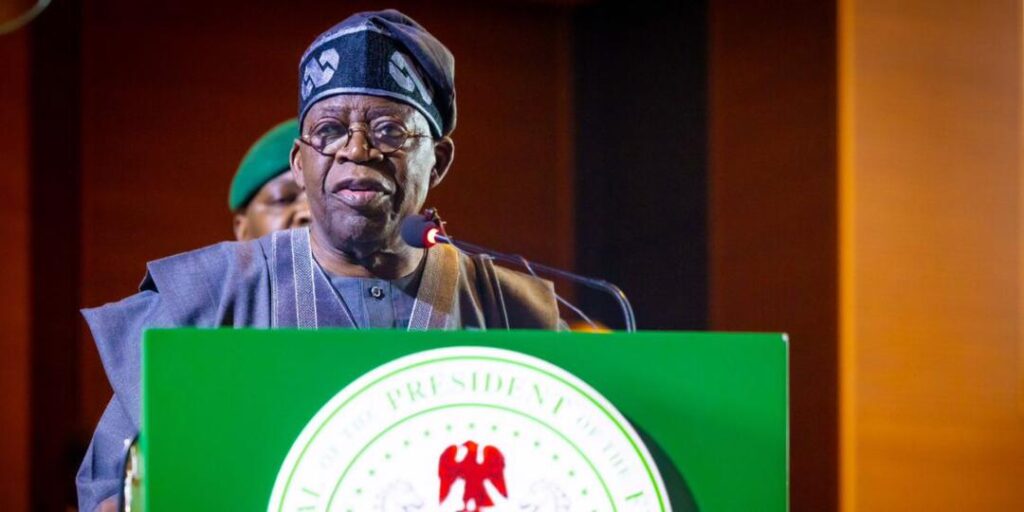
Former Minister of Finance and Coordinating Minister of the Economy, Wale Edun, has outlined key economic improvements recorded during his tenure as he officially exits the Federal Executive Council.
In a farewell statement seen by Nairametrics, Edun expressed gratitude to Bola Ahmed Tinubu for the opportunity to serve in his administration.
His departure follows a cabinet reshuffle that has altered the leadership of Nigeria’s economic management team, marking a transition in the country’s fiscal policy direction.
Edun reflects on economic reforms during his tenure
In his statement, Wale Edun reflected on his time in government, noting that he first served as Chair of the Presidential Transition Committee in May 2023, before later being appointed Special Adviser on Monetary Policy and subsequently Minister of Finance and Coordinating Minister of the Economy.
He described his period in office as one defined by major economic reforms and policy coordination.
“I wish to thank His Excellency, President Bola Ahmed Tinubu, GCFR, for the opportunity to serve our country from the outset of his administration,” Edun stated.
“It has been an honour to contribute to the implementation of the administration’s economic agenda at a pivotal moment in Nigeria’s journey.”
According to him, the administration inherited a fragile economic environment, but introduced reforms aimed at stabilising macroeconomic conditions and restoring investor confidence.
Improvements in growth and inflation
The former finance minister highlighted several economic indicators that he said improved during the period.
He noted that Nigeria’s economic growth increased from around 2% to more than 4%, while inflation declined from about 35% to 15%.
Edun said these improvements were driven by coordinated policy actions involving government institutions and private sector stakeholders.
Collaboration across government and private sector
Explaining the reported progress, Wale Edun credited fiscal reforms, improved policy coordination, and renewed investor confidence.
He acknowledged the contributions of cabinet members, state governments, and private sector actors, noting that the reform process relied heavily on collaboration across institutions.
Edun added that the reforms were designed to restore public trust in economic management while supporting more inclusive growth.
Although he admitted that economic challenges persist, he said the government had laid the foundation for long-term macroeconomic stability and expressed optimism about Nigeria’s economic outlook.
He also reaffirmed his commitment to national development beyond his role in government.
Cabinet reshuffle brings new finance leadership
The exit of Wale Edun follows a cabinet reshuffle by Bola Ahmed Tinubu.
Under the new arrangement, Taiwo Oyedele has been elevated from Minister of State for Finance to Minister of Finance and Coordinating Minister of the Economy.
The Secretary to the Government of the Federation, George Akume, confirmed that Edun and the Minister of Housing, Ahmed Musa Dangiwa, stepped down from the cabinet.
The reshuffle is expected to focus on strengthening fiscal management, tax reforms, and economic policy coordination.
Tax reforms expected to shape new economic direction
Taiwo Oyedele has been a central figure in the administration’s tax reform agenda.
In 2024, several tax reform bills were introduced at the National Assembly to restructure Nigeria’s tax administration.
The reforms proposed stopping about 60 federal agencies from collecting taxes, including bodies such as the Nigerian Upstream Petroleum Regulatory Commission and the Nigeria Customs Service.
According to Oyedele, the initiative aims to allow agencies to focus on their core responsibilities while improving transparency and efficiency in Nigeria’s tax system.
As the new economic leadership takes over, attention is expected to shift toward sustaining reforms and translating macroeconomic gains into improved living standards for Nigerians.