The government of Nigeria has stated that it has no immediate plans to access a $50 billion financial support facility offered by the International Monetary Fund (IMF) to assist economies facing economic difficulties.
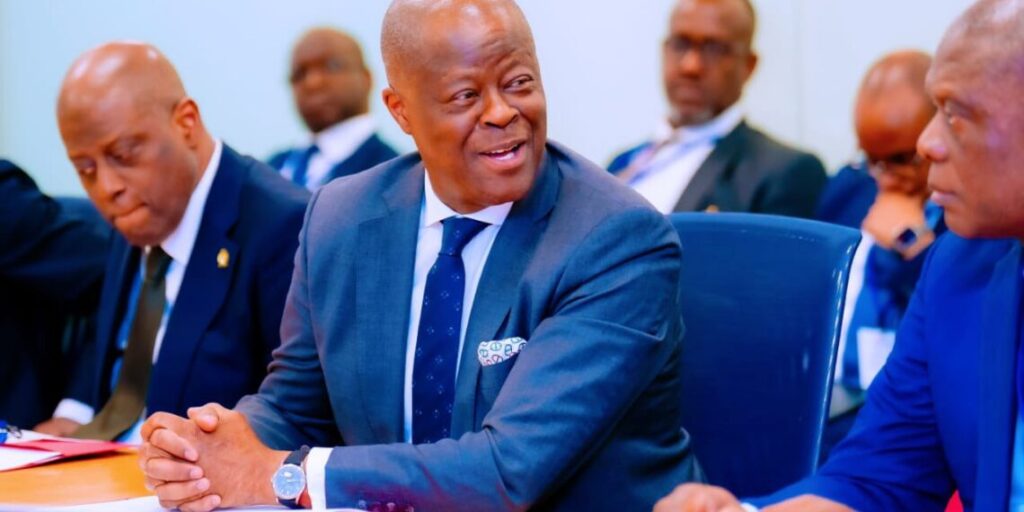
Nigeria’s Minister of Finance and Coordinating Minister for the Economy, Wale Edun, made this known during a press briefing at the ongoing Spring Meetings of the World Bank and the International Monetary Fund in Washington, D.C..
Nigeria rules out borrowing from IMF facility
Responding to questions from journalists, Edun emphasized that the Nigerian government does not intend to approach the IMF for financial assistance under the newly available loan facility.
According to the minister, the country currently has no plans to add additional borrowing from the IMF.
“Nigeria has no plan at the moment to approach the IMF for any other such burden,” Edun stated.
The IMF recently indicated that up to $50 billion in financial resources is available to help countries dealing with economic stress, particularly those struggling with external shocks and financial instability.
IMF urges countries to act quickly when support is needed
Earlier, the Managing Director of the IMF, Kristalina Georgieva, advised countries facing economic pressure to seek financial assistance quickly when necessary, warning that delays in securing support could worsen economic challenges.
According to Georgieva, early intervention can help protect economies from deeper instability.
“My advice is that when you need help financially, don’t hesitate to move fast, because the sooner we act, the more we protect the economy,” she said.
Africa facing growing pressure from global crises
Despite Nigeria’s decision not to access the loan facility, Edun acknowledged that African economies are currently facing significant external pressures, particularly due to geopolitical tensions in the Middle East.
He noted that although African countries are not responsible for the conflict, they are likely to experience disproportionate economic impacts.
These pressures could affect macroeconomic stability, economic growth, job creation, and poverty reduction efforts across the region.
According to Edun, the situation is especially difficult for oil-importing African countries, which are more vulnerable to rising global energy prices and supply disruptions.
Call for greater support for vulnerable economies
The Nigerian finance minister emphasized that many African nations require additional international support to navigate the economic challenges created by global shocks.
He stressed that vulnerable countries deserve greater assistance as they confront rising costs and economic uncertainty.
“They need and deserve extra help at this time,” Edun said, referring particularly to economies facing heightened vulnerability from global economic disruptions.
Nigeria’s stance signals that while the country acknowledges the economic challenges facing the region, it currently intends to pursue its economic management strategy without resorting to additional IMF borrowing.