
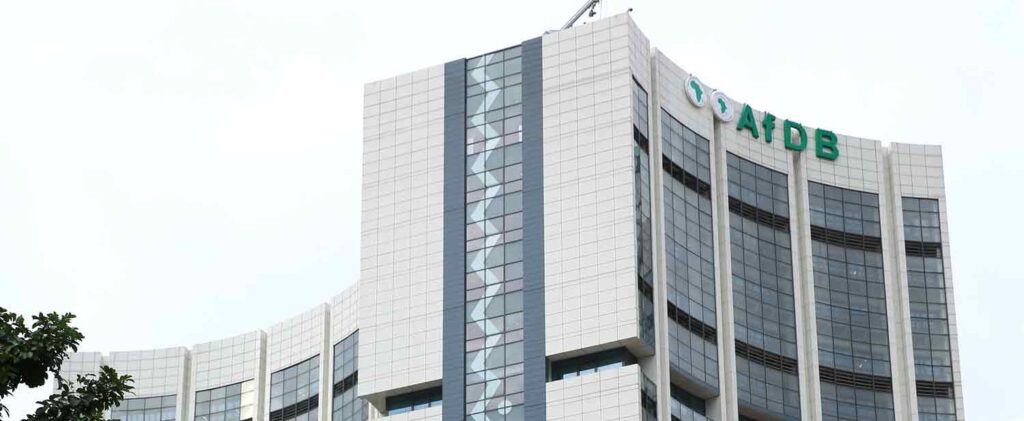
The leadership transition at the African Development Bank (AfDB) represents more than a routine change in management—it marks a potentially transformative moment for Nigeria’s economic outlook. As a founding member and the largest shareholder of the institution, Nigeria stands to benefit from the bank’s evolving strategy, which includes an ambitious plan to scale annual investments from $10 billion to $100 billion. With a capital base of $318 billion, the AfDB remains Africa’s largest development finance institution, owned by 54 African countries and several non-African partners, including the United States and Japan.
The bank’s new vision focuses on expanding sustainable infrastructure, improving energy access, strengthening inclusive agricultural systems, and boosting regional trade through the African Continental Free Trade Area (AfCFTA). For Nigeria, this strategy presents a major opportunity to attract development financing, expand market integration, and realign its economic priorities toward long-term growth.
Leadership transition at AfDB
During the bank’s Annual General Meeting held in Abidjan, Côte d’Ivoire, from May 26 to May 30, 2025, Sidi Ould Tah was elected as the ninth President of the AfDB Group. He succeeds Akinwunmi Adesina, whose second five-year term ends on August 31, 2025.
Tah secured victory through votes cast by the bank’s board of governors, which consists of finance ministers, economy ministers, and central bank governors from the AfDB’s 81 member countries. According to the institution’s electoral rules, a candidate must obtain more than 50.01 percent of the total vote to win the presidency. His five-year tenure officially begins on September 1, 2025, during which he is expected to drive initiatives aimed at promoting financial inclusion, sustainable investment, and economic development across Africa.
Before his election, Tah served as President of the Arab Bank for Economic Development in Africa (BADEA). With more than 35 years of experience in international finance, he previously held the position of Mauritania’s Minister of Finance and Economic Affairs. During his tenure at BADEA, the institution experienced significant structural reforms, with its balance sheet expanding considerably and its credit rating improving to AA.
Challenges facing the new leadership
Tah assumes office at a time when African financial institutions are under increasing pressure to address multiple development challenges. While the AfDB continues to enjoy investor confidence due to its AAA credit rating, the new leadership must mobilise additional resources to support development across the continent.
One immediate challenge is securing funding for the 17th replenishment of the AfDB’s concessional financing window, the African Development Fund (ADF). This task has become more urgent following the decision by the United States to reduce approximately $555 million in funding to the AfDB and the ADF during the administration of Donald Trump.
At the same time, Africa faces a massive development financing gap estimated at over $400 billion annually, equivalent to roughly 14 percent of the continent’s projected GDP by 2030. Addressing this shortfall will be central to the bank’s strategy under the new leadership.
AfDB’s role in Africa’s development
Established in 1964, the AfDB Group plays a crucial role in financing development initiatives and providing technical support to African countries. The institution comprises three entities: the African Development Bank (ADB), the African Development Fund (ADF), and the Nigerian Trust Fund.
Over the decades, the AfDB has supported large-scale infrastructure projects, policy reforms, and regional integration efforts across the continent. Under the leadership of Akinwunmi Adesina, the bank introduced the “High 5” development priorities, which focus on expanding electricity access, achieving food security, promoting industrialisation, strengthening regional integration, and improving quality of life.
Major initiatives launched during this period include the Desert-to-Power programme across the Sahel region and strong institutional support for the African Continental Free Trade Area. The bank also played a key role in providing emergency financing to African countries during the COVID-19 pandemic.
Nigeria’s long-standing partnership with AfDB
Nigeria has maintained a strong partnership with the AfDB as both a founding member and its largest shareholder. Over the years, the bank has supported several strategic development projects in the country.
One notable initiative is the Nigeria Electrification Project, which received about $200 million in funding and aims to provide 500,000 solar connections by 2025. Another major regional initiative is the Lagos–Abidjan Corridor, a $15.6 billion infrastructure project designed to improve transportation and boost trade along West Africa’s coastal corridor.
Nigeria’s infrastructure needs remain enormous. According to estimates by the World Bank, the country requires nearly $3 trillion in infrastructure investment over the next 30 years. Continued AfDB investment in energy and rural development could significantly reduce logistical bottlenecks and improve productivity.
Expanding access to capital for Nigerian businesses
Small and medium-sized enterprises (SMEs) remain a cornerstone of Nigeria’s economy, contributing approximately 48 percent of the country’s GDP. However, these businesses face a financing gap estimated at $158 billion, according to the International Finance Corporation.
Under the new leadership, the AfDB may expand programmes such as the Affirmative Finance Action for Women in Africa (AFAWA), a $500 million initiative designed to support women-led businesses.
Nigeria’s rapidly growing startup ecosystem could also benefit from greater access to capital. Sectors such as fintech and agribusiness have attracted increasing investor interest, with Nigerian fintech firms alone receiving $2.2 billion in funding in 2024. Expanded AfDB support through blended finance and risk-sharing mechanisms could further strengthen innovation and entrepreneurship in the country.
Regional integration and policy influence
As the AfDB’s largest shareholder, Nigeria has considerable influence in shaping the bank’s policy direction. The AfDB has already committed $2.7 billion between 2023 and 2025 to support cross-border infrastructure projects that facilitate trade under the AfCFTA framework.
By leveraging this influence, Nigeria could advocate for reforms that improve customs harmonisation, digital trade systems, and regional connectivity—measures that could increase intra-African trade by an estimated $35 billion annually.
Governance and transparency challenges
Despite these opportunities, governance concerns remain a key issue. Nigeria ranked 140th in the 2024 Corruption Perceptions Index published by Transparency International. Ensuring transparency in development financing will therefore be essential to maximise the benefits of AfDB projects.
Stronger monitoring systems, transparent procurement processes, and real-time project audits could help ensure that major initiatives—such as the $1 billion Nigeria Transmission Expansion Programme—deliver measurable results.
Outlook for Nigeria
Nigeria’s public debt currently stands at about 40 percent of GDP, highlighting the risks associated with excessive reliance on multilateral loans. While the AfDB has already financed nearly $2 billion in major projects across energy, transportation, and SME development, challenges such as slow project implementation and policy conditionalities could limit the overall impact of these investments.
Nevertheless, the leadership transition at the AfDB offers Nigeria an opportunity to realign its development priorities. By focusing on industrial value chains, energy transition initiatives, and youth-driven entrepreneurship, Nigeria can leverage AfDB financing to accelerate economic transformation.
Ultimately, the success of this partnership will depend on how effectively Nigeria utilises the bank’s resources to drive sustainable growth, strengthen institutions, and expand economic opportunities across the country.