Tinubu Cuts 2026 Budget by ₦3.15 Trillion but Retains ₦31.46 Trillion Deficit
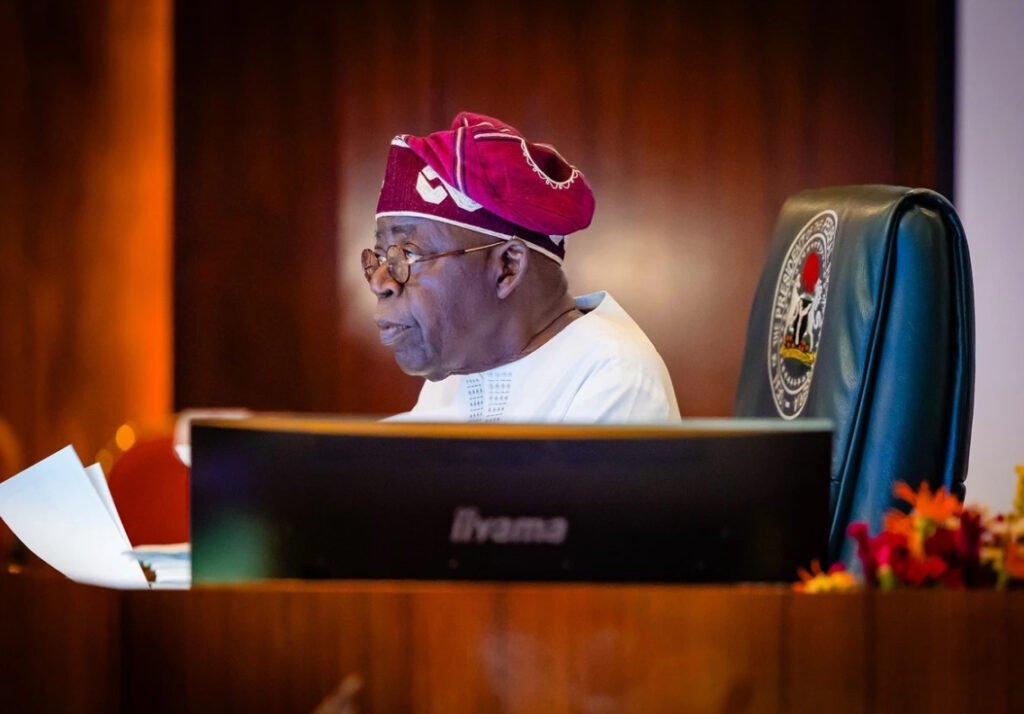
President Bola Tinubu has asked the National Assembly to reduce Nigeria’s 2026 federal budget from ₦68.32 trillion to ₦65.18 trillion, representing a reduction of approximately ₦3.15 trillion or 4.6 per cent.
The proposed adjustment is contained in a bill seeking to repeal and re-enact the 2026 Appropriation Act, alongside a revised Federal Government Fiscal Framework.
The President’s request, contained in a letter dated November 20, 2026, was transmitted to the House of Representatives and read during plenary on Tuesday.
Under the revised framework, aggregate expenditure is expected to decline from ₦68.323 trillion to ₦65.176 trillion, while projected Federal Government revenue, including earnings from government-owned enterprises, stands at ₦33.72 trillion.
Despite the reduction in total expenditure, the government intends to retain the fiscal deficit at ₦31.457 trillion, equivalent to approximately 5.64 per cent of GDP.
The proposed revision reflects the government’s attempt to align the spending plan with available resources, existing financial obligations and expenditures that have already been incurred or committed.
Why the government is revising the budget
According to the President’s communication to lawmakers, the adjustment is intended to regularise certain expenditures incurred by the Nigerian National Petroleum Company Limited on behalf of the Federation, address underprovided debt-service obligations and recognise issued capital warrants and supplementation commitments.
The revised framework also provides for refunds to ministries, departments and agencies, as well as special accounts.
The government explained that a significant portion of the revised capital expenditure allocation consists of amounts that have already been warranted.
Some additional provisions have also been included for priority national interventions, particularly the completion of critical road projects, protection of agricultural production, improvement of farm yields and expansion of market access.
These adjustments suggest that the revision is not simply a uniform reduction in government spending. It also involves restructuring expenditure to accommodate existing obligations and prioritise projects that the administration considers important.
Capital expenditure and revenue projections
The revised budget provides for aggregate capital expenditure of approximately ₦26.23 trillion.
This represents a substantial portion of the revised spending plan, reflecting the government’s intention to maintain funding for infrastructure and other development-related projects.
However, the projected Federal Government revenue of ₦33.72 trillion remains significantly below total planned expenditure.
The difference between projected revenue and aggregate expenditure explains the continued reliance on borrowing to finance the budget.
The decision to retain the ₦31.46 trillion deficit despite reducing expenditure is particularly important because it indicates that the adjustment has not fundamentally changed the government’s financing gap.
It also means the government will continue to depend heavily on domestic and external borrowing to meet its spending obligations.
Implications for Nigeria’s public finances
The proposed reduction raises questions about the government’s ability to implement its original spending programme and meet its revenue targets.
A budget reduction can improve fiscal credibility when expenditure projections are adjusted to reflect realistic revenue expectations. However, retaining such a large deficit means the government still faces considerable financing requirements.
The adjustment also highlights the importance of improving revenue generation, particularly from oil and gas, taxation and government-owned enterprises.
For businesses, the implementation of the revised capital budget will be important because government spending on roads, infrastructure, agriculture and other projects can influence economic activity and private-sector investment.
The revised appropriation bill must still pass through the legislative process before it becomes the legal basis for the adjusted spending plan.
Until then, the ₦65.18 trillion figure remains a proposed revision rather than an enacted replacement for the existing budget.