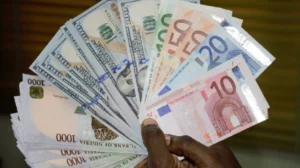
Nigeria’s Public Debt Hits N166.79tn as Domestic Borrowing Accounts for 55%
Nigeria’s total public debt stock rose to N166.79 trillion as of June 30, 2026, representing a 4.67% increase from the N159.35 trillion recorded at the end of the first quarter.
The latest figures released by the Debt Management Office showed that the country added approximately N7.44 trillion to its public debt stock between March and June.
Domestic debt accounted for N91.59 trillion, representing 54.91% of the total debt portfolio, while external debt stood at N75.20 trillion.
In dollar terms, Nigeria’s total public debt was equivalent to approximately $120.93 billion, comprising $54.52 billion in external debt and $66.41 billion in domestic debt. The external component was converted using the official exchange rate of N1,379.1842/$ applicable on June 30.
The Federal Government remained the dominant borrower, accounting for approximately N152.77 trillion of the total debt stock, while the 36 states and the Federal Capital Territory accounted for about N14.01 trillion.
The Federal Government’s domestic debt stood at N87 trillion, with FGN bonds remaining the largest component.
FGN bonds accounted for N64.84 trillion, representing about 74.53% of Federal Government domestic debt. This included N41.47 trillion in naira-denominated bonds and N22.11 trillion in securitised Ways and Means advances.
Treasury Bills also represented a significant component of government borrowing, with outstanding FGN Treasury Bills reaching N19.48 trillion.
The latest increase in public debt comes despite a reduction in the government’s securitised Ways and Means obligations during the second quarter.
The Ways and Means balance fell by N613.34 billion, from N22.72 trillion in March to N22.11 trillion in June. It was the first quarterly decline since the obligations were incorporated into the country’s public debt stock following their securitisation in 2023.
Nigeria also recorded lower domestic debt-service costs during the quarter.
Domestic debt service declined to N2.14 trillion in Q2, from N3.14 trillion in the first quarter. The reduction occurred even as the overall public debt stock increased during the period.
External debt servicing also declined during the quarter, with payments falling to $870.7 million. Interest payments accounted for 56.5% of the external debt-service bill, while principal repayments accounted for 39%.
The latest debt figures have renewed attention on the composition of Nigeria’s borrowing, the cost of servicing existing obligations and the extent to which new borrowing is being directed towards productive investments.
The increase also comes as the Federal Government continues to access domestic capital markets while pursuing additional financing from multilateral institutions.
The government is currently engaging the World Bank over proposed financing facilities worth $1.5 billion, according to recent reports.