IMF Says FX Market Shocks Alone Do Not Automatically Justify Central Bank Intervention
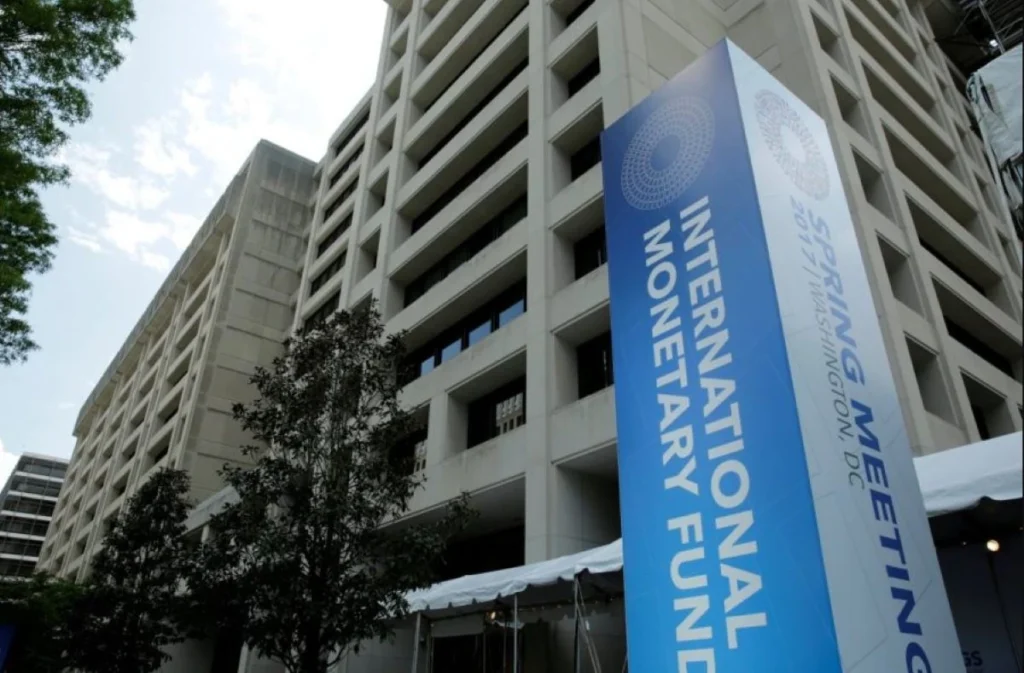
The International Monetary Fund (IMF) has cautioned that evidence of financial shocks in foreign exchange markets does not, on its own, justify central bank intervention, stressing that policymakers need to assess the broader market environment, the source of currency movements and the potential costs of using foreign exchange reserves.
The position is contained in a new Staff Discussion Note examining the drivers of exchange rates in emerging market and developing economies (EMDEs) and the implications for foreign exchange intervention.
The analysis develops a framework for distinguishing exchange-rate movements caused by macroeconomic fundamentals from those driven by financial shocks and market amplification.
The distinction is important because allowing currencies to adjust freely can help economies absorb genuine economic shocks, while excessive intervention can become costly when a currency is responding to underlying changes in inflation, trade, interest rates or external financing conditions.
What you should know
Exchange rates can move for very different reasons.
A currency may depreciate because a country’s economic fundamentals have weakened, such as through falling export earnings, higher inflation or increased demand for foreign currency.
But currencies can also move sharply because financial markets become stressed.
Investors may suddenly reduce exposure to a country’s assets, liquidity may disappear, risk premiums may rise and market participants may rush to buy or sell foreign currency.
These two situations can produce similar exchange-rate movements but require very different policy responses.
The IMF’s framework is designed to help policymakers distinguish between them before deciding whether intervention is appropriate.
Not every sharp currency movement is a policy failure
One of the central ideas is that exchange-rate flexibility can perform an important economic function.
When economic fundamentals change, allowing the currency to adjust can help the economy absorb the shock.
For example, if a country’s export earnings decline significantly, a weaker currency can eventually help make its exports more competitive while discouraging some imports.
Trying to prevent every depreciation through central-bank intervention could therefore delay or obstruct the adjustment required by the economy.
This is why a falling currency is not automatically evidence that a central bank needs to defend it.
Financial shocks can be different
The situation changes when currency movements are being driven primarily by financial-market dysfunction rather than underlying economic fundamentals.
A sudden reversal of capital flows, liquidity shortages or sharp increases in currency risk premiums can create exchange-rate movements that are larger than what economic fundamentals alone would suggest.
In such circumstances, the currency can become an amplifier of financial stress rather than simply an absorber of economic shocks.
The IMF’s new framework uses deviations from uncovered interest parity (UIP) as one way of identifying currency risk premiums and limits to arbitrage. It combines macro-financial data, model-based analysis and narrative evidence to identify episodes in which financial shocks played an important role.
The IMF studied 25 emerging and developing economies
The analysis uses 15 years of monthly data covering 25 emerging market and developing economies.
Its applications to Brazil and Chile found that financial-shock-driven episodes accounted for around one-third of fluctuations in UIP premiums and were associated with sizable contractions in economic activity.
This suggests that financial shocks may not be the dominant explanation for every currency movement, but when they occur, their economic consequences can be significant.
Why intervention can be costly
Foreign-exchange intervention is not free.
When a central bank sells foreign currency to support its domestic currency, it uses part of its reserves.
If the underlying economic pressure remains unchanged, repeated intervention can consume reserves without permanently solving the problem.
There can also be broader policy costs.
Frequent intervention may reduce incentives for businesses and financial institutions to hedge their foreign-exchange exposures because market participants come to expect the central bank to absorb currency risk.
It can also interfere with the adjustment mechanism provided by a flexible exchange rate.
The IMF has previously stressed that intervention should not be used as a substitute for necessary monetary or fiscal adjustment.
When intervention can make sense
The IMF does not argue that central banks should never intervene.
Instead, intervention can be appropriate when specific financial frictions create risks to economic or financial stability.
For example, intervention may be useful when:
- FX markets become severely illiquid, making it difficult for businesses and investors to obtain or hedge foreign currency.
- Large unhedged foreign-currency liabilities mean a sharp depreciation could trigger widespread defaults.
- A sudden depreciation threatens price stability, particularly when it risks pushing inflation expectations significantly higher.
In such circumstances, intervention can complement rather than replace other monetary, fiscal and financial policies.
What this means for Nigeria
The framework is particularly relevant to economies such as Nigeria, where foreign-exchange conditions can have significant effects on inflation, imports, government finances and corporate balance sheets.
Nigeria has also been rebuilding its foreign-exchange reserves, which provides the Central Bank of Nigeria with a larger potential buffer for dealing with periods of severe market stress.
However, having more reserves does not mean that every movement in the naira should be countered.
If the naira moves because of a genuine change in oil earnings, import demand, interest-rate differentials or other fundamentals, allowing some adjustment may be more appropriate than using reserves to maintain a particular exchange rate.
On the other hand, if a sudden market disruption causes an unusually sharp movement unrelated to fundamentals, targeted intervention could potentially help prevent temporary financial stress from becoming more damaging.
Higher reserves do not mean unlimited intervention
A common misunderstanding is that a country with large reserves can simply use those dollars to defend its currency indefinitely.
That is not the case.
Foreign-exchange reserves also serve other purposes, including supporting external payments and maintaining confidence in the country’s ability to meet international obligations.
Using reserves too aggressively can weaken the very external buffer that provides financial stability.
This makes the quality and sustainability of reserve accumulation important.
A country with strong recurring FX earnings has more room to manage temporary shocks than one relying heavily on volatile capital inflows.
The key issue is identifying the cause of the shock
For policymakers, the most difficult part may not be deciding whether to intervene but determining why the currency is moving.
A sharp depreciation could reflect:
- Deteriorating economic fundamentals.
- Temporary investor risk aversion.
- A sudden capital-flow reversal.
- Thin market liquidity.
- Speculative positioning.
- Changes in global interest rates.
- A combination of several factors.
The same exchange-rate movement can therefore require completely different policy responses depending on its underlying cause.
This is why the IMF’s framework places emphasis on diagnosing the source of currency pressure rather than reacting to the exchange-rate movement alone. (IMF)
What investors should watch
For investors and businesses operating in emerging markets, several indicators can help determine whether currency pressure is becoming more fundamental or financial:
- FX market liquidity and turnover
- Foreign portfolio flows
- Foreign-exchange risk premiums
- Interest-rate differentials
- Inflation expectations
- Export and commodity earnings
- Import demand
- Foreign-exchange reserves
- Corporate foreign-currency liabilities
- Bid-ask spreads and market volatility
Looking at these indicators together provides a better picture than simply watching whether the currency is appreciating or depreciating.
The bigger picture
The IMF’s latest analysis reinforces an important principle in modern exchange-rate policy: a currency moving sharply does not automatically mean a central bank should step in.
Policymakers first need to establish whether the movement reflects changing economic fundamentals or a financial shock that is disrupting the functioning of the currency market.
Where fundamentals are driving the adjustment, exchange-rate flexibility can help the economy absorb the shock.
Where financial-market dysfunction is amplifying a temporary shock and threatening financial or macroeconomic stability, intervention may have a role.
For countries such as Nigeria, this distinction is particularly important because foreign-exchange reserves are valuable but finite resources.
The objective is therefore not simply to keep the naira from moving.
It is to ensure that genuine economic adjustments are allowed to occur while temporary financial disruptions do not spiral into wider economic instability.