For Nigeria’s Small Investors, Dangote Refinery IPO Makes the Stock Market Personal
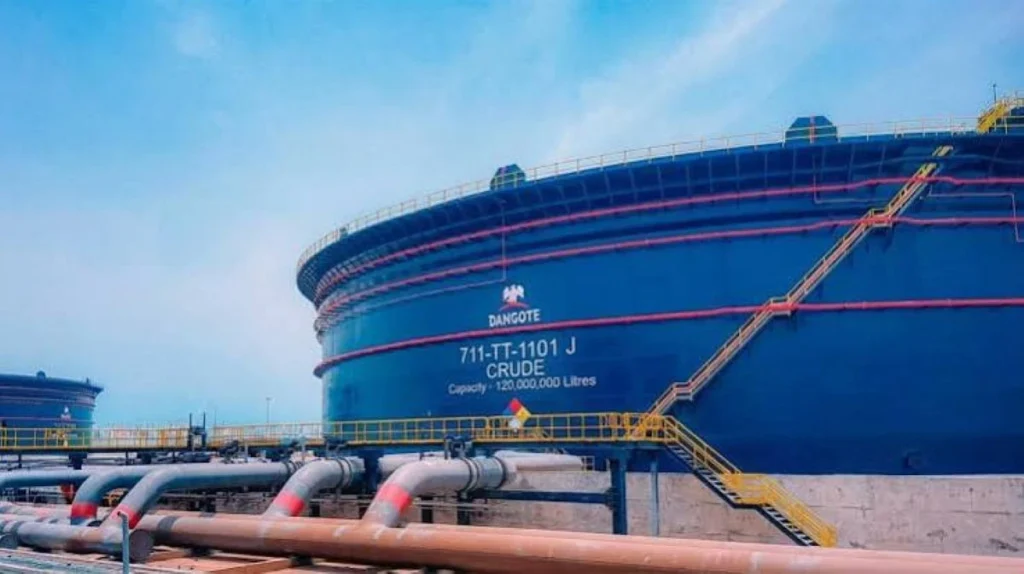
Tunde Ayinde drives a commercial bus between Ojota and CMS every day, and on the morning the newspapers announced that Aliko Dangote was opening his refinery to “the people,” he did the maths on a scrap of paper taped to his dashboard.
Ten shares at ₦525 each came to ₦5,250 — a little more than a good day’s takings after fuel and union levies. By the time he dropped his last passenger that evening, he had decided he would find the money.
He liked the idea of owning a piece of the biggest refinery in Africa, the same refinery whose diesel he sometimes buys at the roadside every week. But he liked something else even more: the idea that a company of that scale would allow a bus driver to become a shareholder alongside some of Nigeria’s wealthiest investors.
What Tunde did not know was that his ₦5,250 sits inside a ₦2.15 trillion share offering that represents only a fraction of a company whose post-IPO valuation is estimated at more than ₦65 trillion.
And when the shares begin trading in late November, the refinery’s listing could become one of the most consequential events for the Nigerian equities market this year.
A refinery becomes a public investment
For decades, Nigeria’s biggest private businesses have largely remained outside the reach of ordinary retail investors. The Dangote Refinery IPO changes that dynamic by offering members of the public an opportunity to buy into one of the country’s largest industrial assets.
At ₦525 per share, the minimum investment required for 10 shares is within reach of a much wider pool of Nigerians than the minimum capital traditionally associated with large institutional investments.
That is part of what makes the offer significant.
The transaction is not simply about raising ₦2.15 trillion. It is also about converting an asset that has largely been identified with one of Africa’s wealthiest businessmen into a publicly traded company in which ordinary Nigerians can hold an economic interest.
For investors such as Tunde, the refinery is no longer just a distant industrial project. It becomes something they can potentially own a piece of.
The scale is difficult to ignore
The numbers surrounding the offer are extraordinary.
The planned ₦2.15 trillion share sale represents a major capital-market transaction, while the refinery’s indicative post-offer valuation of more than ₦65 trillion would place it among the largest companies ever associated with Nigeria’s equities market.
That scale means the transaction has implications beyond the individual investors buying shares.
A company of that size entering the Nigerian Exchange could materially alter the composition of the market, increase its overall capitalisation and deepen the pool of investable assets available to both domestic and international investors.
For the average retail investor, however, the significance may be much simpler.
Tunde does not need to understand market capitalisation, free float or portfolio allocation to understand what ₦5,250 means.
He simply needs to know that, for the first time, he can put money into a company whose products he encounters in his everyday life and become a shareholder.
That is the deeper story behind the Dangote Refinery IPO: not merely the size of the transaction, but the attempt to make one of Nigeria’s most important industrial assets part of the country’s public investment culture.