Airtel Africa CEO calls for wider infrastructure sharing to cut telecom costs
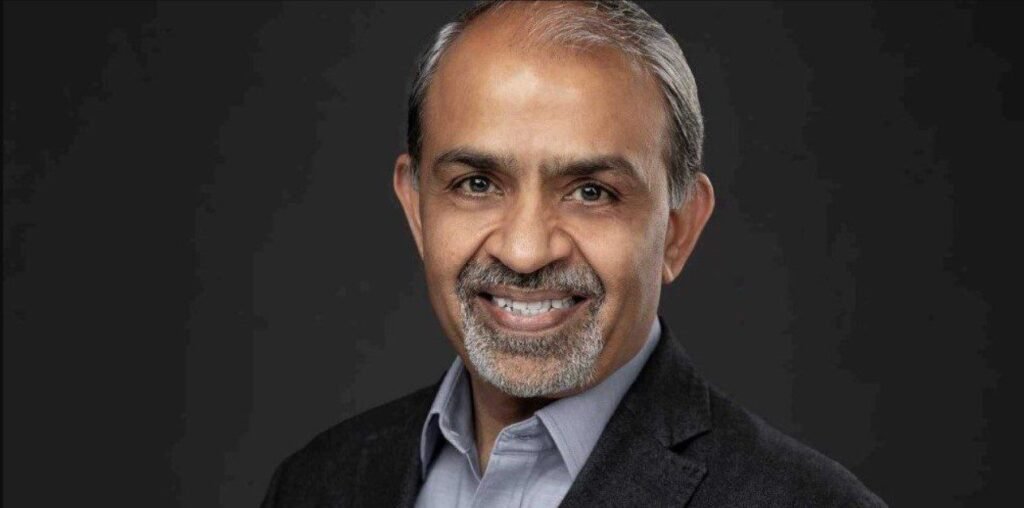
Airtel Africa’s Chief Executive Officer, Sunil Taldar, has called for greater infrastructure sharing among telecommunications operators across Africa, arguing that collaboration could reduce operating costs and accelerate the expansion of digital connectivity on the continent.
Taldar said telecom companies should consider sharing network infrastructure and spectrum where possible instead of duplicating expensive infrastructure in the same locations.
His comments come as African telecom operators face rising demand for mobile data, growing infrastructure costs and pressure to expand coverage to underserved communities.
According to Taldar, the industry can maintain competition in areas such as pricing, products and customer service while cooperating on the underlying infrastructure required to deliver those services.
Avoiding duplication of infrastructure
The Airtel Africa CEO argued that building separate infrastructure for competing operators in the same areas can lead to unnecessary duplication of investment.
Infrastructure sharing, he said, could allow operators to use existing towers, fibre networks, base stations and other telecommunications assets more efficiently.
The approach could be particularly useful in rural and less densely populated areas, where the cost of deploying individual networks can be difficult to justify commercially.
By sharing infrastructure, operators could spread capital and operating costs while extending coverage to communities that might otherwise remain underserved.
Airtel already pursuing sharing agreements
Airtel Africa’s position is supported by several infrastructure-sharing arrangements the company has entered into across its markets.
The company’s 2026 annual report identifies infrastructure-sharing partnerships with other operators, including agreements involving Vodacom in Tanzania and the Democratic Republic of Congo, as well as arrangements with MTN in Uganda and Nigeria.
In April 2025, MTN Group and Airtel Africa entered agreements to share network infrastructure in Uganda and Nigeria, with the objective of improving coverage while reducing the cost of deploying duplicate infrastructure.
The agreements demonstrate how competing operators can collaborate on network infrastructure while continuing to compete for customers.
Rising demand requires more investment
Taldar’s call comes as demand for mobile internet services continues to increase across Africa.
Airtel Africa has identified expanding network coverage and increasing capacity as major priorities, particularly as smartphone adoption and data consumption rise.
The company is committing a significant portion of its 2026 capital expenditure to spectrum acquisition and fibre deployment as it seeks to improve network quality across its 14 African markets.
The operator has also highlighted home broadband as an emerging growth opportunity as more consumers and businesses seek reliable high-speed internet connections.
Infrastructure damage adds to industry costs
Telecom operators are also dealing with infrastructure vandalism and repeated fibre cuts, which have become significant threats to network reliability.
Taldar recently identified damage to fibre cables, theft of batteries and other network equipment, as well as vandalism of power infrastructure, as major challenges affecting service availability.
The scale of fibre damage has increased the cost of maintaining telecommunications networks and contributed to service disruptions.
The Airtel Africa CEO has consequently urged greater protection of telecom infrastructure, noting that reliable connectivity depends not only on new investment but also on safeguarding existing assets.
Potential benefits for consumers
Greater infrastructure sharing could have wider implications for consumers and businesses.
Lower deployment and maintenance costs could give operators greater room to invest in network expansion, improve service quality and potentially moderate some of the costs associated with providing telecommunications services.
It could also make it commercially viable for operators to extend networks into rural and underserved communities where deploying separate infrastructure may not be economically attractive.
The International Finance Corporation has similarly backed Airtel Africa’s network expansion plans, providing a $150 million loan to support the expansion and upgrading of mobile networks and improve access to high-speed connectivity in underserved areas.
Industry collaboration may shape Africa’s digital future
Africa’s rapidly growing digital economy is increasing pressure on telecom operators to expand coverage while keeping their networks financially sustainable.
Taldar’s proposal suggests that infrastructure sharing could become an increasingly important part of the industry’s response.
Rather than having multiple operators independently build competing infrastructure across the same locations, greater collaboration could allow companies to pool resources and direct more investment towards expanding connectivity.
For Airtel Africa, the strategy fits into its broader objective of increasing digital and financial inclusion across its markets.
With data consumption continuing to rise and millions of Africans still lacking reliable broadband access, wider infrastructure sharing could help the continent close its connectivity gap faster while reducing some of the financial burden on individual telecom operators.